


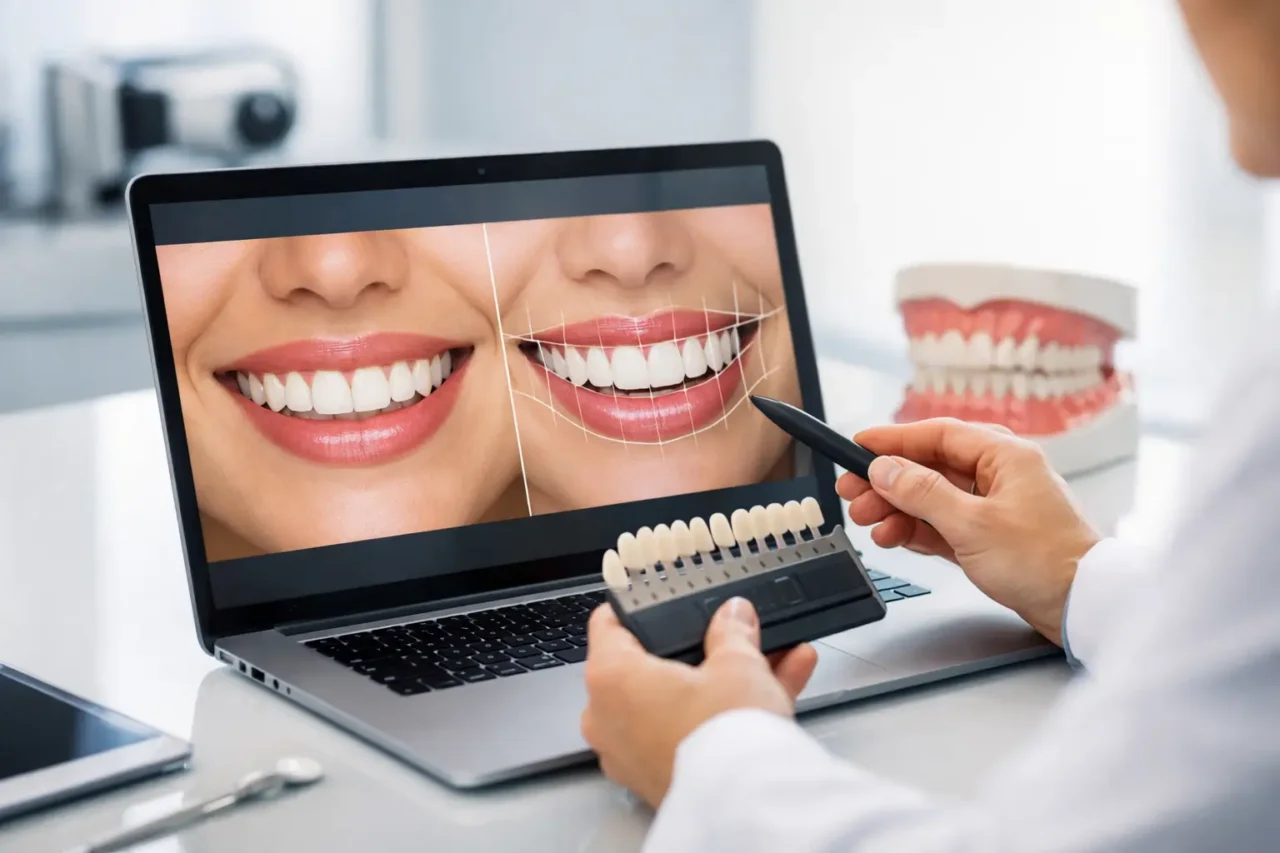
A smile makeover should not feel like a guess. If you are comparing veneers, crowns, implants, or whitening, one of the first questions to ask is what is digital smile design and how does it affect your final result.
Digital smile design is a planning process that uses photos, videos, facial analysis, and digital tools to map out a new smile before treatment begins. Instead of choosing tooth shapes or colors based only on a quick chairside conversation, your dentist studies how your teeth relate to your lips, gums, facial proportions, and expressions. The goal is not to create a generic “perfect” smile. It is to create a smile that looks natural on your face and works properly when you speak, bite, and smile.
For patients considering treatment abroad, this matters even more. When you are investing in travel, time away from work, and a visible change to your appearance, clarity matters. Digital planning helps reduce uncertainty and gives you a more structured path from consultation to final result.
What is digital smile design in practical terms?
In simple terms, digital smile design is the blueprint phase of cosmetic and restorative dentistry. Your dentist gathers visual and clinical information, analyzes your current smile, and uses software or digital mockup techniques to plan changes in shape, size, alignment, and color.
That plan can support many types of treatment. Sometimes it leads to porcelain veneers. In other cases, it guides crowns, gum contouring, orthodontics, implants, whitening, or a combination of treatments. The design itself is not the treatment. It is the decision-making framework behind the treatment.
This distinction is important because many patients assume smile design means veneers by default. It does not. A good smile design process may actually show that you need less treatment than expected, or that restorative work should come before cosmetic work.
How the process usually works
The first stage is information gathering. Your dentist may take high-quality photos of your face and teeth, short videos of you talking and smiling, digital scans or impressions, and X-rays if needed. These records reveal details that are easy to miss during a routine exam, such as uneven tooth display, gum asymmetry, worn edges, bite issues, or how your smile looks at rest.
Next comes facial and dental analysis. The dentist studies midline, tooth proportions, gum levels, smile arc, lip movement, and the way your teeth fit your facial features. This is where digital smile design becomes especially valuable. Teeth can look attractive in a close-up photo but still appear too long, too square, too bright, or too bulky once they are viewed in the context of your full face.
Then a proposed design is created. Depending on the case, this may be a digital simulation, a wax-up, a mockup you can try temporarily in your mouth, or a combination of all three. The purpose is to help you visualize the direction of treatment and give your dentist and lab a clear reference point.
After that, the clinical plan is refined. If the design shows that veneers alone will not solve spacing, bite, or missing teeth, the dentist can sequence the case properly. That might mean whitening first, implant placement before final crowns, or restorative work to rebuild worn teeth before the cosmetic phase begins.
Why patients ask for it
Most people are not looking for a technical process. They want confidence that the end result will suit them. That is why digital smile design has become so popular.
It helps patients see the “why” behind treatment recommendations. If your dentist suggests ten veneers, gum reshaping, or replacing old crowns, the design can show what those changes are meant to accomplish. That tends to make conversations clearer and more collaborative.
It also improves communication. This is especially helpful for international patients who want transparent planning before they book flights or commit to treatment dates. A well-documented smile design process creates a shared visual language between patient, dentist, and lab technician.
Another advantage is customization. Some patients want a brighter, more polished smile for professional reasons. Others want something softer and age-appropriate that does not look obviously cosmetic. Digital planning makes those preferences easier to discuss before permanent work is done.
What digital smile design can improve
A well-planned design can address several concerns at once. It may improve tooth shape, visible wear, chips, discoloration, spacing, minor asymmetry, and the way the teeth show when you smile. In more complex cases, it can support functional improvements too, especially when bite stability and restorative needs are part of the case.
That said, it is not magic software that fixes every issue on its own. If you have significant crowding, gum disease, bone loss, jaw imbalance, or advanced wear from grinding, the design still has to be backed by sound diagnosis and clinical skill. The digital part is only as good as the dentist using it.
What it does not guarantee
This is where realistic expectations matter. A digital preview is a planning tool, not a legally binding promise of an exact final look. Materials behave differently in the mouth than they do on a screen. Lip movement, speech patterns, bite forces, healing, and lighting all affect the result.
There is also an artistic side to smile design. Two dentists can look at the same face and choose slightly different tooth contours or levels of brightness. That is not necessarily a problem. It simply means the best outcomes come from a combination of technology, clinical judgment, and patient communication.
So if you are comparing clinics, do not ask only whether they offer digital smile design. Ask how they use it, whether they create mockups, how they translate the plan into final restorations, and how much input you have during the process.
Is digital smile design only for veneers?
No. Veneers are one of the most common treatments associated with smile design, but they are not the only one. A patient replacing old crowns in the front teeth may benefit from the same planning process. Someone restoring missing teeth with implants may need smile design to determine ideal tooth position and gum harmony. Even whitening can be part of the plan if color matching matters for future restorations.
This broader use is important because the best cosmetic result is often tied to function. Teeth that look beautiful but feel bulky, hit incorrectly, or fail early are not a good investment. Digital smile design is most useful when esthetics and function are planned together.
Why it matters when traveling for dental care
If you are considering treatment in another country, planning becomes part of the value. You want fewer surprises, fewer unnecessary appointments, and a clear understanding of the proposed result before you travel.
Digital smile design supports that by making consultations more precise. Photos, scans, and treatment discussions can often begin remotely. That gives patients a better sense of whether they are good candidates, what procedures may be involved, and how long treatment could take.
For practices that work with international patients, this process also helps organize the treatment journey. At Smile Makeover Cartagena, for example, smile planning is part of a personalized approach that helps patients understand both the esthetic goal and the clinical steps needed to get there. That matters when your schedule, accommodations, and travel plans need to align with dental treatment.
How to know if it is right for you
If your treatment is simple and limited, you may not need an extensive smile design process. A single crown or straightforward whitening case may require good diagnostics but not a full visual design workflow.
But if you are changing multiple front teeth, combining cosmetic and restorative treatment, replacing older dental work, or investing in a full smile makeover, digital planning is usually worth it. It gives structure to complex decisions and helps you avoid making permanent choices too quickly.
The best candidates are often patients who want to understand their options before committing. If you have ever worried that veneers will look too big, implants will not match your natural teeth, or whitening alone will not fix the issue, digital smile design can bring those questions into the open early.
A beautiful smile starts long before the final appointment. The real value of digital smile design is not the software itself. It is the confidence that comes from seeing a thoughtful plan, understanding your options, and moving forward with a result that feels like you.
