


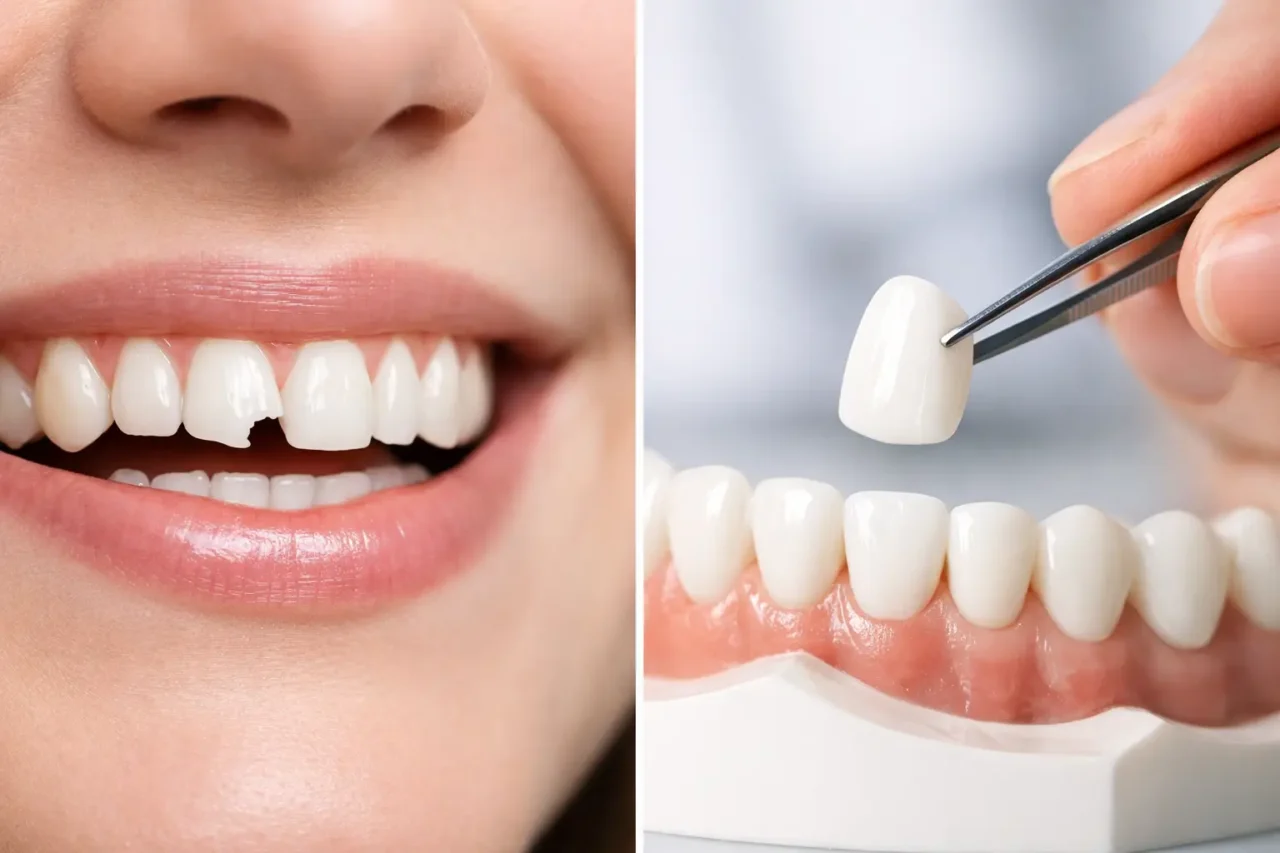
A small chip can change the way you smile more than people expect. Maybe it catches the light in photos, feels rough against your lip, or makes you cover your mouth when you laugh. If you are weighing cosmetic dentistry, one of the most common questions is simple: can veneers fix chipped teeth? In many cases, yes – but the right answer depends on the size of the chip, the condition of the tooth, your bite, and the result you want.
Veneers can be an excellent solution for chipped front teeth because they do more than patch a flaw. They can restore shape, improve symmetry, and refresh the overall appearance of your smile at the same time. That said, veneers are not the best fix for every chip, and a good dentist should tell you when a more conservative or more durable option makes better sense.
Can veneers fix chipped teeth in every case?
Not every case. Veneers work best when the chip affects the visible front surface of a tooth and the tooth is otherwise healthy enough to support a bonded porcelain shell. They are especially popular for small to moderate chips on front teeth, where appearance matters most and where a natural-looking result is a priority.
If the tooth has a minor cosmetic chip, good enamel support, and no major structural damage, a veneer can create a very polished result. It covers the front of the tooth and allows the dentist to redesign the edge, contour, and color so the repaired tooth blends beautifully with the rest of your smile.
But if the chip is large, if there is extensive decay, if the tooth has had major trauma, or if you grind your teeth heavily, veneers may not be the first recommendation. In those situations, dental bonding, a crown, or another restorative treatment may be safer and more predictable.
When veneers are a good option for chipped teeth
Veneers tend to make the most sense when the chip is part of a bigger cosmetic concern. For example, if your tooth is chipped and also uneven, worn down, stained, or slightly misshapen, a veneer can solve several issues in one treatment plan.
This is why many patients choose veneers instead of a simple spot repair. Bonding can fix a chip, but a veneer can refine the full visible surface of the tooth. If you have been thinking about improving your smile anyway, veneers may deliver a more complete and longer-lasting aesthetic result.
Veneers are often a strong choice when:
- the chip is on a front tooth
- the damage is small to moderate
- the tooth is structurally stable
- you want a highly natural cosmetic finish
- you want to improve shape, size, or shade at the same time
Porcelain veneers are also stain-resistant and custom-designed, which makes them appealing for image-conscious adults who want a polished result that still looks like real teeth, not dental work.
When a veneer may not be the best fix
A chipped tooth is not always just a cosmetic issue. Sometimes the visible chip is only part of the problem. If the tooth is cracked deeper than it appears, weakened from prior dental work, or absorbing too much pressure when you bite, covering the front with a veneer may not be enough.
A crown may be better if the tooth needs more complete protection. Dental bonding may be better if the chip is tiny and you want the most conservative treatment possible. Orthodontic treatment may even be part of the discussion if bite alignment is causing repeated chipping.
This is where a proper evaluation matters. The best treatment is not the one that sounds most cosmetic. It is the one that protects the tooth while giving you the appearance you want.
Veneers vs. bonding for chipped teeth
For many patients, this is the real decision.
Bonding uses tooth-colored composite resin to rebuild the chipped area. It is usually faster, less expensive, and more conservative because little to no enamel removal may be needed. For very small chips, bonding can be a smart choice.
Veneers, especially porcelain veneers, are usually more durable, more stain-resistant, and more refined in appearance. They are custom fabricated to match your smile and can create a smoother, brighter, more symmetrical result than bonding alone. If the chipped tooth is in a highly visible area and aesthetics matter, veneers often win on appearance.
The trade-off is that veneers are a bigger commitment. They require careful planning, precision, and in many cases some enamel preparation. Bonding is easier to touch up, but it can chip or discolor sooner over time. Veneers usually involve a higher upfront investment, but they can offer a more stable long-term cosmetic outcome.
What the process looks like
If you are considering veneers for chipped teeth, the process should start with planning, not drilling. A good cosmetic dentist will examine the tooth, evaluate your bite, review your goals, and discuss whether a veneer is actually the right fit.
From there, treatment typically includes smile assessment, tooth preparation when needed, impressions or digital scans, and placement of the final porcelain veneer. The veneer is then bonded to the tooth with strong dental cement and carefully adjusted for shape and bite.
For international patients, the planning stage is especially important. A clinic experienced in cosmetic dentistry and dental tourism can often begin with photos and an online consultation, then organize treatment efficiently once you arrive. That is one reason patients looking for high-end aesthetic work often choose experienced providers such as Smile Makeover Cartagena, where treatment planning, English communication, and travel coordination are part of the experience.
Will veneers look natural on a chipped tooth?
They should – if they are designed well.
A natural-looking veneer is about more than making a tooth white. The dentist has to match translucency, shape, edge position, and proportion so the repaired tooth does not stand out for the wrong reasons. This is especially important for one chipped front tooth. If the veneer is too opaque, too square, or too bright, it can look artificial next to the neighboring teeth.
The best cosmetic results come from individualized design. Some patients want one veneer to repair one tooth. Others get multiple veneers so the smile looks balanced across the front. Neither approach is automatically better. It depends on your natural teeth, your color match, and how much change you want.
How long do veneers last after repairing a chip?
Porcelain veneers are not temporary cosmetic patches. With proper care, they can last many years. Longevity depends on material quality, bite forces, oral hygiene, and habits like nail biting, chewing ice, or using teeth to open packages.
If you grind your teeth at night, your dentist may recommend a night guard to protect the veneers. If you have a history of chipping from trauma or clenching, that should be addressed before treatment so the same force does not damage the veneer later.
A well-made veneer can be a durable fix, but it is still a restoration. It works best when the underlying tooth is healthy and the forces on it are controlled.
Questions to ask before choosing veneers
If you are comparing options, ask practical questions. Is the tooth strong enough for a veneer? Would bonding or a crown be more appropriate? How many teeth need treatment for the most natural result? What happens if you grind your teeth? How many visits are required?
These questions matter even more if you are traveling for care. You want a clinic that gives you a clear diagnosis, an honest recommendation, and a treatment plan that respects both your smile goals and your timeline.
So, can veneers fix chipped teeth?
Yes, veneers can fix chipped teeth when the damage is cosmetic to moderate, the tooth is healthy enough, and the goal is a polished, natural-looking result. They are one of the best options for front teeth when you want more than a basic repair.
The key is choosing treatment for the tooth you actually have, not just the photo result you want. A small chip can be simple to fix, but the best outcome comes from careful diagnosis, thoughtful design, and a plan built around your smile, your bite, and your long-term confidence.
If you are considering veneers, the most helpful next step is not guessing which treatment sounds best. It is getting a professional evaluation from a cosmetic dentist who can show you what is possible and what is truly worth doing.
