


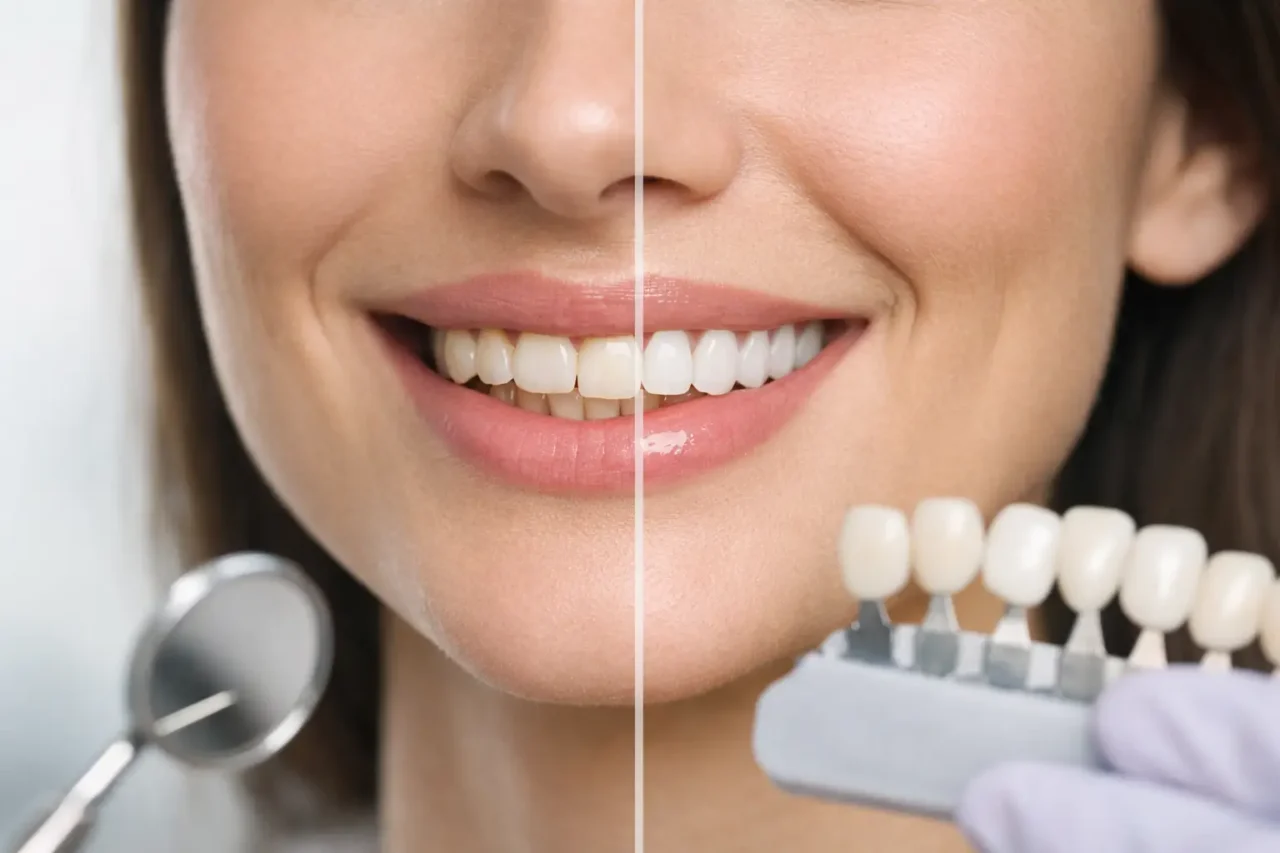
Some veneer transformations look dramatic in photos, but the real question most patients ask is simpler: will my smile still look like me, just better? That is the heart of any honest conversation about veneers before and after. The best results do not look artificial, oversized, or too white. They look balanced, healthy, and natural in your face.
If you are comparing treatment options, before-and-after images can be helpful, but they only tell part of the story. A great veneer case is not just about brighter teeth. It is about proportion, bite, gum line symmetry, facial harmony, and choosing a result that fits your age, features, and goals. For many international patients, it is also about getting that result with clear communication, efficient planning, and a price that makes sense.
What veneers before and after really shows
When people search for veneers before and after, they are usually looking for proof that treatment works. They want to see stained, chipped, worn, uneven, or misshapen teeth become smooth, bright, and symmetrical. That visual change matters, but the most meaningful improvement is often confidence.
Veneers can correct several cosmetic concerns at once. Instead of whitening one area, bonding another, and reshaping something else, veneers can create a more unified smile. They are commonly used to improve discoloration that does not respond well to whitening, small gaps, minor misalignment, uneven edges, short teeth, and teeth that have become worn over time.
That said, not every before-and-after result should look extreme. In many of the best cases, friends and coworkers notice that a patient looks refreshed without immediately knowing why. That usually means the case was planned well.
Who is a good candidate for veneers?
Veneers are ideal for many adults who want a cosmetic upgrade, but candidacy depends on more than appearance. Healthy gums, enough enamel, and a stable bite all matter. If there is active decay, gum disease, heavy grinding, or major bite problems, those issues should be addressed first.
This is one reason personalized evaluation matters. Some patients come in asking for veneers when a crown, whitening, orthodontic correction, or a combination approach would be more appropriate. Others are excellent veneer candidates but need careful smile design to avoid a result that looks too flat or too opaque.
A trustworthy treatment plan starts with what your teeth need, not with a one-size-fits-all package.
The planning stage behind great before-and-after results
The difference between average veneers and exceptional veneers is usually in the planning. Shade, shape, length, translucency, and tooth proportion all need to be tailored to the individual patient.
This is especially important for international patients who want to maximize their time efficiently. A remote consultation can often begin the process by reviewing photos, videos, and dental concerns in advance. That helps clarify whether veneers are the right option, how many teeth should be treated, and whether additional care may be needed.
At the clinical stage, smile design brings the plan to life. This may include digital imaging, detailed measurements, and a conversation about the look you want. Some patients want a brighter Hollywood-style smile. Others want something softer and more understated. Neither is wrong. The right result depends on your preferences, facial features, and the condition of your natural teeth.
Veneers before and after: the treatment process
Understanding the process helps patients judge before-and-after cases more realistically. Veneers are not simply placed over teeth in a single casual appointment. Good dentistry takes precision.
First, the teeth are evaluated and prepared conservatively when appropriate. In many cases, a small amount of enamel is reshaped to make room for the veneer so the final result does not look bulky. Impressions or digital scans are then taken to fabricate the restorations.
Temporary veneers may be placed while the final porcelain veneers are being made. This stage gives patients a preview of changes in shape and length. Once the final veneers are ready, they are checked carefully for fit, color, bite, and overall harmony before being bonded in place.
The final “after” photo is only the endpoint of a structured process. What matters is that the veneers feel comfortable, function properly, and look right in natural light, not just under clinic photography.
What kind of changes can veneers make?
The most noticeable change is usually color, but color alone is not what makes a smile attractive. Veneers can create cleaner lines, close small spaces, restore chipped edges, and make worn teeth appear younger and healthier.
For patients with asymmetry, veneers can also improve visual balance from one side of the smile to the other. If the front teeth differ in size or shape, carefully designed veneers can create a more even look without making every tooth identical. That distinction matters. Natural smiles have harmony, not a copy-and-paste effect.
There are limits, though. Veneers can visually improve mild alignment issues, but they do not move teeth the way orthodontics does. They can transform shape and color, but they are not always the best answer for severely compromised teeth. In those cases, crowns, implants, or restorative treatment may be necessary.
Why some veneer results look better than others
Patients often compare photos and wonder why one smile looks elegant and natural while another looks too bright or too square. Material quality is one factor, but design skill is just as important.
A good veneer result respects facial proportions, lip movement, and gum display. The teeth should complement the face rather than dominate it. Overly opaque veneers can look flat. Teeth that are too long or too wide can appear artificial. An ultra-white shade may look appealing in a photo but feel unnatural in everyday life.
This is where experience matters. A clinician who understands cosmetic dentistry does not just place veneers. They design outcomes. At Smile Makeover Cartagena, that means planning for a smile that photographs beautifully and still feels believable up close, in conversation, and in daily life.
What to expect after veneers
Most patients adjust quickly to veneers. Some notice slight sensitivity for a short time, especially after tooth preparation, but this usually improves. Once bonded, porcelain veneers are durable and feel smooth and natural.
The bigger adjustment is often emotional. Patients who have hidden their teeth for years may need a little time to get used to smiling freely again. That is one of the most rewarding parts of cosmetic dentistry. The physical change is visible, but the personal change is often even greater.
Maintenance is straightforward. Veneers should be brushed and flossed like natural teeth, and regular checkups still matter. Habits such as opening packages with your teeth or chewing hard ice are a bad idea. If you grind your teeth at night, a night guard may be recommended to protect your investment.
Cost, value, and why patients look abroad
For many patients in the United States, Canada, and Europe, veneer treatment is not just a cosmetic decision. It is also a financial one. Pricing can vary significantly depending on the clinic, materials, and complexity of the case.
That is why dental tourism has become a serious option for people who want high-end results without inflated costs. The key is not simply finding lower pricing. It is finding quality care, transparent planning, fluent English communication, and a process that feels organized from the first consultation through follow-up.
When those elements are in place, traveling for veneers can offer both value and peace of mind. The best experience combines strong clinical standards with a smooth patient journey, especially when treatment is being coordinated around flights, accommodations, and a limited travel window.
How to evaluate before-and-after photos wisely
Photos are useful, but they should not be the only thing guiding your decision. Look for consistency across multiple cases, not just one dramatic transformation. Pay attention to whether the smiles suit the patients’ faces. Notice the gum line, tooth shape, and whether the result looks natural from edge to edge.
It also helps to ask what was actually done. Was it a simple veneer case, or did the patient also have whitening, gum contouring, crowns, or implant treatment? Honest case presentation gives you a clearer idea of what veneers alone can achieve.
The right provider should be able to explain not just what changed, but why those changes were recommended.
Veneers can create a striking transformation, but the best before-and-after result is not the whitest smile in the room. It is the one that fits you so well that it feels like the smile you were meant to have all along.
