


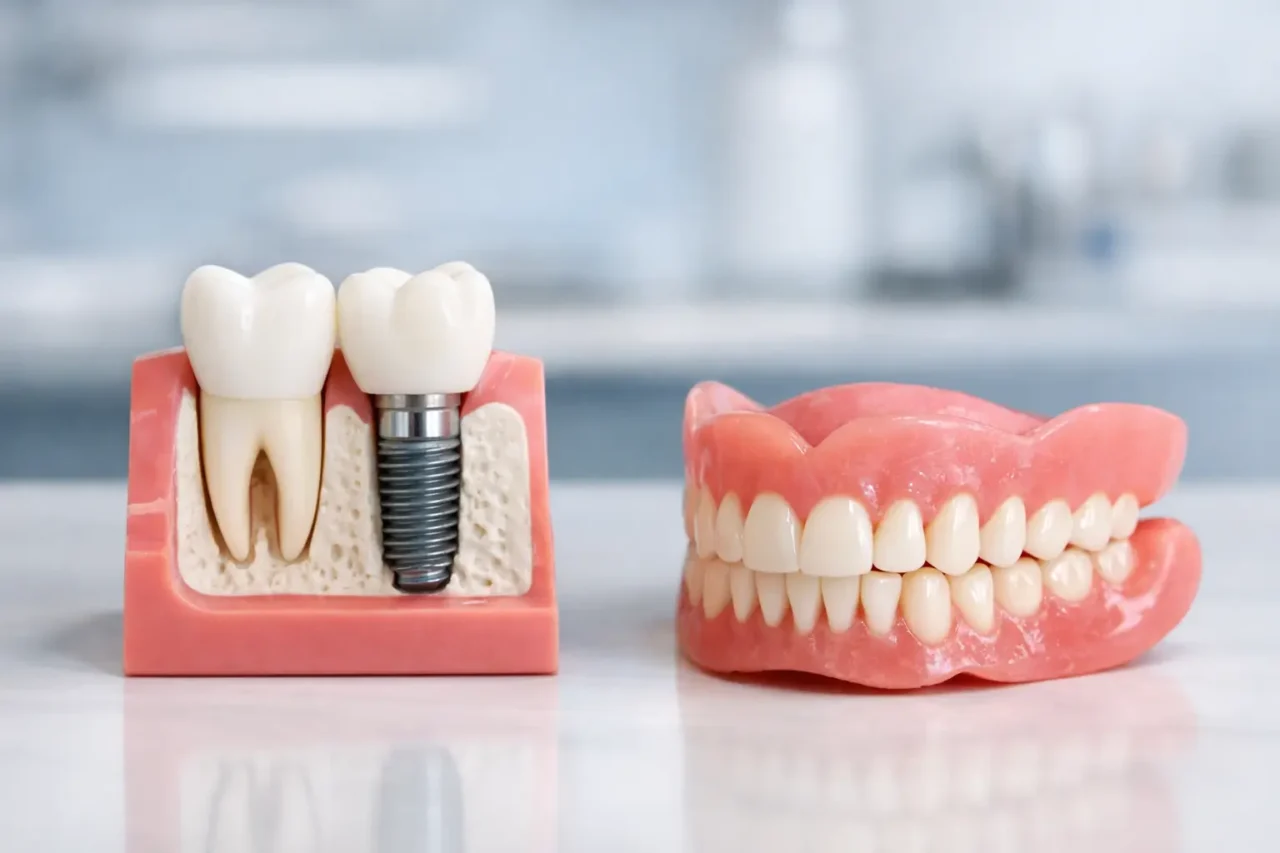
A missing tooth can change more than a photo. It can affect how confidently you speak, which foods you avoid, and how your bite feels at the end of the day. When considering dental implants vs dentures, the best choice is rarely about one treatment being universally better. It is about your bone health, number of missing teeth, timeline, budget, and the kind of daily experience you want from your new smile.
For international patients, the decision also includes practical questions: How many trips will treatment require? Can care be planned around a stay in Cartagena? What follow-up will be needed after returning home? A well-designed treatment plan answers those questions before you book travel, not after.
Dental Implants vs Dentures: The Core Difference
A dental implant replaces a missing tooth root with a small titanium post placed in the jawbone. Once it has integrated with the bone, it can support a crown for one tooth, a bridge for several teeth, or a full-arch restoration. Because the restoration is anchored in the jaw, it is designed to feel stable and function much like natural teeth.
Dentures are removable prosthetic teeth. They may replace a few teeth or a full arch, resting on the gums and surrounding oral structures. Modern dentures can look natural and improve facial support, particularly when they are carefully designed to match your features and bite.
The distinction matters because implants address the missing root as well as the visible tooth, while conventional dentures primarily replace the visible teeth. That affects stability, bone preservation, maintenance, and cost.
When Dental Implants May Be the Better Fit
Implants are often appealing to patients who want the closest experience to natural teeth. A single implant crown is fixed in place, so you do not remove it at night or rely on adhesives. For people replacing multiple teeth, implant-supported bridges and full-arch options can provide substantially more security than a conventional removable denture.
Function is a major advantage. Because implants are anchored to the jawbone, many patients find chewing easier and speech more predictable. This can be especially meaningful if loose dentures have made it uncomfortable to enjoy steak, crisp vegetables, or meals with friends.
Implants may also help preserve jawbone after tooth loss. The jawbone is stimulated through chewing forces around an implant, which can reduce the bone loss that naturally follows a missing tooth. This does not mean every patient is immediately ready for implants. If bone has already receded, bone grafting or a different implant approach may be recommended.
The trade-off is that implants require surgery, healing time, and thoughtful planning. Some cases can be completed with a temporary restoration soon after implant placement, while others need several months of healing before the final crown or bridge is placed. Smoking, uncontrolled diabetes, active gum disease, certain medications, and grinding habits can all influence candidacy and long-term success.
When Dentures Make More Sense
Dentures remain a valuable option, especially for patients who need to replace many teeth quickly or want to avoid surgery. A removable partial denture can fill spaces when healthy teeth remain, while a complete denture can restore an entire upper or lower arch.
They are generally more affordable upfront than a comparable implant treatment. That can make dentures a sensible starting point for someone restoring function after extensive tooth loss, managing a limited budget, or planning to transition to implants later.
Dentures can also be a practical choice when medical conditions make surgery unsuitable. The right denture should not look generic or bulky. It should be planned around your facial proportions, smile line, gum appearance, and bite. Good prosthetic design can create a polished, natural-looking result.
Still, removable dentures involve adjustment. They can shift during eating or speaking, require daily removal and cleaning, and may need periodic relining as the gums and jawbone change. Lower dentures tend to be more challenging because the lower jaw offers less surface area for retention.
The Middle Ground: Implant-Supported Dentures
You do not always have to choose between a fully removable denture and a full fixed bridge. Implant-supported dentures offer a middle path. A denture can be secured to a small number of implants with attachments, greatly improving stability while remaining removable for cleaning.
This approach is often attractive for patients with a full arch of missing teeth who want more confidence than conventional dentures provide but do not need or prefer a permanently fixed full-arch restoration. It can improve comfort, chewing ability, and speech while keeping treatment more accessible than some fixed options.
The ideal number and position of implants depends on the jawbone, bite forces, and the type of restoration planned. A clinical exam and 3D imaging are essential. A treatment plan should never promise a specific implant solution without evaluating the available bone and oral health.
Comparing Cost, Longevity, and Daily Care
Upfront cost is often the first comparison patients make, but it should not be the only one. Conventional dentures usually cost less initially. Implants involve surgical placement, components, restorations, imaging, and sometimes bone grafting. The total can vary significantly depending on whether you are replacing one tooth, several teeth, or a complete arch.
Longevity changes the equation. An implant itself can last for many years with proper care, though the crown, bridge, or denture attached to it may eventually need maintenance or replacement. Dentures also require ongoing attention. Over time, changes in the jaw can affect fit, creating a need for relines, repairs, or a new denture.
Daily maintenance is different as well. Implant crowns and bridges are brushed and cleaned much like natural teeth, with extra attention around the gumline and beneath bridgework. Removable dentures need to be taken out, brushed with appropriate products, soaked as directed, and kept out of hot water. Both options depend on regular professional exams and hygiene visits.
For many U.S., Canadian, and European patients, receiving care in Colombia makes a comprehensive plan more financially attainable. However, value is not simply about finding the lowest price. It comes from experienced clinical planning, quality materials, clear communication, and a realistic schedule for treatment and follow-up.
Planning Treatment Around Dental Travel
Dental tourism works best when the clinical timeline drives the travel plan. Before arriving, patients should share recent X-rays, dental records when available, photos, and their health history through an online consultation. This allows the dentist to discuss likely options, provide a customized quote, and estimate how many days or visits may be required.
For dentures, the timeline may be shorter, although extractions and tissue healing can change the schedule. For implants, placement and the final restoration may be separated by a healing period. Some patients plan two trips: one for surgery and a temporary restoration, then another for the final teeth once healing is complete.
At Smile Makeover Cartagena, fluent English communication and personalized treatment planning help patients understand each stage before they travel. The goal is not to rush a complex case into a vacation window. It is to create a predictable treatment journey that protects your health and supports a beautiful result.
Questions to Ask Before Choosing
Ask your dentist how each option will affect chewing, speech, facial support, and future maintenance. Ask whether you have enough healthy bone for implants, whether any gum treatment is needed first, and what the full cost includes. If travel is part of your plan, clarify the number of visits, expected appointment length, healing requirements, and what follow-up can be handled at home.
It is also worth asking to see the proposed smile design or prosthetic plan. A successful result should restore function without looking overbuilt, too white, or out of proportion with your face. The best restorations look natural because they are designed for the individual wearing them.
Choosing between implants and dentures is a personal health decision, not a one-size-fits-all purchase. Start with a thorough evaluation, be honest about your priorities, and choose the option that gives you the comfort, confidence, and level of care you can maintain for years to come.
