


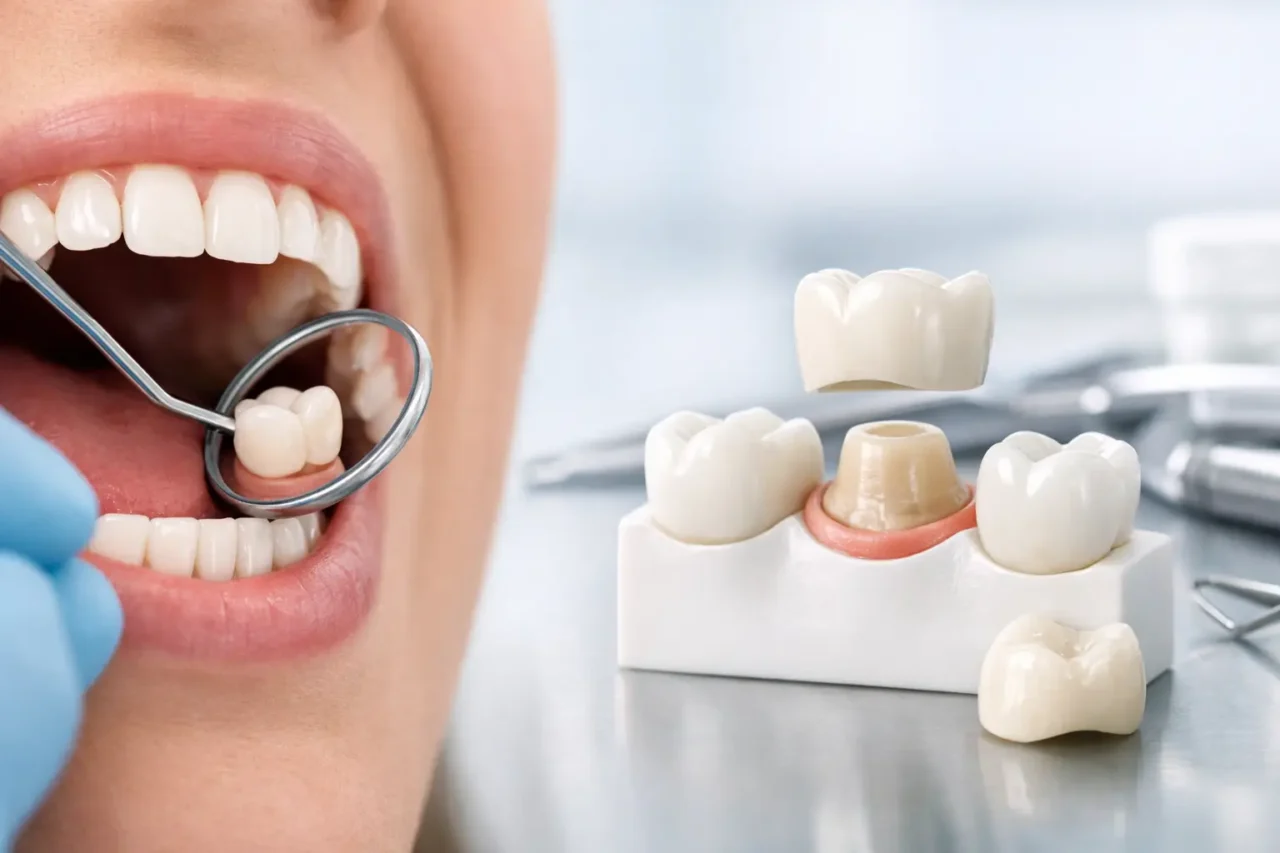
A tooth can look mostly intact and still be too weak to trust. A large old filling may leave thin walls of enamel vulnerable to cracking, or a root canal may save the tooth while making it more fragile over time. Understanding how dental crowns work helps you see why a crown is often recommended not simply to improve appearance, but to protect a tooth you want to keep.
For international patients, a crown treatment plan should also account for timing, travel, and follow-up. At Smile Makeover Cartagena, the goal is to pair natural-looking restorative care with clear English communication and a treatment schedule that fits your stay in Cartagena.
How dental crowns work
A dental crown is a custom-made cap that covers the visible part of a tooth above the gumline. It is bonded over a carefully prepared tooth, restoring its shape, strength, bite, and appearance. Think of it as a protective outer shell designed specifically for your tooth, not a removable cover.
The crown does not repair a tooth by itself. First, your dentist removes decay, replaces unsupported or damaged material, and checks whether the tooth and its root are healthy enough to support the restoration. The remaining tooth structure becomes the foundation. The crown then distributes chewing pressure over that foundation rather than allowing force to concentrate on a weakened area.
This is why crowns are commonly used after root canal therapy, for teeth with extensive fillings or fractures, to support a dental bridge, or to complete a dental implant. They can also improve the appearance of a severely discolored, worn, misshapen, or uneven tooth when a more conservative option is not suitable.
The crown process, step by step
Every smile is different, but most crown cases follow a predictable sequence. The process begins with an examination, digital X-rays when needed, and a discussion of your goals. Your dentist evaluates the tooth, gum health, bite, neighboring teeth, and the type of material that will give the most reliable result.
Preparing the tooth
To make room for the crown, the dentist reshapes a small amount of the outer tooth structure. How much is removed depends on the material selected and the condition of the tooth. A tooth with deep decay or a large missing section may first need a filling buildup to create a stable base.
If the nerve inside the tooth is infected or severely inflamed, root canal treatment may be necessary before the final crown. That is not always the case. Many crowns are placed on vital teeth with healthy nerves.
Local anesthetic keeps the preparation comfortable. You may feel pressure and vibration, but the procedure should not be painful. If dental anxiety has kept you from seeking treatment, discuss that early in your consultation so your care can be planned around your comfort.
Capturing the shape of your smile
After preparation, the dentist takes a precise impression or digital scan of the tooth and surrounding bite. This record allows the dental laboratory to create a crown that fits the margins of the tooth, contacts neighboring teeth correctly, and supports a natural bite.
Shade selection matters just as much for front teeth. A well-designed crown should blend with the color, translucency, shape, and surface texture of your natural smile. The goal is not a flat, overly bright tooth that draws attention for the wrong reason. It is a restoration that looks at home in your face.
A temporary crown may be placed while the final restoration is being made. Treat it gently. Avoid sticky foods, hard candy, and chewing ice, since temporary cement is not intended to provide the same long-term hold as the final bond.
Trying in and bonding the final crown
At the final visit, the temporary is removed and the dentist checks the permanent crown for fit, color, contour, and bite. Small adjustments may be made before it is permanently cemented or bonded.
A crown should feel comfortable when you close your teeth together and when you floss between it and the neighboring teeth. Your tongue may notice the new shape at first, especially on a front tooth, but that awareness usually fades quickly. If your bite feels high or you continue to feel pain when chewing after the initial adjustment period, contact your dental team. A small bite correction can protect the crown and the tooth underneath it.
Which crown material is right for you?
There is no single best material for every tooth. The right choice depends on location, bite force, esthetic goals, available space, grinding habits, and the condition of the tooth.
All-ceramic and porcelain crowns are popular for visible teeth because they can closely mimic natural enamel. Modern ceramics can combine lifelike translucency with excellent strength, though the exact type of ceramic should be selected carefully for your bite.
Zirconia crowns are known for their durability and are often considered for back teeth or patients who place heavy force on their teeth. Newer multilayer zirconia options can also provide improved esthetics. Porcelain-fused-to-metal crowns remain an option in certain restorative situations, although an all-ceramic alternative may offer a more natural appearance near the gumline for many patients.
Your dentist should explain the trade-off clearly. The most translucent material may not be the ideal choice for a patient with severe grinding, while the strongest material may require a different approach to achieve the most natural look on a front tooth.
How long do dental crowns last?
A well-made, well-maintained crown can last many years, often a decade or longer. However, a crown is not maintenance-free, and its lifespan cannot be guaranteed. It depends on the health of the tooth beneath it, the quality of the fit, your bite, oral hygiene, diet, and habits such as clenching or grinding.
The crown itself cannot develop a cavity, but the natural tooth at its edge can. Plaque can accumulate around the crown margin just as it can around any tooth. Brush twice daily with fluoride toothpaste, clean between teeth every day, and keep up with professional exams and cleanings.
If you grind your teeth, a custom night guard may be one of the best ways to protect both your crown and your natural teeth. Avoid using teeth to open packages, crack nuts, or bite hard objects. Those habits can chip ceramics, loosen cement, or fracture the tooth underneath a crown.
What to expect after crown placement
Mild gum tenderness or temperature sensitivity can occur after tooth preparation and crown placement, particularly if the tooth was extensively restored. This usually improves within days to a few weeks. Over-the-counter pain medication may be appropriate for many patients, but follow your dentist’s individualized instructions.
Call your dentist if pain becomes severe, lasts longer than expected, wakes you at night, or occurs when biting. Also report a loose crown, a cracked temporary, swelling, or a bite that does not feel right. These issues are often manageable, but they should not be ignored.
For patients traveling from the United States, Canada, or Europe, a thoughtful schedule matters. Depending on the number of crowns, laboratory workflow, and whether you need additional care such as root canal treatment, gum treatment, implants, or a bridge, your dentist may recommend a specific length of stay or a phased plan. An online consultation and clear records help set realistic expectations before you book your trip.
Crowns on implants and bridges
Crowns do more than restore natural teeth. A single dental implant is typically completed with an implant crown, which replaces the visible portion of a missing tooth after the implant has integrated with the jawbone. Unlike a conventional crown, an implant crown is attached to an implant rather than a natural tooth.
Crowns can also support a bridge. In a traditional bridge, crowns are placed on the teeth beside a gap and connected to a replacement tooth in the middle. This can be an effective option in selected cases, although it requires preparing the supporting teeth. An implant may preserve adjacent teeth, but it involves surgery and a longer healing timeline. The right solution depends on your health, bone support, budget, timeline, and long-term priorities.
A crown should make your tooth feel dependable again, whether you are restoring one damaged molar or completing a broader smile transformation. The best next step is a personalized evaluation that looks beyond the tooth alone and plans for your bite, your appearance, and the confidence to enjoy your new smile long after your visit to Cartagena.
