


A tooth that has been missing for years, crowns that no longer match, painful bite changes, failing bridgework, or worn teeth can turn a simple cosmetic goal into a much larger treatment decision. Expert solutions for complex dental cases begin by looking beyond the most visible concern. The right plan must restore comfort, function, facial balance, and a natural-looking smile while respecting your oral health, timeline, and travel plans.
For international patients, this level of planning matters even more. When you are traveling from the United States, Canada, or Europe, you need clear communication, realistic expectations, and a treatment sequence that makes sense before you book a flight.
What Makes a Dental Case Complex?
A complex case is not defined by one treatment alone. A patient may need veneers, crowns, or implants, but the complexity often comes from how several issues affect one another. Missing teeth can cause nearby teeth to drift. Years of grinding can wear down enamel and alter the bite. Older dental work may have gaps, decay underneath, or a shade that no longer fits the rest of the smile.
Some patients have healthy-looking front teeth but cannot chew comfortably because their bite has changed. Others have a single missing tooth alongside gum recession, bone loss, or a failed implant that requires more careful planning. Full-mouth rehabilitation may be appropriate when multiple teeth are damaged, worn, missing, or poorly restored, but it is not automatically the best answer for every patient.
The goal is not to place the most dentistry possible. It is to identify what is causing the problem, preserve healthy tooth structure whenever possible, and build a solution that will be stable over time.
Expert Solutions for Complex Dental Cases Start With Diagnosis
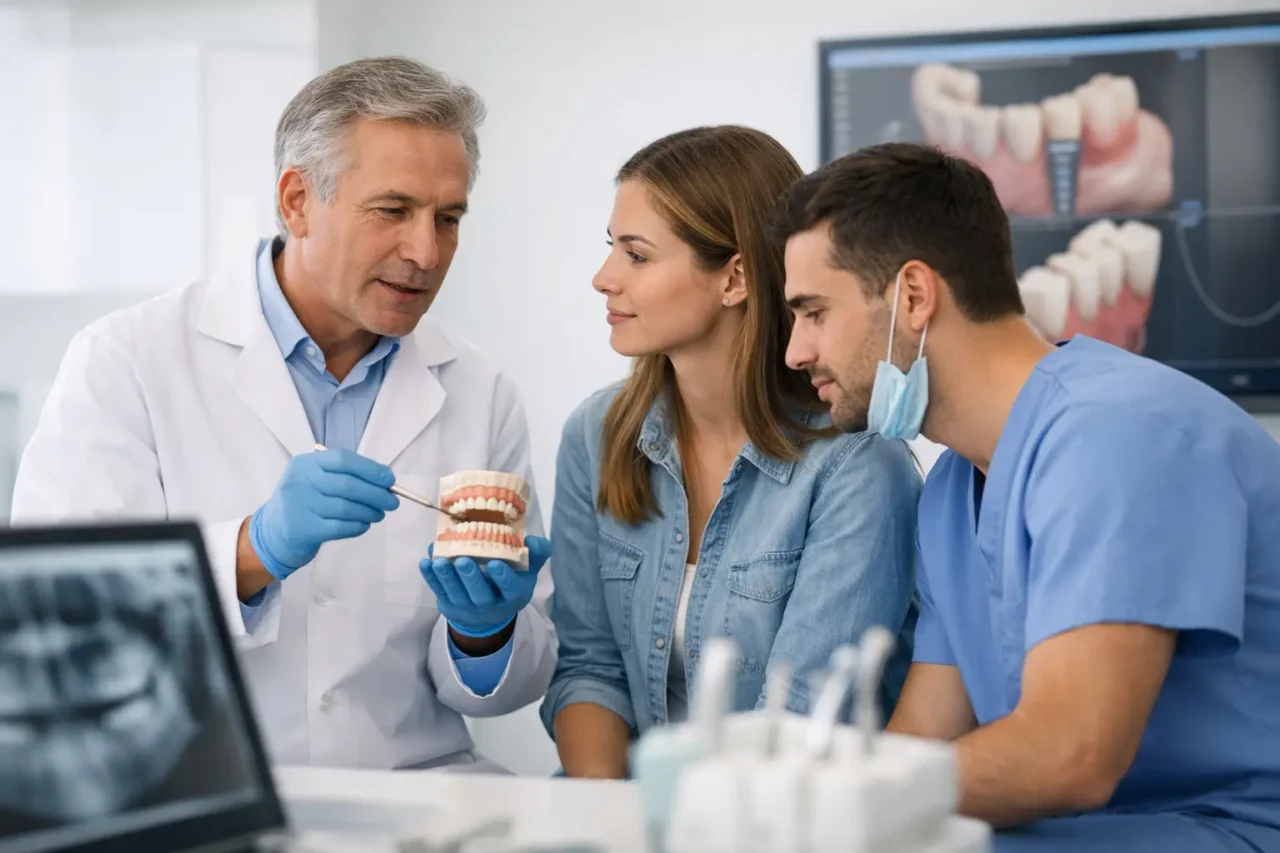
High-quality dentistry is built on diagnosis, not guesswork. Before recommending treatment, an experienced dentist evaluates the health of the teeth and gums, the condition of existing restorations, jaw function, bite alignment, and the amount of bone available for implants. Digital imaging, photographs, scans, and bite records can reveal issues that are not obvious in a mirror.
This is especially valuable when a patient wants a smile makeover but also has restorative needs. Porcelain veneers can create a beautiful transformation when teeth are healthy and the bite is stable. If teeth are severely worn, cracked, decayed, or weakened by large fillings, crowns may offer better protection. When teeth are missing, dental implants can replace the root and support a crown, bridge, or full-arch restoration.
A thoughtful diagnosis also prevents rushed cosmetic decisions. Covering damaged teeth without addressing infection, gum disease, bite pressure, or structural weakness can lead to avoidable complications later.
The bite is part of the design
A beautiful smile has to work comfortably. Bite forces affect how veneers, crowns, bridges, and implants perform. Patients who clench or grind may need a protective nightguard after treatment. Those with uneven bite pressure may need restorations designed and adjusted to distribute force properly.
This is where a personalized plan makes a meaningful difference. Two people can request the same treatment and need very different approaches because their teeth, gums, bone levels, and bite patterns are different.
Common Treatment Paths for Challenging Smiles
Complex care is usually a sequence rather than a single appointment. The exact order depends on your diagnosis, healing needs, and the final result you want to achieve.
Replacing missing teeth with implants
Dental implants are often the preferred option for replacing one or more missing teeth because they are designed to function like tooth roots. After the implant integrates with the bone, it can support a custom crown, bridge, or denture. In more involved cases, a patient may need bone grafting, removal of a failing tooth, or a healing period before the final restoration is placed.
Immediate implant placement may be possible in select situations, but it depends on bone quality, infection status, gum condition, and the ability to achieve initial stability. A responsible provider will not promise the same timeline for every patient.
Restoring worn, broken, or heavily treated teeth
Teeth with extensive decay, fractures, old fillings, root canal treatment, or severe wear may require crowns to restore strength and shape. When several teeth are affected, treatment can be planned in stages to rebuild a comfortable bite before finalizing the cosmetic details.
Crowns and bridges are not simply selected by color. Material choice matters. Porcelain, ceramic, zirconia, and other restorative materials have different strengths and aesthetic characteristics. Front teeth often call for exceptional translucency and natural shade variation, while back teeth require materials that can withstand stronger chewing forces.
Combining cosmetic and restorative dentistry
Many smile makeovers combine restorative care with cosmetic refinement. For example, implants may replace missing teeth, crowns may protect weakened teeth, and veneers may improve the shape, proportion, and color of healthy visible teeth. Whitening may be completed before final crowns or veneers are matched to the desired shade.
The trade-off is timing. A full transformation may require more than one visit, particularly when implants or gum treatment are involved. A plan that is slightly slower but biologically sound is usually better than trying to compress every step into a short vacation.
Why Treatment Planning Matters for Dental Travelers
Traveling for dental care can offer significant value, but it should never mean accepting uncertainty. International patients need a clinic that can organize treatment around clinical priorities and travel realities.
At Smile Makeover Cartagena, the process begins with an online consultation and a review of your goals, dental history, available X-rays, and photographs. This early conversation helps determine whether your desired treatment can reasonably fit your travel window or whether staged care is safer. It also gives you a customized quote and an opportunity to ask questions in fluent English before making arrangements.
Once you arrive, an in-person examination confirms the final plan. This step is essential because digital records are helpful, but they cannot replace a clinical evaluation. If new findings change the recommended treatment, you deserve a straightforward explanation of what has changed, why it matters, and what options are available.
A clear timeline reduces unnecessary stress
Some treatments, such as professional whitening, single crowns, veneers, or certain urgent repairs, may be completed efficiently when the patient is a good candidate. Implant treatment often requires more planning because healing and integration are part of the process. In these situations, a staged trip can be the most predictable route to a lasting result.
Build time into your visit for consultations, treatment appointments, adjustments, and follow-up checks. Avoid scheduling major dental procedures immediately before a long flight or an important event. You should also understand what aftercare looks like once you return home, including how to contact the clinic if questions arise.
Questions Worth Asking Before You Commit
The best dental decisions are informed decisions. Before accepting a treatment plan for a complex case, ask how the provider determined which teeth can be preserved, whether your gums and bone are healthy enough for the proposed work, and how your bite will be evaluated.
You should also ask what materials will be used, how many appointments are expected, whether temporary restorations are needed, and what happens if your case requires a different approach after the in-person exam. For implant cases, ask whether grafting or additional healing time may be necessary. For cosmetic cases, discuss your preferred tooth shape, shade, and the level of natural detail you want in the final result.
Clear answers build confidence. Pressure to make a fast decision does not.
Choosing Results That Look Like You
The strongest smile transformations do not look copied from someone else. They reflect your facial features, lip line, skin tone, personality, and goals. Some patients want a bright, highly polished Hollywood-style result. Others prefer a softer shade, subtle texture, and small natural variations that keep the smile believable.
Your dentist should discuss these preferences before final restorations are made. Photographs, digital previews, and temporary designs can help you visualize proportion and shape. They also create an opportunity to adjust the plan before the final porcelain or ceramic work is completed.
Complex dental care asks more of the dentist and the patient, but it can also create life-changing improvements in confidence, comfort, and daily function. Start with a detailed consultation, share your priorities honestly, and give your smile the time and planning it deserves.
