


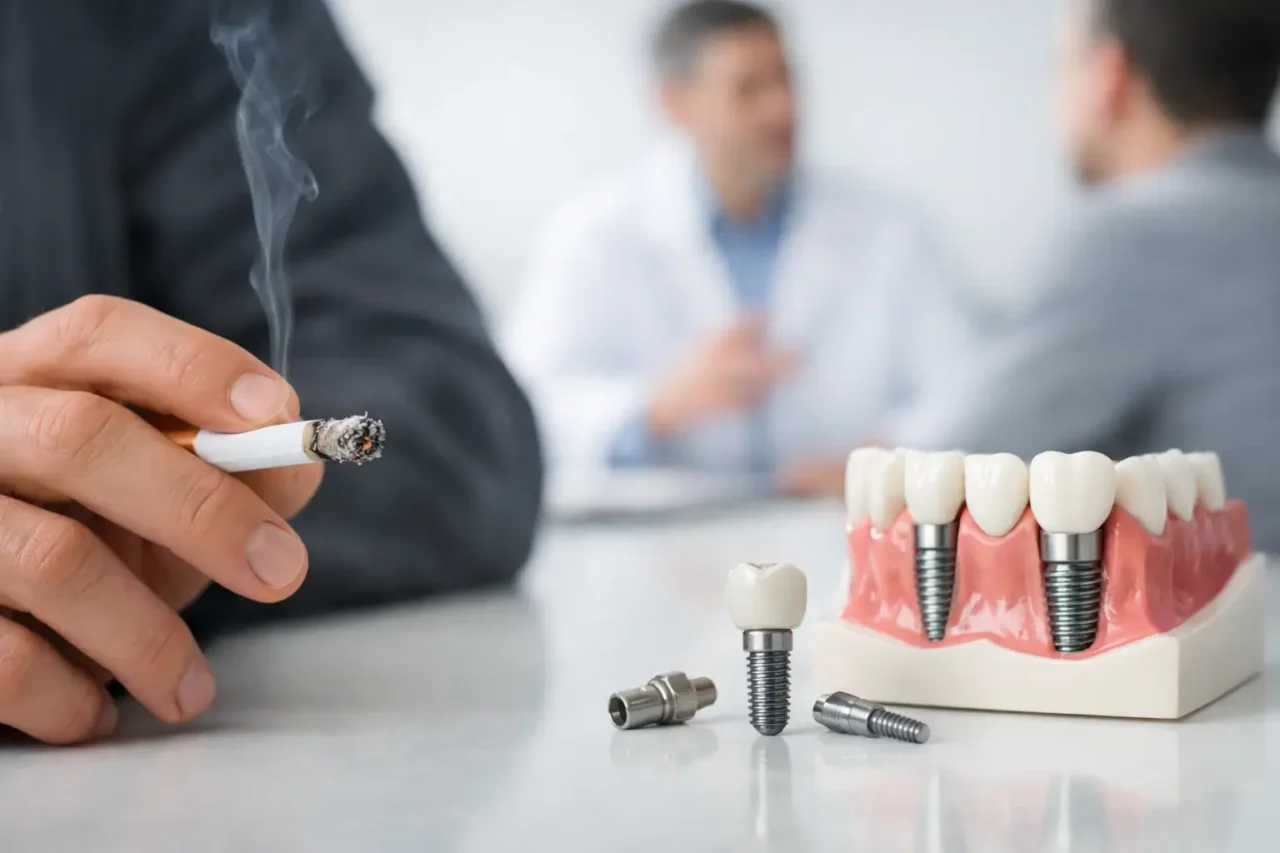
A missing tooth can affect far more than a photo. It can change how you chew, speak, and feel about smiling. So, can smokers get implants? Yes, many smokers are candidates for dental implants, but smoking adds meaningful risk that should be addressed before treatment begins. The goal is not to judge your habits. It is to create a treatment plan that gives your implant the strongest possible chance of healing well and lasting.
Dental implants are designed to replace a missing tooth root and support a crown, bridge, or full-arch restoration. For the implant to succeed, the surrounding bone and gum tissue must heal tightly around it. Smoking can interfere with that process, which is why an honest conversation about nicotine use is one of the most valuable parts of your consultation.
Can Smokers Get Implants Safely?
Smoking does not automatically disqualify you from dental implants. Your dentist will look at the complete clinical picture: the number of cigarettes you smoke, how long you have smoked, the condition of your gums, available jawbone, medical history, oral hygiene, and the type of restoration you need.
A person who smokes occasionally and has healthy gums may have a very different risk profile from someone who smokes daily and has untreated periodontal disease. Patients seeking one implant also have different considerations than those planning an implant-supported bridge or full-mouth rehabilitation.
What matters is informed consent and practical preparation. Your dental team should explain where your risks are higher, what can be improved before surgery, and whether a staged approach will protect your long-term result. An implant is an investment in function and confidence. It deserves a plan built around predictability, not pressure.
Why Smoking Raises Implant Failure Risk
Implant treatment relies on osseointegration, the process in which jawbone grows and attaches to the implant surface. Smoking can reduce blood flow in the gums and bone, limiting the oxygen and nutrients that healing tissue needs. Nicotine also constricts blood vessels, while smoke exposure irritates oral tissues and can make infection harder to control.
The effects can show up early or years later. During early healing, smokers may be more likely to experience delayed healing, infection, swelling, or a failure of the implant to integrate with bone. Over time, smoking is associated with a higher risk of peri-implant disease, an inflammatory condition that can cause bone loss around an implant.
This does not mean every smoker will lose an implant. Many do well, especially when they reduce or stop nicotine use and maintain excellent hygiene. It does mean that the margin for error is smaller. Skipping cleanings, continuing heavy smoking after surgery, or ignoring bleeding gums can turn a manageable risk into a serious problem.
Cigarettes are not the only concern
Patients sometimes ask whether vaping, cigars, chewing tobacco, nicotine pouches, or nicotine replacement products are different. They are different exposures, but they are not automatically risk-free around implant surgery.
Nicotine itself can affect circulation and healing. Vaping may expose tissue to heat and chemical irritants, while smoking tobacco adds combustion byproducts that are harmful to oral health. Your dentist needs to know about all nicotine products, not only cigarettes, so recommendations can be tailored to your situation. Do not stop a prescribed smoking-cessation medication without speaking to the medical professional who prescribed it.
What Your Dentist Will Evaluate Before Treatment
A high-quality implant consultation should go beyond looking at the missing tooth. Digital imaging and a clinical exam help determine whether the bone is dense and wide enough to support an implant in the ideal position. Your dentist will also check for active gum disease, decay on neighboring teeth, bite forces, grinding, and signs of infection.
If you have been missing a tooth for years, some bone loss may already be present. Smoking can compound that challenge, but it does not necessarily rule out treatment. Bone grafting, sinus lifts in the upper back jaw, or a different implant plan may be appropriate depending on your anatomy.
For international patients, this assessment should start before travel whenever possible. Clear photos, X-rays, and medical history can support an initial online consultation. A final in-person examination and 3D imaging are still necessary before surgery, because safe implant planning depends on the details of your bone, bite, and soft tissue.
How to Improve Your Chances of a Successful Implant
The strongest recommendation is to stop smoking and avoid nicotine before and after implant placement. Your dentist can give you a specific timeline based on your health and procedure, but healing is not limited to the day of surgery. The weeks before treatment and the months after placement both matter.
If quitting completely feels out of reach, be candid. A realistic reduction plan is better than promising to stop and then returning to smoking immediately after surgery. Your dental team can explain the added risk and help coordinate the timing of treatment around your goals. Some patients choose to postpone elective implant surgery while they work on cessation support. That can be a smart decision, especially if gum disease or heavy nicotine use is present.
Your daily habits are equally important. Brush carefully with the tools recommended by your dentist, clean between teeth and around implants, attend professional maintenance visits, and report bleeding, tenderness, bad taste, or looseness promptly. Implant problems are often easier to treat when they are found early.
For the first days after surgery, follow post-operative instructions closely. Avoid smoking, forceful spitting, and any activity that may disturb the surgical site. Eat the recommended soft foods, take prescribed medications exactly as directed, and keep your follow-up appointments. If you are traveling for care, build enough time into your itinerary for post-operative checks rather than scheduling a flight immediately after treatment.
Timing Matters for Dental Travelers
One of the advantages of a well-planned dental tourism experience is that your treatment schedule can be organized around clinical healing rather than rushed into a short vacation. A single implant may be placed during one visit, then allowed to integrate for several months before the final crown is made. In some cases, an immediate temporary tooth may be possible, but it is not the right choice for every smoker or every implant site.
Complex cases can require more than one phase. Extractions, gum treatment, bone grafting, implant placement, and final restorations may each have their own healing period. While that takes patience, it protects the quality of the result. A natural-looking final crown is only as dependable as the foundation beneath it.
At Smile Makeover Cartagena, planning for international patients begins with clear communication in English and a personalized review of clinical needs, travel timing, and treatment priorities. The right itinerary is one that allows your dentist to protect your health while making the experience organized and comfortable.
Questions to Ask at Your Implant Consultation
Before committing to treatment, ask how your smoking or nicotine use changes your individual risk, whether you have signs of gum disease or bone loss, and what healing timeline is recommended. You should also ask whether you need a graft, when you can travel safely after surgery, and what maintenance will be needed once you return home.
A trustworthy provider will not promise that implants are risk-free. They will explain the trade-offs in plain language and give you options. For some patients, the right next step is an implant. For others, it may be periodontal treatment, smoking reduction, a temporary restoration, or more time to heal before proceeding.
Choosing implants as a smoker is not an all-or-nothing decision. It is an opportunity to make a long-term choice for your smile with a clear view of the risks, the preparation involved, and the habits that will protect your result. When you are ready, a personalized consultation can turn that decision into a treatment plan built for lasting confidence.
