


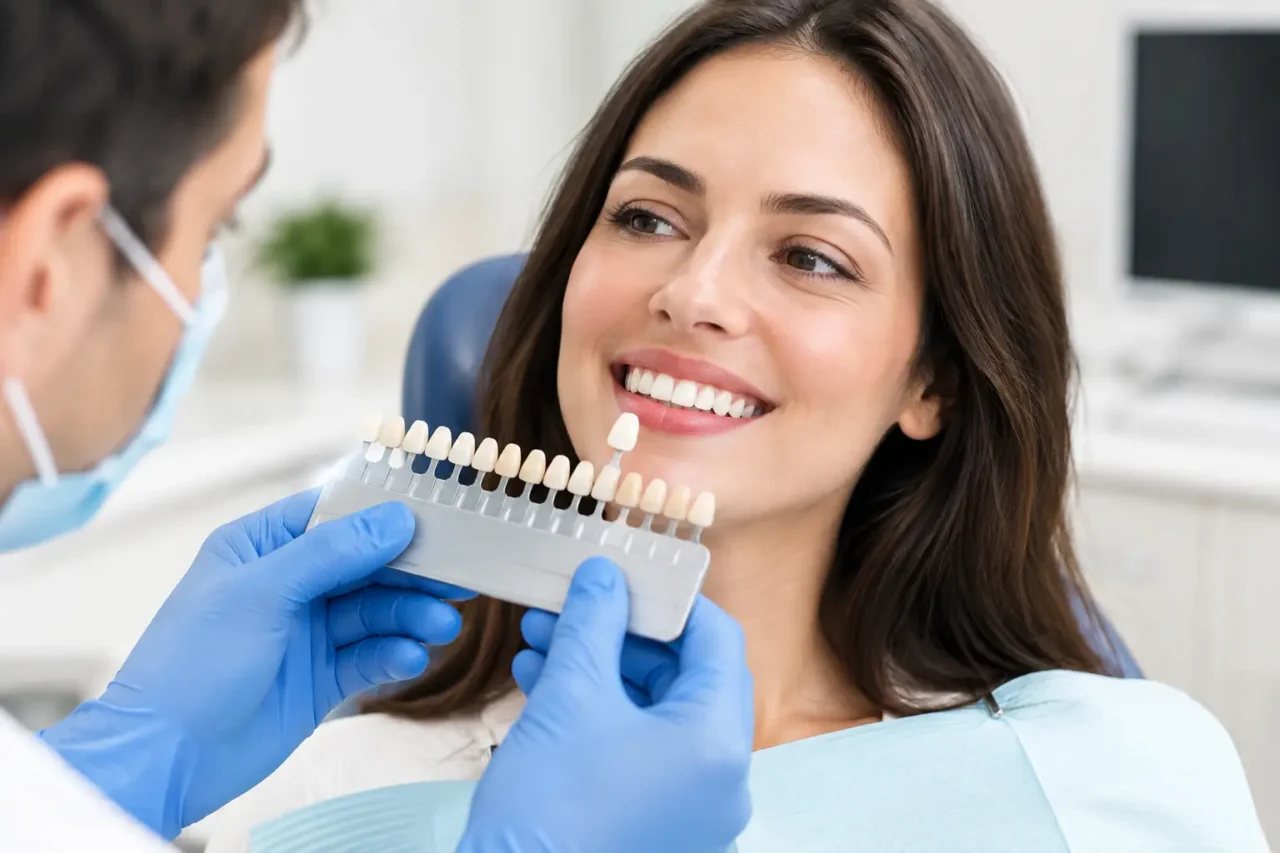
A veneer can be beautifully made and still look out of place if the color is wrong. Veneer shade selection is not simply a choice between “white” and “whiter.” It is a personalized aesthetic decision that considers your facial features, skin tone, natural teeth, lip color, age, and the level of brightness that feels like you. The goal is not a smile that looks manufactured. It is a smile that looks healthy, refined, and confidently yours.
For patients traveling to Cartagena for a smile makeover, this conversation should begin well before treatment. Clear photos, an online consultation, and thoughtful planning allow your dentist to understand what you love about your smile and what you would like to change before you arrive.
Why Veneer Shade Selection Matters So Much
Porcelain veneers reflect light differently than natural enamel. High-quality porcelain can recreate the translucency and depth found in healthy teeth, but the shade choice still sets the overall impression of the smile. A shade that is too bright can draw attention to individual veneers, especially beside untreated lower teeth, crowns, or older dental work. A shade that is too dark may not deliver the fresh, polished result you expected.
The best shade is usually the one that fits naturally with your face while meeting your cosmetic goals. Some patients want a subtle improvement that looks like they were born with exceptionally healthy teeth. Others prefer a noticeably brighter, camera-ready smile. Both preferences are valid. What matters is choosing a shade with realistic expectations and a plan for how it will relate to the rest of your mouth.
A personalized approach also helps avoid a common disappointment: selecting an extremely white shade from a photo, then realizing it looks different in daylight, office lighting, and close-up conversations.
Understanding Veneer Color: Brightness, Warmth, and Depth
Dentists evaluate tooth color through more than one dimension. The most noticeable is value, or brightness. High-value shades appear lighter and more reflective. This is often what patients mean when they request very white veneers.
Hue refers to the basic color family, such as a warmer yellow-red tone or a cooler gray tone. Chroma is the intensity or saturation of that color. Natural teeth are rarely one flat color. They often have slightly warmer color near the gumline, more translucency toward the edges, and small variations that make enamel appear alive rather than opaque.
This is why choosing a shade from an online chart alone is not enough. A skilled cosmetic dentist considers whether a bright shade needs subtle translucency, surface texture, or characterization to remain believable. For example, a patient may choose a light shade but still benefit from gentle warmth near the gumline and transparent incisal edges. That level of detail can make bright veneers look elegant rather than artificial.
Your Face Is Part of the Shade Decision
Skin tone, eye color, lip tone, facial proportions, and even hair color influence how white teeth appear. The same veneer shade can look soft and natural on one person yet strikingly bright on another. There is no universal “best white.”
Patients with warm skin undertones may prefer a shade with a touch of warmth so the smile feels harmonious. Patients with cooler undertones may be drawn to a cleaner, brighter appearance. Still, these are starting points, not rules. Personal preference matters because you will see this smile every day.
Age can also guide the discussion, although it should never limit your options. Natural enamel often becomes slightly warmer and less translucent over time. A mature patient may prefer a refined shade that brightens the face without looking disconnected from their appearance. A younger patient may want more translucency and a lighter overall value. The right answer depends on the individual, not a formula.
Match Veneers to Teeth You Are Keeping
If veneers will cover only the upper front teeth, the color must relate to visible lower teeth, canines, and any natural teeth that show when you smile or speak. This is one of the most practical parts of veneer shade selection. A very bright upper smile can make untreated lower teeth appear darker by comparison.
Whitening natural teeth before finalizing veneer color is often the right sequence. Whitening can improve the shade of the teeth that will remain visible, allowing the veneers to be designed around a lighter, more consistent baseline. Veneers themselves do not respond to whitening gel after they are placed, so choosing their final color should happen after whitening is complete and the tooth color has stabilized.
Crowns, bridges, and fillings require the same attention. Existing restorations may need to be replaced or incorporated into the plan if they would clash with the new veneers. During your consultation, share clear information about prior dental work so your treatment plan can account for the whole smile, not just the teeth receiving veneers.
How Bright Is Too Bright?
Many patients arrive with celebrity photos or social media images showing ultra-white smiles. Those references are useful because they help communicate the level of brightness you like. They are not exact shade prescriptions. Photography, filters, makeup, studio lighting, and editing can dramatically change how teeth look on screen.
The brightest possible shade is not always the most flattering choice. Very opaque, high-value veneers can look flat under natural light if they do not have enough translucency or dimension. They can also make surrounding natural teeth, crowns, or the whites of the eyes appear less bright by contrast.
That does not mean you must choose a conservative shade. It means brightness should be intentional. A polished, luminous result often comes from combining a light shade with thoughtful porcelain layering rather than choosing the most opaque white available. Your dentist can show you how different options may read in person and explain which choices are likely to stay natural-looking over time.
Try the Smile Before Finalizing It
A preview is one of the most reassuring parts of cosmetic treatment planning. Depending on your case, your dentist may use digital smile design, a diagnostic wax-up, temporary veneers, or a mock-up to help you visualize changes in shape, length, proportion, and color.
A mock-up is especially valuable because shade does not exist in isolation. A color that feels perfect on a small sample may look different once paired with longer teeth, a fuller smile line, or a new tooth shape. Seeing the proposed design in your own face gives you the opportunity to discuss adjustments before the final porcelain is made.
Bring reference photos, but be specific about what you like. You may be responding to the brightness, the tooth shape, the symmetry, or the overall confidence of the person’s smile. Explaining that distinction helps your dentist translate inspiration into a result that suits you.
Planning Shade Selection From Abroad
International patients do not need to leave every decision until they arrive. At Smile Makeover Cartagena, the process can begin with an English-language online consultation, photos of your smile, and a discussion of your goals. This early planning helps identify whether whitening, replacement crowns, gum contouring, or other treatment should be considered alongside veneers.
Photos are useful, but they have limits. Phone cameras, indoor bulbs, and screen settings can distort color. Your final shade should be confirmed in person with professional shade guides and clinical lighting. If you are traveling for treatment, allow enough time in your itinerary for planning, preparation, temporary restorations when needed, and final placement. A well-organized schedule supports better decisions than rushing through a cosmetic change.
It is also wise to discuss your lifestyle. If you drink coffee, red wine, or tea regularly, porcelain veneers are highly stain-resistant, but natural teeth can still darken gradually. Choosing a shade that coordinates well with the teeth you keep can make future maintenance easier. Regular cleanings and occasional whitening of natural teeth may help preserve a consistent appearance.
Questions Worth Asking at Your Consultation
A good veneer consultation should feel collaborative, not pressured. Ask whether your preferred shade will match the teeth you are keeping, whether whitening should happen first, and how existing crowns or fillings will affect the final result. Ask to see a preview when appropriate and to understand how translucency and porcelain design will influence the look of the finished veneers.
You can also ask what the smile will look like in daylight, not only under dental office lights. A dentist focused on natural-looking outcomes will welcome these questions and explain the trade-offs clearly. The aim is not to persuade you toward the brightest option or the most subtle option. It is to help you make a choice you will continue to love after the excitement of treatment day has passed.
Your ideal shade should make you want to smile more freely, whether you are speaking in a meeting, taking vacation photos in Cartagena, or seeing yourself in an ordinary morning mirror. Start the conversation early, share the look you have in mind, and give the final decision the care it deserves.
