


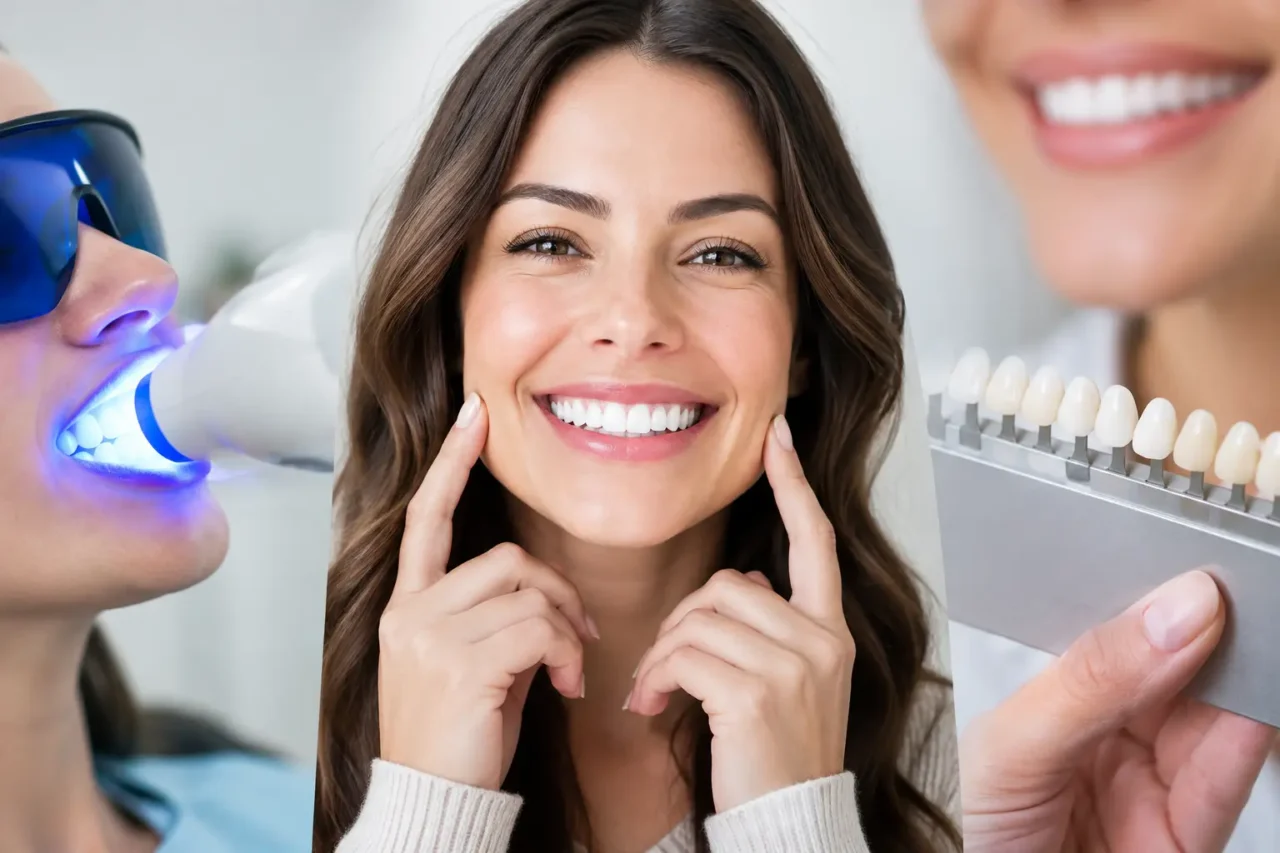
A brighter smile can change how you feel in photos, meetings, and everyday conversations. But when comparing teeth whitening vs veneers, the best choice is not simply the treatment that creates the whitest shade. It is the option that addresses what is actually bothering you about your teeth while preserving as much healthy tooth structure as possible.
Whitening can refresh the color of natural teeth quickly and conservatively. Porcelain veneers can change color, shape, proportion, and minor alignment concerns in one personalized treatment plan. For many patients, the decision comes down to whether discoloration is the only issue or whether the smile needs a more complete aesthetic transformation.
Teeth Whitening vs Veneers: The Key Difference
Teeth whitening lightens the color of natural tooth enamel. Professional whitening uses carefully selected bleaching agents to break down stains within the tooth, helping teeth look brighter without changing their shape or position. It is an excellent option for patients with healthy teeth who are primarily concerned with yellowing, coffee stains, wine stains, or age-related darkening.
Veneers are thin, custom-crafted shells, most often made from porcelain, that are bonded to the front surfaces of selected teeth. They do not bleach the teeth underneath. Instead, they create a new visible surface designed around your preferred shade, facial features, bite, and smile goals.
That distinction matters. Whitening improves what is already there. Veneers redesign what is visible.
When Professional Whitening Is the Better Choice
Professional whitening is often the right first step when your teeth are structurally healthy, evenly shaped, and free from major cosmetic concerns. If you like your smile but wish it looked fresher or lighter, whitening may deliver exactly the improvement you want without more extensive treatment.
A professionally supervised approach also offers more control than over-the-counter strips or generic kits. Your dentist can evaluate the cause of discoloration, recommend a realistic shade goal, and help manage sensitivity. Not all staining responds the same way, so this evaluation prevents disappointment and avoids unnecessary treatment.
Whitening can be especially effective for surface and lifestyle-related stains caused by coffee, tea, tobacco, red wine, or naturally darker enamel. Results vary from person to person, and they are not permanent. Many patients choose occasional touch-ups to maintain their preferred brightness, particularly if they regularly consume staining foods and drinks.
Whitening has limits, however. It will not change the color of crowns, composite bonding, fillings, or existing veneers. It may also produce limited improvement for certain deep internal stains, including discoloration related to trauma, some medications, or changes inside a tooth. In those cases, veneers or crowns may offer a more predictable cosmetic result.
When Veneers Make More Sense
Veneers are designed for patients who want more than a color change. They can create a balanced, natural-looking smile when teeth are chipped, worn, unevenly shaped, slightly spaced, or affected by stains that whitening cannot adequately improve.
A veneer treatment plan can address several visible concerns at once. For example, a patient may have darkened teeth along with small gaps, short worn edges, and uneven proportions. Whitening can brighten the natural enamel, but it cannot close spaces or restore lost length. Carefully designed veneers can improve the overall harmony of the smile while still looking like your own teeth.
Porcelain is valued for its lifelike translucency and strong resistance to staining. With good oral hygiene, routine dental care, and protection from habits such as nail biting or chewing ice, porcelain veneers can remain beautiful for many years. They are still a long-term commitment, not a temporary cosmetic service. Veneers may eventually need repair or replacement.
Most veneer cases require some level of preparation to create space for the porcelain and achieve a natural profile. The amount varies by case, but it is an important consideration because prepared teeth will continue to need restoration in the future. A responsible cosmetic dentist will never treat veneer placement as a one-size-fits-all solution.
Veneers Are Not a Shortcut for Unhealthy Teeth
Before placing veneers, your dentist should check for gum disease, decay, active infection, unstable bite patterns, and teeth that may need restorative care. Cosmetic dentistry looks its best and lasts longer when the foundation is healthy.
Patients who grind or clench their teeth can still be candidates for veneers, but they may need a protective nightguard and a treatment plan designed around their bite. If a tooth is significantly weakened, a crown may be more appropriate than a veneer. If missing teeth or failing restorations are part of the picture, restorative or implant treatment may need to come first.
Comparing Results, Durability, and Maintenance
Whitening results are subtle to dramatic depending on your starting shade and the type of staining present. The treatment retains the natural texture, shape, and character of your teeth, which is ideal when those features already suit your smile. Maintenance usually involves touch-up whitening and practical habits that reduce new staining.
Veneers offer greater control. Your dentist can select the shade, length, contour, and symmetry of each visible tooth. The goal should not be a flat, overly bright smile. The most convincing veneer results have thoughtful proportions, natural translucency, and a shade that complements your complexion rather than competing with it.
In terms of longevity, whitening is a maintenance-based treatment. Its effects fade gradually and can be refreshed. Veneers are a durable restoration, but they are not maintenance-free. Brushing twice daily, flossing, attending regular exams, and avoiding using your teeth as tools all protect your investment.
Both treatments can cause disappointment when expectations are unrealistic. Whitening cannot turn every smile paper-white. Veneers cannot compensate for poor oral health or eliminate the need for daily care. The right treatment is the one that matches your condition, goals, budget, and willingness to maintain the result.
Cost Considerations for International Patients
When considering teeth whitening vs veneers, cost matters, but it should not be the only factor. Whitening is generally less expensive because it is less invasive and requires fewer materials and appointments. Veneers involve advanced planning, custom porcelain fabrication, artistic design, and clinical precision for each tooth being treated.
For patients traveling from the United States, Canada, or Europe, treatment in Cartagena can make premium cosmetic dentistry more accessible while preserving a high standard of personalized care. The value should come from a clear treatment plan, quality materials, experienced clinical work, and transparent communication, not from choosing the lowest quote.
At Smile Makeover Cartagena, international patients can begin with an online consultation and a customized plan before arranging travel. This makes it easier to understand whether whitening, veneers, or a combination of restorative and cosmetic treatment is appropriate for your goals.
Can You Combine Whitening and Veneers?
Yes, and this is often the most natural-looking approach. Many patients whiten their natural teeth before receiving veneers on a limited number of front teeth. That allows the veneers to be color-matched to a brighter version of your natural smile.
The sequence is important because veneers and crowns do not whiten after placement. If you already have visible restorations, your dentist will discuss whether they can remain as they are, need replacement, or should guide the final shade selection. Planning the color first helps avoid mismatched teeth later.
A combination plan may also be appropriate when only a few teeth need shape correction while the rest simply need brightening. This conservative strategy can preserve more natural enamel than placing veneers across every visible tooth.
How to Choose With Confidence
Start by identifying your real goal. If your teeth are healthy and you mainly want a lighter color, professional whitening is usually the sensible place to begin. If you want to correct color along with chips, gaps, uneven edges, or irregular proportions, veneers may provide the more complete and predictable result.
A proper consultation should include an examination of your teeth and gums, a conversation about your desired outcome, and a clear explanation of what each treatment can realistically achieve. Bring photos of smiles you like, but remain open to professional guidance. The best smile design is not a copy of someone else’s teeth. It is a result that looks balanced, comfortable, and believable on you.
Your smile should feel like an upgrade, not a disguise. Whether you choose a conservative whitening plan or a custom veneer transformation, the most rewarding result is one that lets you smile more freely long after you return home.
