


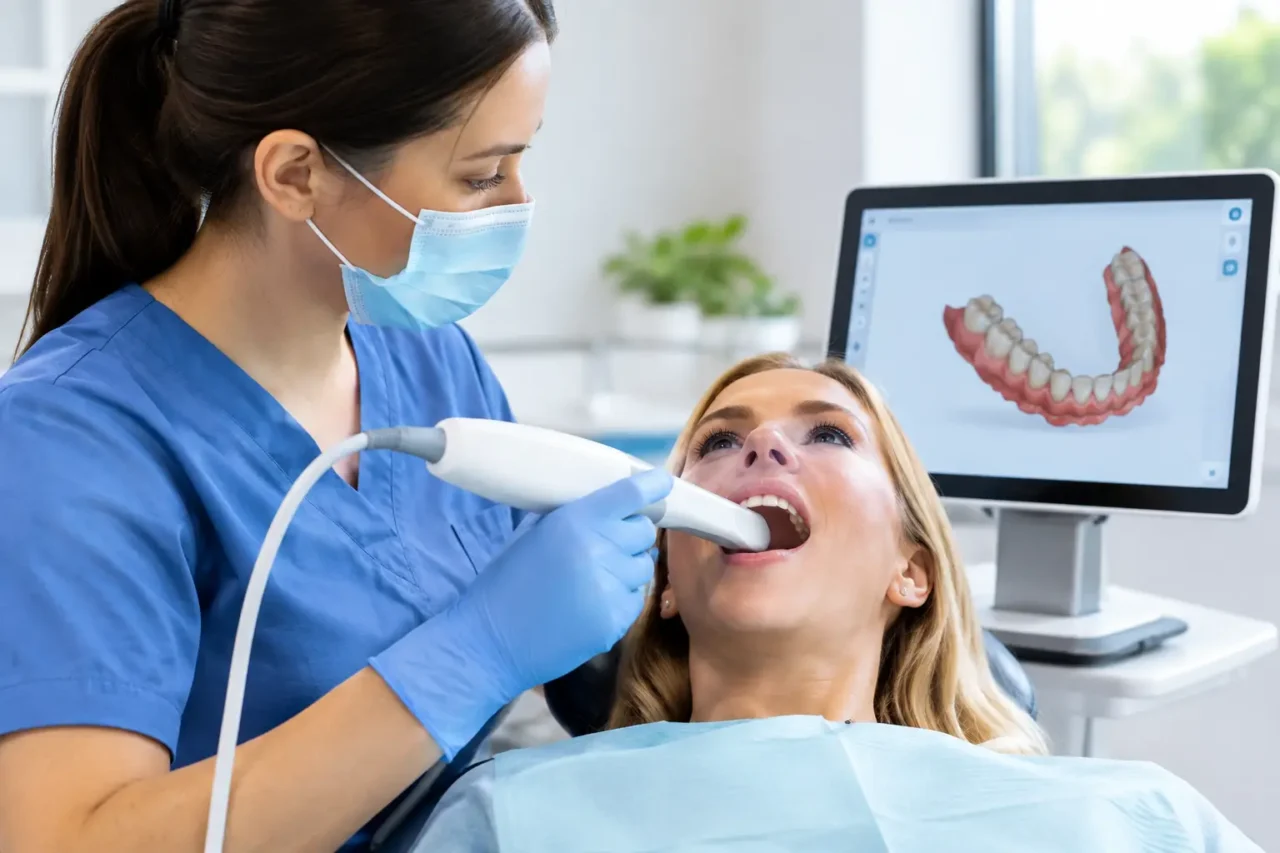
A dental impression used to mean several minutes with a bulky tray, impression material, and the uncomfortable feeling of waiting for it to set. For patients planning veneers, crowns, or implants during a trip abroad, that experience can add unnecessary stress. Intraoral scanner technology replaces much of that process with a small digital camera that captures a detailed 3D model of your teeth and gums in real time.
For international patients, the value goes beyond comfort. A high-quality digital scan helps the dental team plan with greater clarity, communicate treatment details visually, and move efficiently from consultation to restoration. It is one more way a modern clinic can make a smile transformation feel organized, personal, and easier to understand.
What intraoral scanner technology actually does
An intraoral scanner is a handheld device that records thousands of images as it moves around the mouth. Software stitches those images together into a three-dimensional digital model. Your dentist can view the model immediately, rotate it on-screen, zoom in on individual teeth, and use it as a foundation for treatment planning.
The scan can capture tooth shape, bite relationships, spacing, worn edges, and the contours of surrounding soft tissue. Depending on the scanner and the clinical situation, the resulting file may be used to design porcelain veneers, crowns, bridges, implant restorations, night guards, removable prosthetics, or orthodontic appliances.
This is not simply a more impressive version of a traditional impression. It changes the workflow. If a small area needs to be captured again, the dentist can rescan that spot right away rather than discovering a problem after the impression has been sent to a lab. That immediate review can reduce avoidable delays.
Why patients often find digital scans more comfortable
Traditional impressions can be difficult for people with a sensitive gag reflex, dental anxiety, or limited time. The tray must remain in place while the material sets, and some patients dislike the taste, pressure, or sensation of material flowing toward the back of the mouth.
With digital scanning, the process is generally more comfortable. The scanner tip is guided around the teeth while you remain seated, and the team can pause if you need a break. There is no setting material and no tray filled with paste. For someone traveling for dental care, that small improvement can make a meaningful difference during a schedule that may include several appointments.
Comfort should not be mistaken for a shortcut. Careful scanning still takes clinical skill. Moisture control, access to the treatment area, patient movement, and the complexity of the bite all affect the quality of the scan. A good result depends on both the technology and the clinician using it.
Better planning for veneers and smile design
For cosmetic dentistry, details matter. A veneer case is not only about making teeth whiter or straighter. It involves proportion, symmetry, bite, gum display, facial features, and the amount of healthy enamel available for preparation.
A digital scan provides a precise starting point for smile design. It can be combined with photos, videos, and clinical records so the dentist can assess how proposed changes relate to your natural smile and facial appearance. This supports more informed conversations about tooth length, shape, shade, and whether a conservative approach or more comprehensive treatment makes sense.
Patients also benefit from seeing what the dentist sees. Rather than relying only on a verbal description of crowding, uneven edges, or old restorations, you can review the digital model together. That visual clarity is especially helpful when you are making decisions from another country before travel.
Digital planning does not mean every cosmetic outcome is fully predictable from a screen. Natural teeth, gum tissue, bite forces, and individual healing all introduce variables. The purpose of the scan is to improve planning and communication, not to promise a computer-generated result that ignores biology.
How scanning supports crowns, bridges, and implants
Restorative dentistry depends on fit. A crown or bridge that does not fit correctly can affect comfort, function, gum health, and the longevity of the restoration. Digital impressions give the dentist and laboratory a detailed record of the prepared tooth, adjacent teeth, and bite.
For implant dentistry, scanning can be particularly valuable once an implant is ready for its final restoration. The scan helps record the implant position and surrounding teeth so the laboratory can create a custom crown, bridge, or prosthetic designed for the planned bite and appearance.
Complex implant cases may require additional records, including X-rays or 3D imaging. An intraoral scan does not replace those tools. Instead, it can work alongside them as part of a carefully coordinated plan. This matters for full-mouth rehabilitation, multiple implants, and cases where bone, gum condition, or bite stability must be evaluated before treatment begins.
Why this matters when you are traveling for dentistry
Dental tourism works best when communication is clear before, during, and after treatment. Digital scanning supports that process because records can be reviewed quickly and used to coordinate between the clinical team and dental laboratory.
For a traveler, this may help create a more efficient appointment schedule. A scan can be checked immediately, reducing the chance that an unclear conventional impression creates an avoidable lab delay. In treatments such as veneers or crowns, that efficiency is valuable when your time in Cartagena is planned around flights, accommodations, and recovery days.
Still, no ethical clinic should promise that technology alone will compress every treatment into a fixed timeline. Some procedures require healing time. Implants may need months of integration before a final crown is placed, and gum treatment or bite adjustments can change the recommended sequence. A personalized plan should account for your oral health, treatment goals, and realistic travel window.
What to ask before choosing a clinic
If you are comparing dental providers abroad, asking about scanning is reasonable, but it should not be the only question. The best technology is most useful when paired with experienced clinicians, quality materials, a trusted laboratory process, and clear communication in a language you understand.
Ask how the clinic uses the scan in your specific treatment. Will it support veneer planning, final restorations, implant work, or all of these? Ask how many visits your case is likely to require, what records are needed before you travel, and whether any part of your treatment requires a healing period or follow-up appointment.
You should also ask how the team handles changes discovered during an in-person examination. Online photos and preliminary discussions are helpful, but a final recommendation should be based on a complete clinical assessment. A professional answer is not always the fastest or lowest-cost option. It is the option that protects function, comfort, and a natural-looking result.
A more personal digital treatment experience
Technology should never make dentistry feel impersonal. Used well, it does the opposite. Seeing your own teeth on a screen gives you a clearer role in the planning process, while the clinical team gains information needed to design restorations with care.
At Smile Makeover Cartagena, digital records can be part of a treatment journey designed around clear English communication, individualized planning, and a travel-friendly experience. Whether your goal is a brighter smile, a new crown, or a full restoration after tooth loss, the right plan begins with accurate information and an honest discussion of what your smile needs.
If you are considering care abroad, bring your questions, photos, and goals to the first consultation. The right digital scan is not the finish line. It is a clearer first step toward treatment that looks natural, feels comfortable, and fits your life long after your trip home.
