


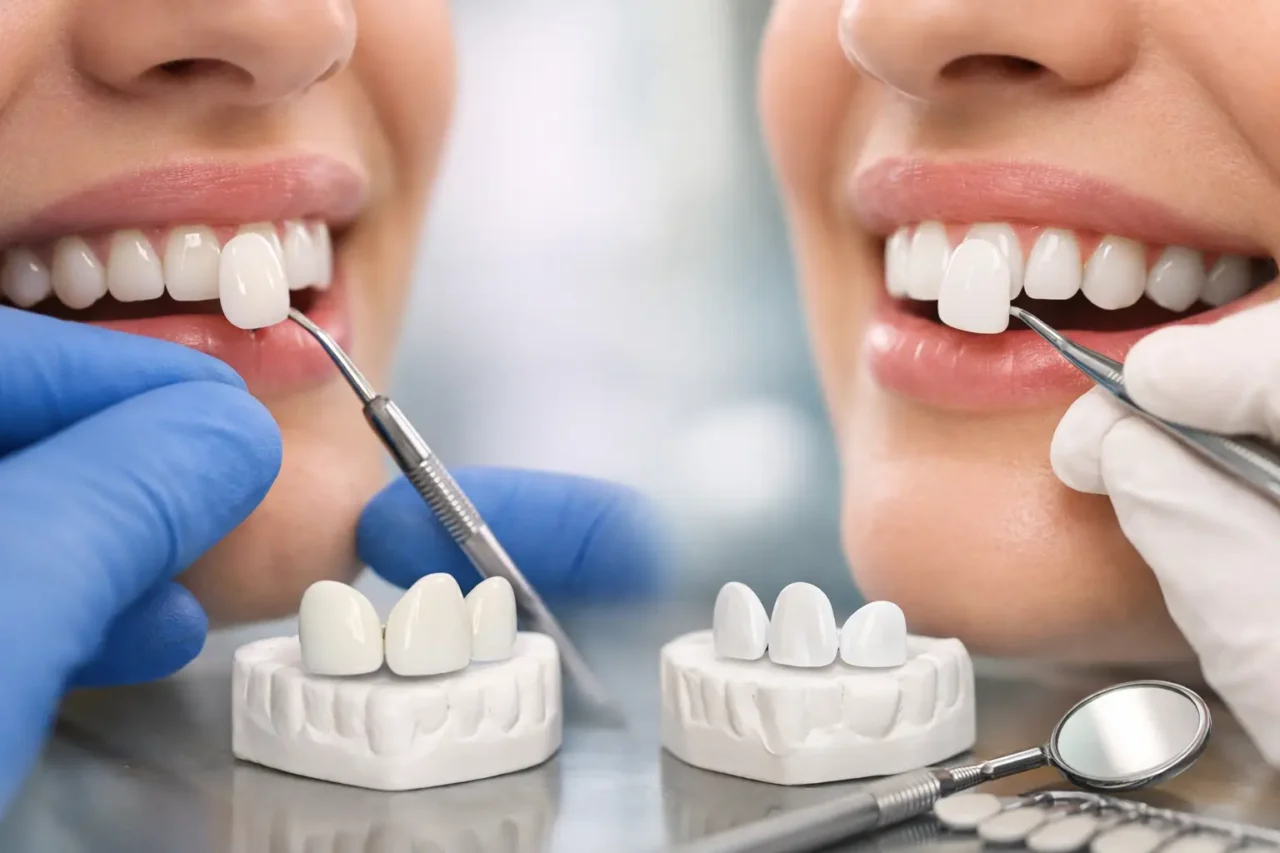
If you are comparing cosmetic dentistry options, the difference between porcelain veneers and lumineers matters more than the marketing makes it seem. Both are designed to improve the look of your smile, but they are not interchangeable. The right choice depends on your natural teeth, your bite, your cosmetic goals, and how much change your smile actually needs.
Patients often come in asking for the thinnest option because they want a conservative treatment. That makes sense. But thinner is not always better. In many cases, the best result comes from choosing the option that gives your dentist enough control over shape, color, and fit while still preserving healthy tooth structure.
What is the difference between porcelain veneers and lumineers?
The simplest way to understand the difference between porcelain veneers and lumineers is this: both are thin shells placed on the front of teeth, but lumineers are a branded type of ultra-thin veneer, while traditional porcelain veneers are more customizable and usually require more precise tooth preparation.
Porcelain veneers are custom-made restorations crafted to improve color, shape, size, symmetry, and overall smile balance. They can correct a wide range of concerns, from stained teeth and worn edges to small gaps and minor misalignment. Because they are designed with more flexibility in thickness and contour, they often allow for a more polished and natural-looking transformation.
Lumineers are marketed as a minimal-prep or no-prep option. They are thinner than many conventional veneers, which can make them appealing to patients who want less alteration to the natural tooth. That sounds attractive on paper, but the reduced thickness also limits what they can hide and how much they can reshape.
Why tooth preparation changes the result
One of the biggest differences between these two options is what happens before placement. Traditional porcelain veneers usually involve removing a small amount of enamel so the veneer can sit naturally on the tooth. This preparation helps avoid a bulky appearance and creates room for a better emergence profile, especially near the gumline.
Lumineers are often promoted as requiring little to no drilling. For some patients, that can be true. But no-prep treatment is only ideal when the natural teeth already have the right position, size, and color to support an ultra-thin shell. If teeth are dark, prominent, uneven, or crowded, placing material on top without enough preparation can make them look thicker or less natural.
This is where real treatment planning matters. A conservative approach is valuable, but only if it also gives you a result you will be happy to wear every day.
Less prep does not always mean better dentistry
Patients sometimes hear no-prep and assume it is automatically the healthier choice. In reality, good cosmetic dentistry is about preserving what should be preserved and adjusting what needs to be adjusted. If a slight amount of enamel reduction leads to a cleaner fit, better bite, and more natural final shape, that may be the more conservative choice in the long run.
A veneer that looks bulky or feels off can lead to disappointment, even if less tooth structure was touched at the start.
Appearance and natural-looking results
For most adults investing in a smile makeover, the final appearance is the deciding factor. This is where porcelain veneers usually have the advantage. Because they can be designed with more control over thickness, translucency, contour, and edge detail, they often create a more refined and lifelike result.
Lumineers can look beautiful in the right case, especially when only modest cosmetic enhancement is needed. But they are not as forgiving when stronger masking is required. If you have tetracycline staining, dark teeth, old bonding, irregular shapes, or visible wear, traditional porcelain veneers generally offer more artistic and functional control.
The goal is not to make teeth look obviously done. The goal is for your smile to look brighter, balanced, and natural in photos, in conversation, and in full daylight. That usually comes from customized planning rather than choosing the thinnest material available.
Durability and long-term performance
Both porcelain veneers and lumineers are made from high-quality ceramic materials, and both can last for years with good care. Still, durability is not only about the material itself. It also depends on case selection, bite forces, preparation design, bonding technique, and whether the restoration is being asked to do more than it realistically can.
Traditional porcelain veneers often perform very well because they are designed around the patient’s bite and esthetic needs. The dentist and lab have more flexibility to build strength into the veneer where needed. That can be especially important for patients who clench, have worn teeth, or need more noticeable reshaping.
Lumineers can also last well in properly selected cases, but they are not a universal solution. If the teeth are not ideal for a very thin restoration, long-term satisfaction may be affected by appearance, edge visibility, or the need for future changes.
Reversibility is often overstated
Some patients ask whether lumineers are reversible. The answer is sometimes, but not always in the way people expect. Even if very little preparation is done, the bonding process and the changes needed to maintain esthetics can still make future treatment more complex. Also, once a patient gets used to an enhanced smile, going back to untreated teeth is rarely the practical plan.
A better question is not whether treatment is technically reversible. It is whether it is the right treatment the first time.
Cost and value for international patients
When patients compare veneers and lumineers, they are often also comparing budgets. Lumineers are sometimes perceived as a premium branded option, but brand recognition does not automatically mean better value. The best value comes from choosing the treatment that fits your goals, lasts well, and looks right on your face.
For international patients, this conversation becomes even more important. If you are traveling for cosmetic dentistry, you want clarity before you book flights and hotel nights. You want to know whether your case needs minimal enhancement or a more comprehensive veneer design. A personalized consultation, photos, and a careful review of your smile are far more useful than picking a product name online.
At Smile Makeover Cartagena, many patients are relieved to learn that high-end cosmetic dentistry can be planned in fluent English and delivered with a clear treatment roadmap, without the pricing pressure they often face in the US or Canada. That matters when you want beautiful results and a smooth travel experience.
Who is a better candidate for porcelain veneers?
Porcelain veneers are often the better fit if you want a more noticeable smile upgrade or if your teeth have color, shape, spacing, or wear issues that require real correction. They are also commonly preferred when a patient wants a highly customized smile design that matches facial features, lip movement, and bite dynamics.
If your teeth are small, uneven, stained, chipped, slightly crooked, or restored with old cosmetic work, traditional veneers usually provide more options. They give your dentist room to create harmony rather than simply covering the front surface.
Who may be a candidate for lumineers?
Lumineers may work well if your teeth are already fairly well aligned, not heavily stained, and only need subtle refinement. They can be a reasonable option for patients seeking a conservative cosmetic change with minimal preparation, as long as the expected result matches what this thin material can realistically achieve.
The key phrase is careful case selection. When lumineers are chosen for the right patient, they can be attractive and effective. When chosen because the marketing sounds easier, they may fall short of expectations.
Questions to ask before choosing either option
Before moving forward, ask your dentist how much preparation your case truly needs, whether your tooth color can be masked predictably, and how the restorations will affect the thickness and profile of your smile. Ask to see what shape changes are possible, how your bite will be evaluated, and what maintenance you should expect over time.
You should also ask what option your dentist would choose if the goal were not just minimal prep, but the best overall outcome. That answer often reveals the difference between sales language and personalized care.
A beautiful smile is not about choosing the trendiest label. It is about choosing the treatment that fits your teeth, your goals, and your long-term confidence.
