


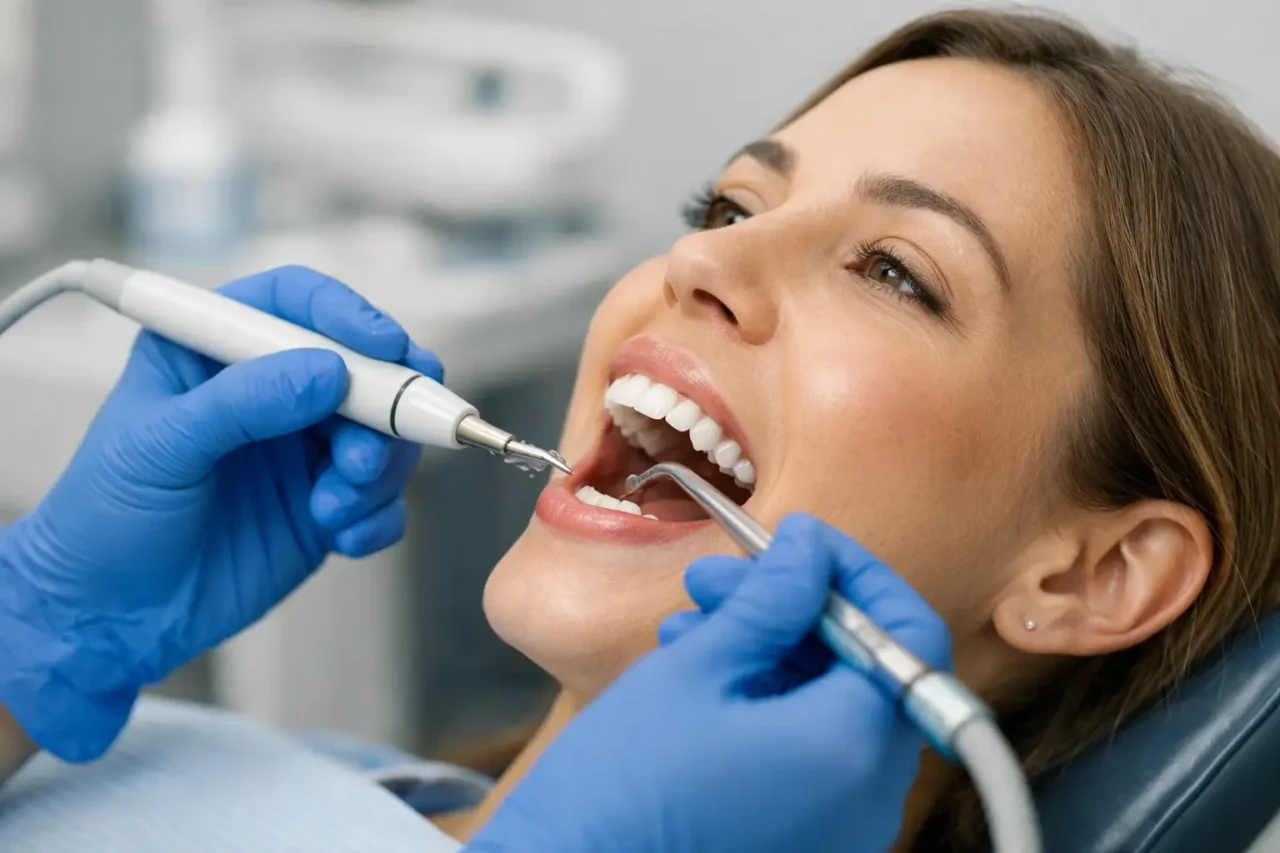
Bleeding when you brush, persistent bad breath, or gums that look swollen are not problems to cover up with a stronger mouthwash. They can be signs that bacteria have collected below the gumline, where a regular cleaning cannot reach. A deep teeth cleaning is a targeted periodontal treatment designed to remove that buildup and give your gums a chance to heal.
For patients considering cosmetic dentistry, crowns, veneers, or implants, healthy gums are the foundation of a beautiful, lasting result. Treating gum disease first can protect both your natural teeth and any future dental work.
What Is a Deep Teeth Cleaning?
Deep teeth cleaning is the everyday term for scaling and root planing. It is not simply a longer version of a standard hygiene appointment. During a routine cleaning, a hygienist removes plaque and tartar from the visible surfaces of the teeth and just around the gumline. During scaling and root planing, the dental team cleans beneath the gums, down to the roots of the teeth.
Plaque is a soft bacterial film that forms every day. If it is not thoroughly removed, it can harden into tartar, also called calculus. Once tartar settles below the gumline, brushing and flossing cannot remove it. The bacteria may irritate the gums, causing them to pull away from the teeth and create periodontal pockets.
Scaling removes tartar and bacteria from the tooth and root surfaces. Root planing carefully smooths those root surfaces so bacteria are less likely to cling to them and the gum tissue can reattach more closely. The goal is to control infection, reduce inflammation, and slow or stop the progression of periodontal disease.
When Is Deep Teeth Cleaning Recommended?
A dentist recommends this treatment based on an examination, periodontal measurements, and often X-rays. The depth of the pockets between your teeth and gums is a key factor. Healthy pockets are generally shallow. Deeper pockets can indicate gum disease and make it difficult to keep the area clean at home.
You may need scaling and root planing if you have bleeding gums, gum recession, tartar below the gumline, loose teeth, tenderness, persistent bad breath, or bone loss visible on X-rays. Some patients have few noticeable symptoms, especially when gum disease has progressed slowly. That is why a proper evaluation matters more than self-diagnosis.
Deep cleaning is not a whitening treatment, and it does not replace cosmetic dentistry. It is a health-focused procedure. However, healthier gums can improve the appearance of your smile by reducing redness, puffiness, and bleeding before aesthetic treatment begins.
What Happens During the Appointment?
Your dentist begins by reviewing your medical history, examining your gums, measuring periodontal pockets, and assessing X-rays when needed. This helps determine whether a deep cleaning is appropriate and which areas require treatment.
Because the work takes place below the gumline, local anesthetic is commonly used to keep you comfortable. Depending on the amount of buildup and the number of areas involved, treatment may be completed in one longer visit or divided into two appointments. Dividing the treatment can make recovery easier, particularly when several areas need attention.
Your dental professional uses ultrasonic instruments and fine hand instruments to remove deposits from below the gums. You may notice vibration, pressure, and water from the ultrasonic device, but you should not feel sharp pain once the anesthetic is working. If you are anxious about dental treatment, say so before the appointment. A thoughtful comfort plan can make a meaningful difference.
After the cleaning, the dentist may recommend a medicated rinse, short-term pain relief, or a specific home-care routine. You will also need a follow-up evaluation, often within several weeks, to confirm that the gums are responding well.
How Long Does It Take?
There is no single treatment time for every patient. A localized area with mild periodontal involvement may be treated efficiently, while generalized gum disease can require more time and separate visits. Your dentist should explain the scope of treatment before starting, including whether you need additional periodontal care.
For international patients, this planning is especially valuable. An online consultation and preliminary records can help organize your schedule, but an in-person examination is still necessary before a final diagnosis is made.
Recovery After Scaling and Root Planing
Most patients return to normal daily activities quickly. Your gums may feel tender for a few days, and minor bleeding, sensitivity to cold, or soreness when chewing can occur. If the gums have been very inflamed, you may also notice that the teeth appear slightly longer after healing. This is usually because swelling has decreased and the true gumline is more visible.
Choose softer foods while your mouth feels tender, and avoid very spicy, crunchy, or extremely hot foods for the first day or two. Continue brushing gently with a soft toothbrush and clean between your teeth as instructed. Good home care is what helps maintain the improvements made during treatment.
Avoid smoking during healing. Tobacco use reduces blood flow to the gums and can make periodontal treatment less successful. If you experience worsening pain, heavy bleeding, facial swelling, fever, or a reaction to medication, contact your dental team promptly.
Can You Combine Deep Teeth Cleaning With a Dental Trip?
Often, yes, but the best schedule depends on the condition of your gums and the other dentistry you are considering. Deep teeth cleaning can be an excellent first step before crowns, veneers, bridgework, or implants because active gum inflammation should be addressed before elective restorative or cosmetic work begins.
The trade-off is that your gums need time to heal and be reassessed. If periodontal disease is mild and localized, your dentist may be able to coordinate treatment efficiently within a short visit. If disease is more advanced, the safest plan may involve treatment first, a healing period, and then a later phase for more extensive restorative care.
This is one reason transparent planning matters. A clinic should not promise a full cosmetic transformation before evaluating the health of your gums, bone, bite, and existing teeth. The right sequence protects your investment and supports more natural-looking, stable results.
At Smile Makeover Cartagena, international patients can begin with a personalized consultation and treatment plan in fluent English, so they understand the recommended timeline before arranging travel. Cartagena can be an appealing place to recover at a comfortable pace, but dental health should always determine the itinerary, not the other way around.
How to Protect Your Results
A deep cleaning is highly effective, but it is not a one-time cure if gum disease has developed. Periodontal bacteria can return without consistent daily care and professional maintenance. Many patients benefit from periodontal maintenance visits more frequently than the standard six-month cleaning schedule. Your dentist will recommend the interval that fits your gum condition.
At home, brush twice daily with a soft-bristled toothbrush and fluoride toothpaste. Clean between your teeth every day with floss, interdental brushes, or another tool recommended for your spacing and dental work. If you have crowns, bridges, implants, or veneers, ask for instructions tailored to those restorations.
Manage conditions that can affect gum health, including diabetes, dry mouth, and smoking. If you clench or grind your teeth, a night guard may also be part of protecting your teeth and gums from additional strain.
Questions Worth Asking Before Treatment
Before agreeing to a deep cleaning, ask what periodontal pocket depths were measured, whether X-rays show bone loss, and how many sections of your mouth need treatment. You should also understand what type of anesthetic will be used, what recovery is likely in your case, and when you need to return for reevaluation.
If you are traveling for care, ask whether your timeline includes enough time for healing before additional procedures. It is also wise to confirm how follow-up will be managed once you return home. Clear answers are a sign of a treatment plan built around your health rather than a rushed schedule.
Healthy gums do more than prevent bleeding and bad breath. They create the stable foundation that lets every future smile decision, from a simple whitening treatment to full-mouth rehabilitation, look better and last longer.
