


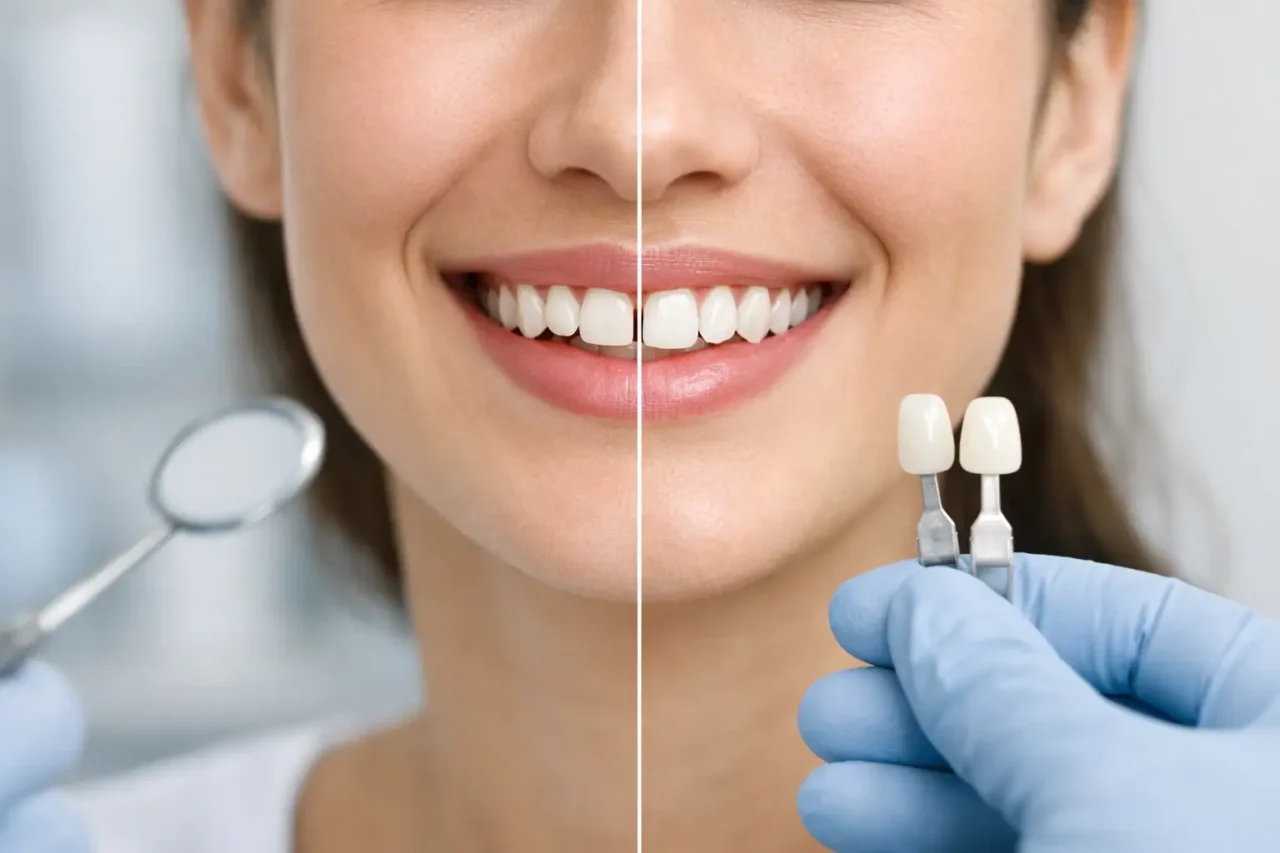
A small space between the front teeth can be one of the first things you notice in photos, video calls, or the mirror. The good news is that veneers close gaps for many patients without braces or lengthy orthodontic treatment. The right result, however, depends on more than making the space disappear. It requires careful planning so your teeth still look proportional, your bite feels comfortable, and your smile looks naturally yours.
For international patients considering cosmetic dentistry in Cartagena, veneers can be an efficient way to improve spacing, tooth shape, color, and minor wear during a planned dental trip. A personalized evaluation is the first step toward knowing whether veneers are the right choice for your specific smile.
How Veneers Close Gaps Between Teeth
A veneer is a thin, custom-crafted porcelain shell bonded to the front surface of a tooth. To close a gap, your dentist slightly adjusts the width and shape of the veneers on the teeth surrounding the space. Rather than physically moving teeth into a new position, veneers create the visual effect of a balanced, gap-free smile.
This approach works especially well for small to moderate gaps between the upper front teeth. It can also be useful when spaces appear alongside other cosmetic concerns, such as narrow teeth, uneven edges, discoloration that whitening cannot correct, or minor chips. A smile design can address these details together instead of treating each concern separately.
The goal is not simply to make teeth wider. Every veneer should be designed around facial proportions, gumline symmetry, lip movement, neighboring teeth, and the way your upper and lower teeth meet. When the plan is thoughtful, the final smile can look refined rather than artificial.
When Veneers Are a Good Choice for Closing Gaps
Veneers may be an excellent option if your teeth and gums are healthy, your bite is stable, and the spaces are primarily an aesthetic concern. Patients often choose porcelain veneers when they want a faster cosmetic transformation than orthodontics can provide, particularly if they are already interested in improving the color or shape of multiple visible teeth.
They are often a strong solution when a gap is caused by naturally small or narrow teeth. In this case, adding carefully planned width can bring the teeth into better proportion. Veneers may also work well after orthodontic treatment if very small spaces remain or if teeth need shape refinement.
A gap is not always only a cosmetic issue, though. Spacing can develop because of gum disease, shifting teeth, a tongue-thrust habit, missing teeth, or bite changes. If the underlying cause is active, placing veneers without addressing it first can compromise the long-term result. Healthy gums and a stable foundation always come before cosmetic treatment.
The Size of the Gap Matters
Small gaps are generally the most predictable cases for veneers. As the space gets wider, the amount of porcelain needed to close it increases. If each tooth must be made significantly wider, the proportions can begin to look unnatural.
For larger gaps, orthodontics may be recommended first to move teeth into a more ideal position. Veneers can then be used afterward for fine-tuning if needed. In other cases, a combination plan involving bonding, crowns, implants, or gum treatment may be more appropriate. The best option depends on why the gap exists, not just where it appears.
Your Bite Matters Just as Much as Appearance
Front teeth receive significant force when you bite, speak, and chew. If you grind your teeth, clench your jaw, have an edge-to-edge bite, or have an uneven bite relationship, veneers need added planning and protection.
Some patients can still be good candidates, but they may need bite adjustment, restorative treatment on other teeth, or a custom night guard after veneers are placed. A cosmetic result should never come at the expense of function. A comfortable, stable bite helps protect both your veneers and your natural teeth.
Veneers vs. Bonding vs. Braces
There is no single best way to close a gap. The right treatment should reflect your health, timeline, budget, and cosmetic goals.
Dental bonding uses tooth-colored composite resin to build out the sides of teeth. It can be a more conservative and lower-cost option for small gaps. Bonding is usually completed in one visit and often requires little or no enamel removal. However, composite can stain, chip, and lose its polish more easily than high-quality porcelain. It may need repair or replacement sooner.
Orthodontics moves your natural teeth and can be the best option for larger spaces, crowding, bite problems, or tooth positions that veneers should not disguise. The trade-off is time. Clear aligners or braces can take months, and cosmetic changes such as discoloration or worn edges may still need separate treatment afterward.
Porcelain veneers offer excellent color stability, translucency, and long-term cosmetic refinement. They can correct several visible concerns in a coordinated plan, which is why they are popular for smile makeovers. They are also an irreversible treatment in many cases because a small amount of enamel may need to be prepared. That decision deserves a clear discussion before treatment begins.
What a Natural-Looking Veneer Result Requires
The most convincing veneer work does not look like a row of identical, overly white teeth. Natural smiles have dimension, appropriate texture, and subtle variation. Your dentist should consider the color of your skin, the whites of your eyes, your age, facial features, and your preferred level of brightness.
The number of veneers also matters. If a front gap is the only concern, treating just two teeth may be possible. Yet when neighboring teeth differ in color, shape, or width, treating additional visible teeth can create better harmony. This is not about recommending more treatment than necessary. It is about making sure the result blends naturally when you smile.
Digital planning, photographs, impressions or scans, and a detailed bite evaluation allow you to preview the direction of the smile before final porcelain is made. For patients traveling from the United States, Canada, or Europe, this level of planning is particularly valuable because it helps make the treatment timeline clear before the trip.
Planning Veneers During a Dental Trip to Cartagena
Dental tourism works best when the clinical plan is organized well before you arrive. An online consultation can begin with clear photos, dental X-rays when available, and a conversation about your goals, health history, and schedule. This gives the dental team an initial understanding of whether veneers are likely to be appropriate.
Your in-person examination remains essential. The dentist will evaluate your gums, tooth structure, bite, and existing restorations before confirming the final plan. If treatment proceeds, porcelain veneers typically involve an initial preparation and design appointment, a laboratory phase, and a final bonding appointment. Your exact timeline depends on the number of veneers, the complexity of your case, and whether other care is needed.
At Smile Makeover Cartagena, international patients can expect fluent English communication and a treatment plan designed around both clinical needs and travel logistics. The aim is to give you enough time for proper appointments, final checks, and adjustments rather than rushing a permanent cosmetic decision.
Questions to Ask Before Choosing Veneers
Before committing, ask how much tooth preparation is expected, whether the gap can be closed without making teeth look too wide, and what treatment is recommended if the space returns or the bite changes. You should also ask whether gum treatment or orthodontics would create a healthier foundation first.
Discuss the expected shade, the number of teeth involved, and how the dentist will evaluate your bite. If you grind or clench, ask about protective options. Clear answers are a sign that your treatment is being planned for long-term success, not just a quick before-and-after photo.
Porcelain veneers require normal daily care: brushing, flossing, regular dental cleanings, and avoiding habits such as biting hard objects or opening packages with your teeth. With good care and a stable bite, they can remain a beautiful part of your smile for many years.
A gap does not have to define your smile, but it also should not be closed with a one-size-fits-all solution. The most satisfying outcome begins with an honest evaluation of your teeth, gums, bite, and goals, then turns that information into a smile that feels as good as it looks.
