


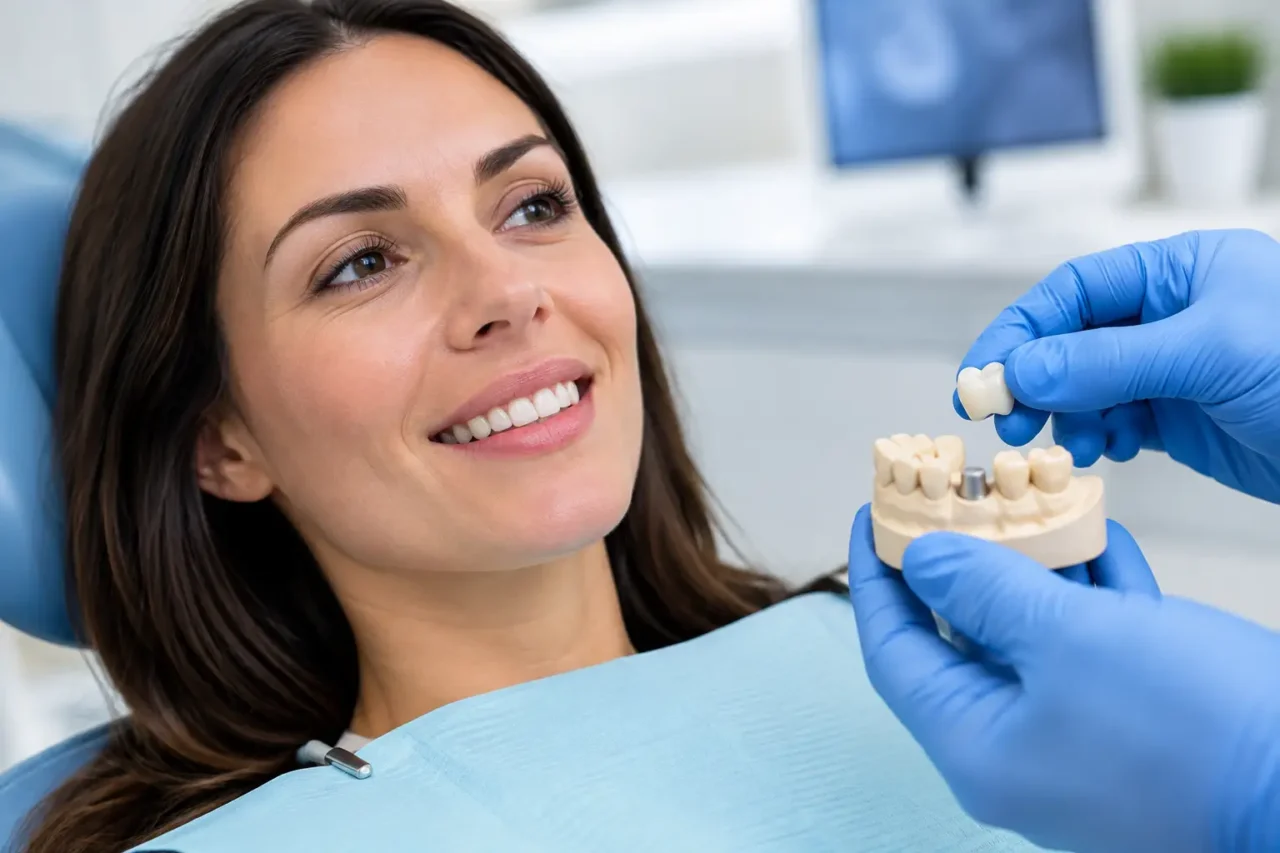
A crown that chips while you are eating, feels loose, or suddenly looks darker can create an understandable sense of urgency. Can crowns be repaired? Often, yes – but the right answer depends on what failed: the crown material, the bonding cement, or the tooth underneath it. A quick cosmetic touch-up may be possible in one visit, while a crack or decay under the crown may call for a carefully planned replacement.
For international patients, the goal is not simply to make a damaged crown look better before going home. It is to choose the treatment that will remain comfortable, functional, and natural-looking long after the trip is over.
Can Crowns Be Repaired Without Replacing Them?
Some crown problems are repairable, especially when the crown is stable and the underlying tooth remains healthy. Small chips in porcelain or ceramic, minor rough edges, and certain bonding issues can often be addressed conservatively.
A dentist begins by examining the crown, the gumline, the bite, and X-rays when needed. This matters because a visible chip can be a simple surface issue, but it can also be a sign that your bite is placing excessive pressure on the restoration. Repairing the surface without addressing the cause may only delay another failure.
Minor porcelain chips and rough edges
A small chip on the edge of a porcelain crown may be smoothed and polished if it does not affect your bite or expose metal or a dark underlying layer. When more material is missing, a dentist may use tooth-colored composite resin to rebuild the area. This can be a practical option for a minor defect, particularly on a tooth that is not under heavy chewing force.
Composite repairs have limits. They may stain, wear, or detach sooner than a new ceramic crown, especially on molars or in patients who grind their teeth. For a front tooth, where color and translucency are highly visible, a repair should blend naturally with the existing crown and neighboring teeth. If it cannot, replacement may provide the better aesthetic result.
A loose crown that is otherwise intact
A crown can loosen when the cement underneath breaks down. If the crown is intact, fits correctly, and there is no decay or fracture beneath it, it may be possible to clean it and recement it.
This is not a situation to solve with over-the-counter glue. Household adhesives can damage the crown, irritate gum tissue, make proper recementation difficult, and create a poor seal that traps bacteria. Keep the crown safe, avoid chewing on that side, and see a dentist as soon as possible.
Small cracks in repairable areas
Not every crack means a crown must be replaced. A superficial craze line or a small fracture limited to a non-functional area may be polished or repaired with composite. However, a crack that travels through the crown, reaches the margin near the gumline, or changes how your teeth meet is more concerning. Those crowns generally need replacement because they can continue to fracture or allow bacteria to reach the tooth.
When Replacing a Crown Is the Safer Choice
Replacement is usually recommended when the crown no longer protects the tooth effectively. Even if a damaged crown causes little pain, a compromised seal can allow decay to develop quietly beneath it.
A new crown may be the most predictable option when there is extensive chipping, a large fracture, recurrent decay, poor fit, a broken tooth under the crown, or a crown that has repeatedly come loose. Crowns also need replacement when their appearance no longer suits the smile, such as a darkened margin at the gumline or a color mismatch after whitening adjacent teeth.
The material matters, too. Older porcelain-fused-to-metal crowns can show a gray shadow near the gums or reveal metal after porcelain chips. Modern all-ceramic options can offer a more lifelike appearance for visible teeth, while zirconia is often selected for strength in high-pressure areas. The best choice depends on the tooth position, your bite, your cosmetic goals, and the amount of natural tooth structure remaining.
The Hidden Issue: What Is Happening Under the Crown?
A crown is only as reliable as the tooth and foundation beneath it. Before repairing or replacing it, your dentist needs to rule out problems that cannot be seen from the outside.
Decay beneath a crown can develop when the margin leaks or plaque accumulates near the gumline. Sometimes the tooth has fractured, a previous root canal needs evaluation, or gum disease has affected the supporting bone. In these cases, simply placing a new crown without treating the underlying condition can lead to pain, infection, or another restoration failure.
If enough healthy tooth structure remains, the tooth may be rebuilt with a filling material or a post and core before a new crown is made. If the tooth is severely cracked below the gumline or cannot be predictably restored, extraction and an implant-supported crown may be discussed. That is a bigger decision, but it can be the right long-term solution when saving the natural tooth is no longer realistic.
What to Expect During Crown Repair or Replacement in Cartagena
For patients traveling for dental care, planning matters as much as the procedure itself. A good treatment plan should account for the condition of the existing crown, the time available in Cartagena, and the need for a reliable result before your return flight.
An online consultation can help establish whether you may need a simple repair, recementation, or a replacement crown. Clear photos, recent X-rays if available, and details about symptoms are useful starting points. However, the final recommendation should always follow an in-person exam, because the condition under a crown cannot be fully confirmed from photos alone.
A straightforward repair may be completed in one appointment. Crown replacement commonly requires tooth preparation, digital or traditional impressions, fabrication, and final cementation. Some cases can be completed efficiently during a planned stay, while more complex treatment involving root canals, gum treatment, implants, or multiple crowns may require additional time or staged visits.
At Smile Makeover Cartagena, treatment planning is designed to give international patients clear expectations before they travel, with fluent English communication and personalized recommendations based on both function and smile aesthetics. Rather than automatically replacing every older crown, the focus should be on preserving healthy structure when appropriate and recommending replacement when it offers a more dependable result.
How to Protect a Repaired or New Crown
A well-made crown can last many years, but it still needs daily care. Brush along the gumline twice a day, clean between teeth daily, and attend regular hygiene visits. The crown itself cannot decay, but the natural tooth at its edge can.
Avoid using crowned teeth to open packaging, bite hard objects, or crack ice. If you clench or grind your teeth, a custom nightguard can protect both your crown and the rest of your smile. If your crown feels high after treatment, contact your dentist promptly. A small bite adjustment can prevent unnecessary pressure and reduce the risk of chipping or jaw discomfort.
Pain, swelling, persistent sensitivity, a bad taste near the crown, or movement in the restoration should never be ignored. These signs do not always mean a dental emergency, but they do deserve a professional evaluation before a minor concern becomes a more complex repair.
A damaged crown does not automatically mean you need a complete new restoration. The most reassuring next step is a thorough assessment that looks beyond the visible defect, so your treatment supports the health, comfort, and confidence of your smile wherever life takes you.
