


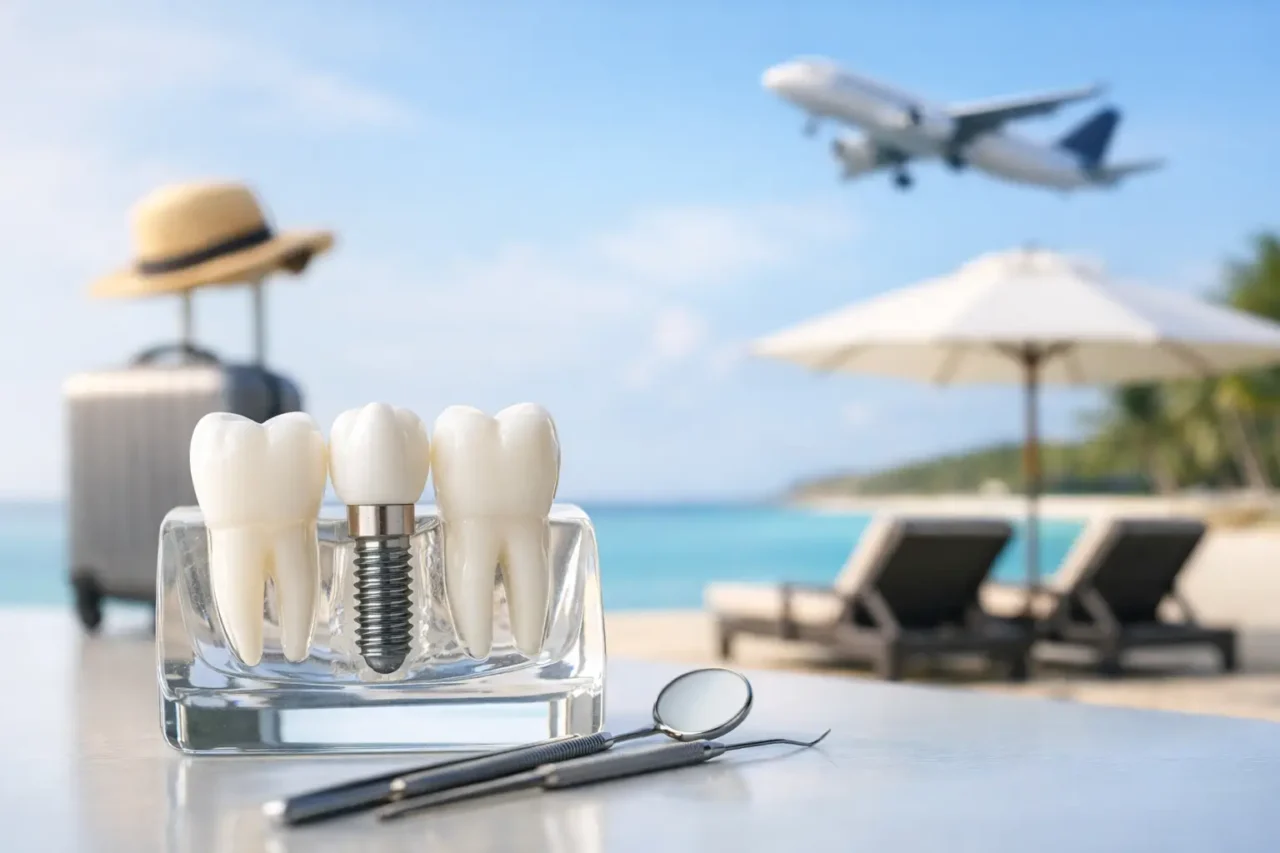
A missing tooth changes more than a photograph. It can affect how comfortably you chew, how clearly you speak, and how confident you feel when you laugh. Dental implants are designed to replace the tooth from the root up, creating a stable foundation for a crown, bridge, or full-arch restoration that looks and functions more like a natural tooth.
For many patients in the United States, Canada, and Europe, the question is not simply whether implants are right for them. It is whether they can receive high-quality, personalized care abroad without adding uncertainty to an already important decision. The answer depends on careful planning, realistic timelines, and choosing a clinic that treats your oral health and travel experience with equal attention.
What Dental Implants Actually Replace
A dental implant is a small post, usually made from biocompatible titanium, placed into the jawbone where a tooth root is missing. Over time, the bone can bond with the implant through a process called osseointegration. Once stable, the implant supports a custom restoration such as a single crown, a bridge, or a full-arch prosthesis.
Unlike a removable denture, an implant-supported restoration is fixed in place and does not rely on neighboring teeth for support. Unlike a traditional bridge, it may allow your dentist to replace a missing tooth without reshaping the healthy teeth beside it. These advantages make implants one of the most trusted long-term solutions for tooth loss, but they are not a one-size-fits-all treatment.
The visible crown is only one part of the result. The quality of the implant placement, the condition of the gum tissue, the bite, and the design of the final restoration all influence comfort, longevity, and a natural-looking smile.
Who Is a Good Candidate for Dental Implants?
Many adults with one or more missing teeth can be candidates for implants, including people who have worn bridges or dentures for years. Your candidacy is based on your individual oral and medical history, not just the number of teeth you need to replace.
Healthy gums and sufficient jawbone are important because the implant needs stable support. If bone has receded after a tooth has been missing for a long time, a bone graft or sinus lift may be recommended before placement. Gum disease also needs to be treated and controlled first. Placing an implant into an unhealthy environment can compromise the outcome.
Certain health conditions, medications, smoking habits, teeth grinding, and uncontrolled diabetes may affect healing and require added planning. None of these factors automatically rule out treatment, but they should be discussed openly during your consultation. A responsible dentist will explain the risks, alternatives, and the clinical steps needed for your situation rather than promising a fast result before reviewing your records.
A Complete Evaluation Comes First
A meaningful implant evaluation includes more than a quick look at a missing tooth. Your dentist should review current X-rays or a 3D CBCT scan, assess your bite, examine the gums, and understand your aesthetic goals. For international patients, this process can begin with an online consultation, photographs, available dental records, and a clear discussion of your health history.
An initial estimate can help you plan, but a final treatment plan may need to be confirmed after an in-person examination and diagnostic imaging. That is not a hidden surprise. It is part of practicing precise, patient-centered dentistry.
Understanding the Implant Treatment Timeline
The timeline is one of the most important considerations for dental travelers. In some cases, an implant can be placed immediately after a tooth extraction. In other cases, the extraction site needs time to heal, or bone grafting is needed before implant surgery. After placement, healing may take several months before the final crown is attached.
This healing period is not wasted time. It allows the implant to integrate with the bone and provides the stability required for a dependable final restoration. Some patients can receive a temporary tooth during this phase, especially when the missing tooth is visible in the smile. Whether immediate loading is appropriate depends on implant stability, bone quality, bite forces, and the type of restoration planned.
For a single implant, many patients travel for an initial surgical visit and return later for the final crown. For more extensive cases, such as implant-supported bridges or full-mouth rehabilitation, treatment may be carefully staged across multiple visits. It can be tempting to choose the shortest possible timeline, but a plan should be built around biology and predictable results, not vacation dates alone.
Planning Travel Around Healing
International treatment works best when travel dates are selected after the clinical sequence is clear. Plan to stay long enough for surgery, postoperative checks, and any adjustments needed before you fly home. Avoid scheduling your return flight immediately after a complex procedure.
You should also ask how your follow-up will be handled once you are back home. A good clinic provides clear aftercare instructions, copies of relevant records when appropriate, and direct communication if questions arise during healing. Fluent English communication matters here. You should never feel unsure about medication instructions, dietary guidelines, or what symptoms require attention.
Safety and Quality When Choosing Care Abroad
Traveling for dental care can offer meaningful savings, particularly for extensive restorative work. But the lowest quote is not always the best value. Implant treatment involves surgical planning, materials, laboratory work, and long-term maintenance. Comparing prices without comparing the full scope of care can lead to confusion later.
Ask what the quoted treatment includes. Does it cover diagnostics, the implant post, abutment, custom crown, temporary restoration, sedation if needed, and follow-up appointments? Is bone grafting included if it becomes necessary? What implant system and restorative materials are being used? Clear answers allow you to compare treatment plans fairly.
Clinical credentials and technology matter, but so does the way a clinic communicates. You should understand who will perform each step, why a specific approach is recommended, and what alternatives are available. Look for a provider that welcomes questions about healing times, maintenance, expected results, and possible complications.
At Smile Makeover Cartagena, international patients receive personalized treatment planning with English-speaking support from the first consultation through follow-up. The goal is not to make dental travel feel rushed or complicated. It is to make every step clear, comfortable, and centered on a result you can feel good about.
Choosing the Right Restoration for Your Smile
The type of restoration depends on what you are replacing. A single missing tooth may be restored with one implant and a custom crown. Several missing teeth in a row may be restored with an implant-supported bridge, reducing the need for one implant per tooth. Patients missing most or all teeth may be candidates for a fixed full-arch solution or an implant-retained removable denture.
There are trade-offs in every option. A fixed full-arch restoration can provide remarkable stability and confidence, while an implant-retained denture may be a more accessible option for some patients and can still offer a major improvement over a conventional denture. Your bone structure, oral health, goals, budget, and ability to return for planned appointments should all be part of the decision.
Aesthetic planning is especially valuable when replacing front teeth. The crown must match the surrounding teeth in shape, color, translucency, and gum contour. A technically successful implant should also belong naturally in your smile.
Caring for Implants After Treatment
Dental implants cannot get cavities, but the tissues around them still need daily care. Plaque buildup can lead to inflammation around the implant, which may threaten the supporting bone if left untreated. Brushing twice daily, cleaning between teeth or beneath bridges, and attending professional checkups are essential.
If you clench or grind your teeth, a night guard may help protect your restoration from excessive force. Smoking cessation, good diabetes management, and routine hygiene visits also support long-term implant health. Think of an implant as a durable replacement, not a maintenance-free one.
The right implant journey starts with an honest conversation about your health, goals, timing, and travel plans. Bring your questions, share your records, and ask for a plan that makes clinical sense for your life. A well-planned smile can be one of the most rewarding reasons to make Cartagena part of your next trip.

