


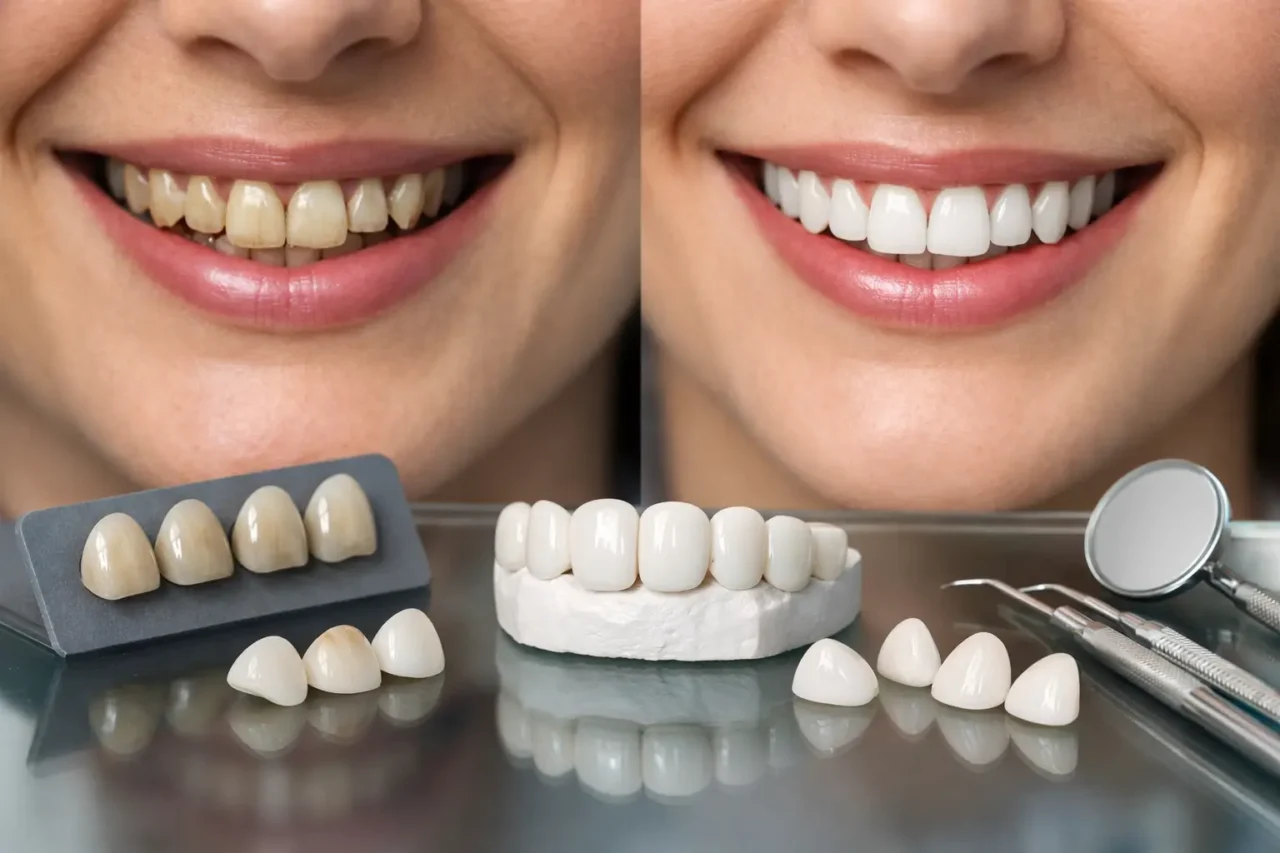
A whitening tray can brighten many smiles, but it cannot always overcome years of coffee, red wine, tobacco, aging restorations, or naturally dark tooth color. For patients whose discoloration remains visible after professional whitening, the best veneers for stained teeth can create a brighter, more even smile while preserving a natural appearance.
The right choice is not simply the whitest veneer available. It is the material, shade, thickness, and treatment plan that can mask underlying color without making teeth look bulky, flat, or artificial. For international patients planning a smile makeover, that decision also affects the number of appointments needed and how confidently they can travel home with their new smile.
Why Some Stains Need More Than Whitening
Professional whitening works by changing the color of natural enamel and dentin. It can be highly effective for surface and age-related yellowing, but it has limits. Gray discoloration from certain medications, darkened teeth after trauma or root canal treatment, fluorosis, and deep internal staining may not respond evenly. Existing crowns, fillings, and bonding also do not whiten.
This is where veneers may be the more predictable cosmetic option. A veneer covers the front surface of the tooth, allowing a dentist to control the final color, shape, and light reflection. The goal is not to cover every tooth automatically. A careful evaluation determines whether whitening, veneers, crowns, or a combination will produce the healthiest and most balanced result.
Porcelain Veneers Are Often Best for Deep Staining
For most patients with significant, stubborn discoloration, porcelain veneers are the leading choice. High-quality dental porcelain has translucency and depth that closely resemble natural enamel, yet it can be selected with enough opacity to conceal dark tooth structure underneath.
Porcelain is also highly stain resistant. Once your new shade is established, it is less likely to absorb pigments from coffee, tea, berries, or wine than natural enamel or composite resin. With consistent brushing, flossing, and professional cleanings, porcelain veneers can maintain their appearance for many years.
The trade-off is that porcelain veneers require detailed planning and usually involve a small amount of enamel preparation. The amount varies by case. A very dark tooth may need more masking ability, while a minimally prepared veneer may be appropriate when teeth are already well positioned and only need a modest color change. The best approach protects tooth structure while leaving enough room for a strong, natural-looking veneer.
Choosing the Right Porcelain Opacity
Patients sometimes request the brightest possible shade because they want a dramatic change. Yet a very opaque, ultra-white veneer can look unnatural against the lips, skin tone, and lower teeth. It may also require more preparation to avoid thickness.
An experienced cosmetic dentist can use porcelain opacity strategically. More opaque materials may be used where staining is darkest, while more translucent porcelain can be chosen for visible front teeth that need lifelike light reflection. This customized approach helps create a smile that looks bright in photos and believable in person.
Composite Veneers: A Lower-Cost Option With Limits
Composite veneers use tooth-colored resin applied and shaped directly on the teeth. They can improve mild to moderate staining, small gaps, worn edges, and uneven shapes in fewer visits. Because composite often requires little or no enamel removal, it can be a conservative option for selected patients.
However, composite does not resist staining as well as porcelain. It can gradually pick up color from foods, drinks, and smoking, and it may need polishing, repair, or replacement sooner. For severe gray, brown, or uneven discoloration, composite may not mask the underlying tooth color as predictably without looking thicker than desired.
Composite can be a practical choice when budget, timing, or conservative treatment is the priority. For patients seeking a long-lasting, high-impact solution for heavily stained front teeth, porcelain usually offers the more refined and durable result.
When Veneers May Not Be the Best First Step
Not every discolored tooth needs a veneer. If your teeth are healthy and the staining is primarily yellow, professional whitening may be the simplest place to start. Whitening can also help establish a lighter baseline before veneers are placed on only a few visible teeth.
A tooth that is badly decayed, extensively filled, fractured, or root canal treated may need a crown rather than a veneer. Crowns cover the entire tooth and may offer better protection when there is not enough healthy structure to support a veneer. If gum disease, active decay, teeth grinding, or bite problems are present, those concerns should be addressed before cosmetic treatment begins.
This is why an online consultation should go beyond choosing a shade from a photo. Clear photographs, dental X-rays when available, health history, and a discussion of your goals help create a safer plan. The strongest cosmetic results are built on healthy gums, stable teeth, and a bite that supports the restorations.
How Many Teeth Should Be Treated?
The answer depends on how many teeth show when you smile, talk, and laugh. Some patients improve their smile with six to eight upper veneers. Others choose eight to ten upper veneers and matching lower veneers for a more complete transformation. Treating only the darkest teeth can work, but the surrounding natural teeth must blend well with the new shade.
Your dentist will also consider facial symmetry, tooth proportions, gum display, and the color of neighboring teeth. A bright smile should still look like it belongs to you. The most successful cases are designed around your individual features, not a one-size-fits-all celebrity smile.
Planning Veneers During a Trip to Cartagena
Dental tourism works best when the clinical plan is organized before you arrive. At Smile Makeover Cartagena, international patients can begin with an English-speaking online consultation, share photos and treatment goals, and receive guidance on the expected process. Once in Cartagena, the in-person exam confirms whether the proposed plan is appropriate for your teeth and gums.
Porcelain veneer treatment commonly requires several appointments over approximately one to two weeks, depending on the number of teeth and the complexity of the case. The process may include digital smile planning, tooth preparation when needed, temporary veneers, final fitting, and bite adjustments. Building time into your trip is essential. A rushed schedule leaves little room for the careful detail work that makes veneers look natural and feel comfortable.
Patients should also plan for follow-up at home. Veneers do not need complicated maintenance, but regular dental exams and cleanings remain necessary. If a veneer ever chips, loosens, or needs adjustment, it is helpful to have records of the materials and shade used so a local dentist can coordinate care if needed.
Questions to Ask Before Choosing Veneers
Before committing to treatment, ask what material will be used and why it suits your degree of staining. Ask whether whitening could reduce the number of veneers required, how much enamel preparation is expected, and whether any teeth may need crowns instead. You should also understand the planned shade, how your bite will be evaluated, and what happens if the final result needs an adjustment.
For travel-based care, confirm the anticipated appointment schedule and the amount of time you should remain in the city after final placement. Transparent answers matter as much as an attractive before-and-after photo. You deserve to know how the result will be designed, not just what it will cost.
A brighter smile should feel like a confident version of your own, not a mask over your teeth. When deep staining is evaluated carefully and the veneer material is matched to your needs, the result can be both striking and naturally yours.
