


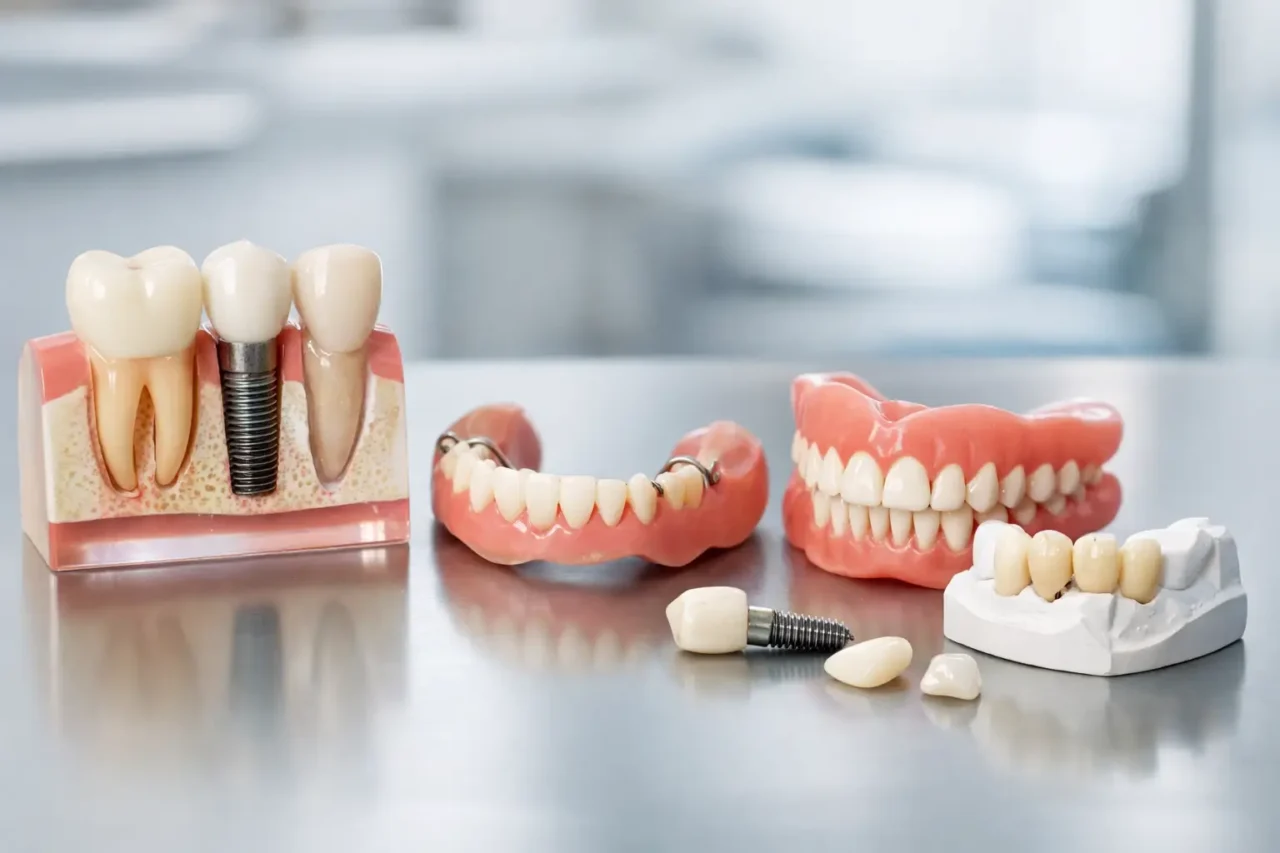
Losing a tooth changes more than your smile. It can affect how you eat, how clearly you speak, and how confident you feel in photos, meetings, and everyday conversations. If you are weighing the best teeth replacement options, the right answer depends on how many teeth are missing, the condition of your gums and bone, your timeline, and your budget.
For many patients, the biggest mistake is assuming there is one universal solution. There is not. A single missing front tooth has different demands than several missing back teeth, and a full-arch case calls for a different strategy than replacing one tooth after an accident. The best plan is the one that restores function, looks natural, and fits your long-term goals.
How to choose the best teeth replacement options
When dentists evaluate tooth replacement, they are not just looking at the gap. They are looking at the surrounding teeth, bite pressure, bone support, gum health, and the final appearance of your smile. That is why two patients with a similar missing tooth can receive very different recommendations.
A few factors matter most. The first is stability. Some options stay fixed in place and feel closer to natural teeth, while others are removable and may require more adjustment. The second is preservation. Certain treatments help protect jawbone and reduce changes in facial structure over time. The third is convenience, since treatment length, healing time, and follow-up needs vary. Cost matters too, but it should be weighed against lifespan and maintenance, not just the initial price.
If you are traveling for treatment, planning also becomes part of the decision. Patients often want solutions that combine efficiency with excellent esthetics, especially when they are arranging care around work schedules or a longer stay abroad.
Dental implants
Dental implants are often considered the gold standard when discussing the best teeth replacement options. An implant replaces the root of a missing tooth with a small titanium post placed in the jawbone. Once healed, it supports a crown, bridge, or full-arch prosthesis.
The biggest advantage is that implants are independent. They do not rely on neighboring teeth for support, and they help stimulate the jawbone in a way that other replacements do not. That matters because bone naturally shrinks after a tooth is lost. Over time, that loss can affect both oral health and facial appearance.
Implants also tend to feel the most natural for chewing and speaking. Patients usually like the security of a fixed solution, especially when replacing visible teeth or lower molars that handle heavy bite force.
That said, implants are not instant in every case. Some patients need bone grafting, tooth extraction, or healing time before the final restoration can be placed. They also require healthy gums and good oral hygiene habits. While the upfront cost is higher than a bridge or denture, the long-term value is often strong because implants can last many years with proper care.
For a single missing tooth, a single implant with a crown is frequently the most conservative and durable option. For multiple missing teeth, implants can support bridges without replacing every missing tooth individually. For full-mouth cases, implant-supported fixed teeth can provide a major upgrade in comfort and confidence.
Dental bridges
A dental bridge fills the space left by one or more missing teeth by anchoring an artificial tooth to the natural teeth on either side. In the right case, a bridge can be an effective and attractive solution, especially when the neighboring teeth already need crowns.
One benefit of a bridge is speed. In many cases, treatment can be completed faster than implants because it does not require surgical placement or months of osseointegration. That can be appealing for patients who want to restore a smile quickly.
Bridges also provide a fixed result, which many people prefer over something removable. They can restore appearance and chewing function very well, particularly for short spans.
The trade-off is that a traditional bridge requires reshaping the supporting teeth. If those teeth are healthy and untouched, some patients prefer not to alter them. Bridges also do not stimulate the jawbone the way implants do, so they do not prevent bone loss beneath the missing tooth area.
A bridge may be a smart choice when the adjacent teeth already have large fillings or damage and would benefit from crowns anyway. In that situation, the treatment can solve more than one problem at once.
Partial and full dentures
Dentures remain one of the most accessible teeth replacement options, and for some patients they are still the most practical. A partial denture replaces several missing teeth and clips around remaining natural teeth. A full denture replaces all teeth in the upper or lower arch.
Modern dentures can look far better than many people expect. When designed carefully, they can improve facial support, restore smile esthetics, and help with basic chewing and speech. They also tend to have a lower initial cost than implants or extensive bridgework.
Still, removable dentures come with limits. They may shift during eating or talking, they usually provide less biting strength than fixed options, and they do not stop jawbone resorption. Over time, as the ridge changes shape, they may need relining or replacement for a better fit.
For patients missing many or all teeth, dentures can be an important first step. In some cases, they are used as a temporary solution while planning future implant treatment. For others, especially those prioritizing affordability or avoiding surgery, they remain a reasonable long-term choice.
Implant-supported dentures and full-arch solutions
There is a middle ground between traditional dentures and replacing every tooth with a separate implant. Implant-supported dentures and full-arch restorations offer more security by anchoring the prosthesis to a smaller number of implants.
This option is especially appealing for patients who have lost most or all of their teeth and want better stability than removable dentures alone can offer. Depending on the design, the prosthesis may snap in and out for cleaning or remain fixed in place and removed only by the dentist.
The difference in daily comfort can be significant. Patients often report easier chewing, less movement, and greater confidence in social settings. For people who have struggled with loose lower dentures, this can be life-changing.
As with other implant treatment, bone quality and overall oral health matter. Not every patient needs the same number of implants or the same style of restoration, so planning is highly individualized.
Which option is best for you?
If you are replacing one tooth, an implant is often the strongest long-term choice, while a bridge may make more sense if the nearby teeth already need crowns. If you are missing several teeth in a row, an implant-supported bridge can preserve more structure, but a removable partial may be the better fit if budget is the main concern.
If you need to replace all teeth in an arch, your decision usually comes down to conventional dentures versus implant support. The lower the priority on movement and maintenance, the more attractive implant-retained or fixed options become.
Cosmetics matter too. Front teeth demand careful attention to gum contours, shape, and color matching. Back teeth carry more chewing load. The best plan balances both appearance and durability rather than focusing on one alone.
Cost, timing, and treatment abroad
For many international patients, the conversation about the best teeth replacement options is also a conversation about value. Implant and full-mouth treatments can be expensive in the United States, Canada, and Europe, which is why many patients compare high-quality care abroad.
What matters most is not just lower pricing. It is whether the clinic offers clear planning, English communication, realistic timelines, and a treatment team experienced in both restorative and cosmetic outcomes. A well-organized process can make complex care feel manageable, even when travel is part of the plan.
At Smile Makeover Cartagena, patients often begin with an online consultation and a customized treatment proposal before they book travel. That helps remove guesswork and gives patients a clearer idea of which option fits their needs, schedule, and goals.
Questions worth asking before you decide
Before moving forward, ask how long the treatment should last, what maintenance it requires, and what happens if your bite or bone changes over time. Ask whether the recommendation is based on preserving healthy teeth, improving function, or simply lowering immediate cost. Those are not always the same thing.
It is also wise to ask for a realistic picture of recovery. Some solutions look faster on paper than they feel in real life. A plan that fits comfortably into your schedule and healing capacity is usually the better choice.
Replacing missing teeth is not just about filling space. It is about restoring comfort, confidence, and normal daily function in a way that still makes sense years from now. The right option should feel like a smart long-term investment in your health and your smile.
