


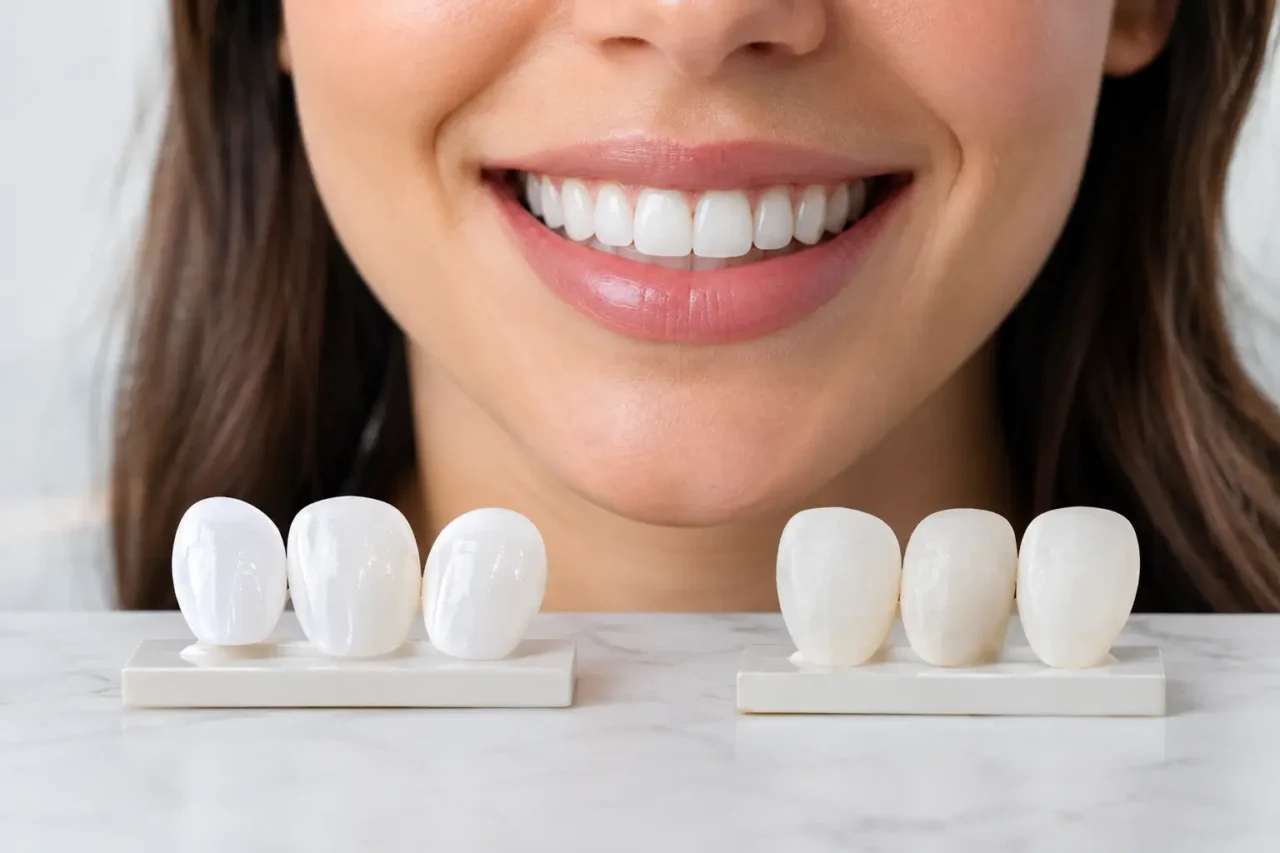
A brighter, more balanced smile can change how you feel in photos, meetings, and everyday conversations. But when you are comparing porcelain versus composite veneers, the right choice is not simply the one that looks best on day one. It is the option that fits your tooth health, desired result, budget, timeline, and willingness to maintain your investment.
For international patients planning treatment in Cartagena, the decision also affects how your visit is organized. A personalized evaluation helps determine whether you need a conservative cosmetic enhancement, a more durable smile makeover, or restorative care before veneers are considered.
Porcelain Versus Composite Veneers: The Main Difference
Both types of veneers improve the visible front surface of teeth. They can help correct discoloration, small chips, uneven edges, minor gaps, worn enamel, and teeth that appear slightly misaligned. The difference lies in the material and how the veneer is created.
Porcelain veneers are thin, custom-made ceramic shells fabricated in a dental laboratory and bonded to the teeth. They are designed around your facial proportions, bite, gum line, and preferred smile shape. High-quality porcelain reflects light in a way that closely resembles natural enamel, which is why it is often chosen for comprehensive aesthetic transformations.
Composite veneers are sculpted directly onto the teeth using tooth-colored resin, the same family of material used for cosmetic bonding. Your dentist layers, shapes, and polishes the material during the appointment. This makes composite a more direct and often more conservative option for modest corrections.
Neither material is automatically better. A patient seeking a subtle repair on one or two teeth may be an excellent composite candidate. Someone wanting a long-lasting, stain-resistant change across the smile may find porcelain to be the more predictable investment.
Appearance: Natural Detail or Direct Improvement?
Porcelain is known for its translucency, color stability, and polished surface. It can be customized in fine detail, including brightness, texture, edge shape, and natural-looking variations in color. For patients who want a refined, camera-ready result without an overly artificial appearance, porcelain offers exceptional control.
Composite can also look beautiful, especially when used by an experienced cosmetic dentist for smaller changes. It is particularly useful for smoothing a chipped edge, closing a narrow gap, or improving the contour of a tooth that looks slightly shorter than its neighbors. However, resin does not reflect light exactly like porcelain, and its surface can lose some polish over time.
The number of teeth being treated matters. Composite may be ideal for targeted corrections, while porcelain can create greater harmony when changing the shape, shade, and proportions of several visible teeth. Your dentist should design the smile around your face and existing teeth rather than applying one formula to every patient.
Color and stain resistance
Porcelain resists staining from coffee, tea, red wine, and tobacco far better than composite resin. It also maintains its shade more consistently over the years. That does not mean porcelain is maintenance-free, but it tends to retain its polished appearance with routine hygiene and professional care.
Composite can gradually absorb surface stains or become duller, particularly with frequent exposure to staining foods, drinks, or smoking. It can usually be polished or repaired, which is a practical advantage, but it may require more frequent cosmetic maintenance.
Durability, Repairs, and Tooth Preparation
Porcelain veneers are generally more durable than composite veneers when they are properly planned, bonded, and cared for. They are strong enough for normal chewing but are not indestructible. Biting ice, opening packages with your teeth, and chewing hard objects can chip or damage any veneer.
If porcelain chips significantly or comes loose, replacement is often necessary. Because each veneer is custom-made, a replacement may require laboratory work and an additional visit. Patients should also understand that porcelain treatment commonly involves some enamel preparation, although the amount varies based on the starting position and shape of the teeth.
Composite veneers are easier to repair in many cases. If a small area chips, your dentist can often add and reshape resin directly. Composite may also require little to no enamel removal for certain cases, making it appealing to patients who want the most conservative approach possible.
Still, minimal preparation is not always the healthiest or most aesthetic solution. If teeth protrude, are severely discolored, or have old restorations, simply adding material without careful planning can create a bulky result. A proper examination, photographs, X-rays when indicated, and bite assessment are more valuable than choosing a material based on a single promise.
Cost: Initial Savings Versus Long-Term Value
Composite veneers usually cost less upfront because they can often be completed directly in the dental chair and do not require laboratory fabrication. For patients making a limited improvement or treating only a few teeth, that lower entry cost can make sense.
Porcelain veneers typically have a higher initial cost due to custom design, lab craftsmanship, and the additional planning involved. Yet their longevity, stain resistance, and stable finish may offer stronger long-term value for patients pursuing a full smile makeover.
For dental tourism patients, the value conversation should go beyond the price per veneer. Ask what is included in your treatment plan: consultation, digital smile planning, temporary veneers if needed, materials, adjustments, follow-up guidance, and any restorative treatment required before cosmetic work begins. A transparent quote makes it easier to compare options realistically.
At Smile Makeover Cartagena, treatment planning is personalized because the same smile goal can require very different clinical solutions. A patient with healthy teeth and minor gaps has different needs than someone with grinding, decay, worn enamel, or existing crowns.
What Is Best for Your Timeline in Cartagena?
Composite veneers can often be completed in one or two appointments, depending on the number of teeth and complexity of the design. This can be helpful for travelers with a shorter stay or patients who need a focused cosmetic correction.
Porcelain veneers usually require more planning and at least two clinical stages: tooth preparation and records, followed by bonding after the custom veneers are ready. Some patients may receive temporary veneers between appointments. The exact schedule depends on the size of the case, the condition of your teeth, laboratory coordination, and whether you need other treatment first.
Avoid booking a flight home immediately after the final bonding appointment. Allow time for bite adjustments and a final review. A well-organized dental tourism journey should include enough flexibility for comfort, quality control, and clear aftercare instructions, not just the fastest possible turnaround.
When Veneers May Not Be the First Step
Veneers are cosmetic restorations, not a substitute for treating active dental disease. Gum inflammation, untreated cavities, failing fillings, infection, or unstable bite issues should be addressed first. Patients who clench or grind their teeth may still be candidates, but they may need bite management and a protective night guard to protect their new smile.
Whitening is another consideration. Veneers do not whiten after they are placed. If you want a brighter overall smile, whitening natural teeth before selecting the veneer shade can create a more harmonious result. Crowns, bridges, or implants may also be more appropriate than veneers for teeth with extensive damage or missing structure.
How to Make a Confident Choice
The best consultation starts with your goals, not a sales pitch. Share photographs of your smile, explain what you would change, and be honest about habits such as grinding, smoking, or frequent coffee consumption. Ask to see how the proposed material will address your specific concerns and whether the plan preserves as much healthy tooth structure as possible.
Choose composite when you want a conservative, repairable solution for smaller changes, have a shorter treatment window, or prefer a lower initial investment. Choose porcelain when you want superior stain resistance, highly customized aesthetics, and a longer-lasting finish for a broader smile transformation.
A beautiful result should still look like it belongs to you. With thoughtful planning, fluent communication, and enough time to make the right clinical decisions, your veneer treatment can feel as comfortable as the confidence it brings.
