


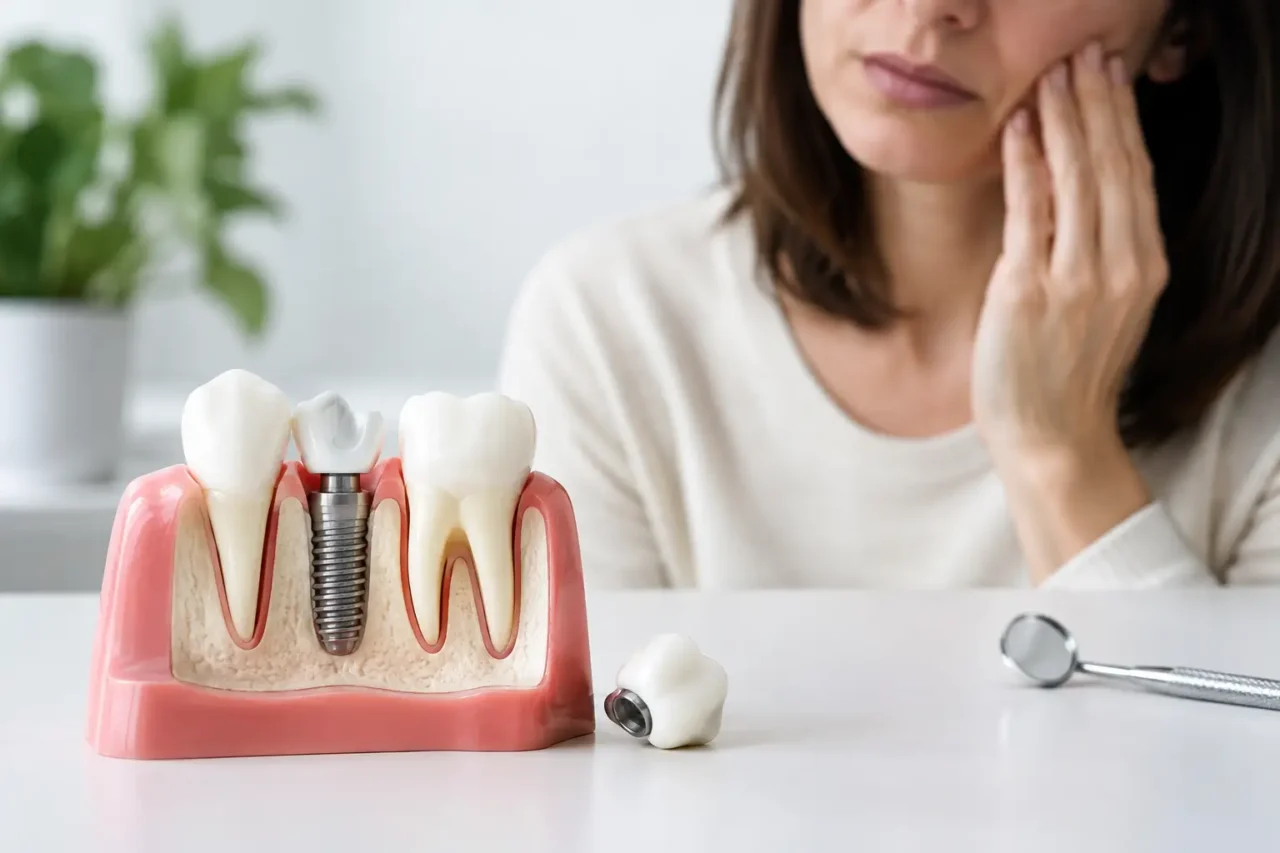
A dental implant should feel secure, comfortable, and much like a natural tooth. When it does not, the concern can be immediate: Is something wrong with the implant, the crown, or the healing process? Implant failure is not always a lost implant, and it is not always an emergency. But pain, movement, swelling, or changes around the implant deserve prompt professional attention.
For patients who have invested time, money, and trust in restoring their smile, clear answers matter. The good news is that many implant complications can be managed successfully when they are caught early and evaluated by an experienced implant dentist.
What Implant Failure Actually Means
The term implant failure can describe several different situations. In the most serious form, the implant post does not properly bond with the jawbone or loses its support after it has healed. This may require removal, bone treatment, and a carefully planned replacement.
However, not every concern means the titanium implant itself has failed. A loose crown, damaged abutment, cement issue, bite imbalance, or irritated gum tissue can create symptoms that feel alarming but may be repairable without removing the implant. That distinction is why an in-person examination and imaging are essential before assuming the worst.
Implant problems generally fall into two timeframes. Early failure occurs during the healing period, before the implant fully integrates with the bone. Late failure develops months or years later, often because of infection around the implant, bone loss, excessive biting forces, or changes in overall health.
Implant Failure Signs You Should Not Ignore
A successful implant should not be mobile. If the implant itself feels loose, contact a dentist promptly and avoid chewing on that side. Sometimes patients feel movement in the crown rather than the implant post, which can be less serious, but only an exam can confirm the source.
Persistent pain is another reason to schedule an evaluation. Mild soreness after surgery is expected, especially during the first several days. Pain that worsens rather than improves, returns after healing, or appears when biting may signal infection, bite pressure, or a problem with the surrounding tissues.
Other warning signs include bleeding gums around the implant, swelling, pus, a bad taste, gum recession, or a visible change in the position of the crown. These symptoms can be associated with peri-implant mucositis or peri-implantitis, conditions involving inflammation and, in more advanced cases, bone loss around an implant.
Not every change is dramatic. Some patients notice that food is suddenly getting trapped around an implant crown, that floss catches differently, or that the bite feels uneven. These smaller changes are worth addressing early, before they become more complex and costly to treat.
Why Dental Implants Can Fail
Dental implants have high long-term success rates, but success depends on biology, planning, healing, and daily maintenance. There is rarely one single cause.
Infection and bone loss around the implant
Peri-implantitis is one of the most common causes of late implant failure. Bacteria collect around the gum line and trigger inflammation. Without treatment, the infection can damage the bone that supports the implant. Smoking, inconsistent home care, untreated gum disease, and missed professional cleanings can increase the risk.
Unlike natural teeth, implants do not have the same protective connective tissue attachment. That means inflammation around an implant can sometimes progress quietly. Regular monitoring is not optional after implant treatment, even when the crown looks and feels excellent.
Inadequate bone support or incomplete integration
An implant needs sufficient healthy bone to remain stable. If bone quantity or quality is limited, the implant may not integrate as expected. This can occur after long-term tooth loss, periodontal disease, infection, trauma, or natural bone remodeling in the upper jaw.
Bone grafting can improve the foundation when needed, but it also adds healing time. Trying to rush implant placement simply to shorten a treatment timeline is not always the right choice. A thoughtful plan should prioritize predictable support over speed.
Excessive pressure from biting or grinding
Implants do not have the same shock-absorbing ligament as natural teeth. When a patient grinds or clenches, or when the bite is not balanced correctly, concentrated force can strain the implant, abutment, screw, or final crown.
This does not mean patients with bruxism cannot have implants. It means the treatment plan may need a protective night guard, stronger restorative materials, adjusted bite contacts, or a design that distributes pressure across more than one implant.
Surgical and restorative planning factors
Implant placement requires precision. The implant must be positioned with the final tooth restoration, bite, available bone, neighboring teeth, and facial aesthetics in mind. Poor angulation, an implant that is too narrow for the load, or a restoration that is difficult to clean may contribute to future complications.
For visible front teeth, planning is especially detailed. The goal is not only a stable implant, but also natural gum contours, appropriate tooth proportions, and a result that blends beautifully with the smile.
Health and lifestyle considerations
Uncontrolled diabetes, heavy smoking, certain medications, immune conditions, and poor healing capacity may affect implant outcomes. These factors do not automatically rule out treatment. They do, however, call for an honest medical review and a customized plan.
A qualified dentist should ask about your health history, previous gum disease, smoking habits, and medications before recommending implants. Patients should feel comfortable discussing these details openly. Accurate planning starts with accurate information.
What Happens If an Implant Fails?
The next step depends on the cause, timing, and amount of healthy bone remaining. If the crown or abutment is loose while the implant is stable, the solution may be as straightforward as replacing a screw, repairing the crown, or adjusting the bite.
If there is early infection or inflammation without major bone loss, professional cleaning, improved hygiene, and targeted treatment may help stabilize the area. More advanced peri-implantitis can require surgical access, decontamination of the implant surface, and bone-regeneration procedures. Results vary depending on how much support has already been lost.
When an implant has lost stability or cannot be predictably maintained, removal may be the safest option. After removal, the site is allowed to heal, and bone grafting may be recommended to rebuild the foundation. A replacement implant can often be placed later, but timing depends on the condition of the tissues and the complexity of the case.
Removal is understandably disappointing, but it is not the end of your restoration options. In some cases, a new implant is the right path. In others, a bridge or removable prosthetic may be better suited to your anatomy, health needs, budget, and travel schedule.
How to Protect a Dental Implant for the Long Term
The daily habits that protect natural teeth also protect implant-supported restorations: brush thoroughly, clean between teeth and around the implant as directed, and attend regular hygiene visits. Your dentist may recommend specific tools, such as an interdental brush, implant-safe floss, or water flosser, based on the shape of your restoration.
Avoid using teeth as tools, chewing ice, or biting hard objects. If you clench or grind, wear the night guard your dentist recommends. A well-made guard protects both the implant restoration and your remaining natural teeth from damaging forces.
For international patients, follow-up planning deserves special attention. Before traveling home, you should understand your healing instructions, provisional restoration care, the expected treatment timeline, and who to contact if a concern develops. At Smile Makeover Cartagena, this planning is part of creating a treatment journey that feels organized from your consultation through follow-up.
When to Seek Urgent Care
Call a dentist promptly if you have a loose implant or crown, significant swelling, fever, drainage, worsening pain, or difficulty swallowing or breathing. Trouble breathing or swallowing requires emergency medical care.
Do not try to tighten an implant crown yourself or ignore movement because it is painless. Continuing to chew on an unstable restoration can damage components or place additional stress on the bone. Until you are evaluated, chew on the opposite side and keep the area as clean as possible.
A concern around an implant can feel personal because it affects how you eat, speak, and smile. The most useful next move is not panic or guesswork. It is a timely examination with a dentist who can identify what is actually happening and build a clear path back to a comfortable, confident smile.
