


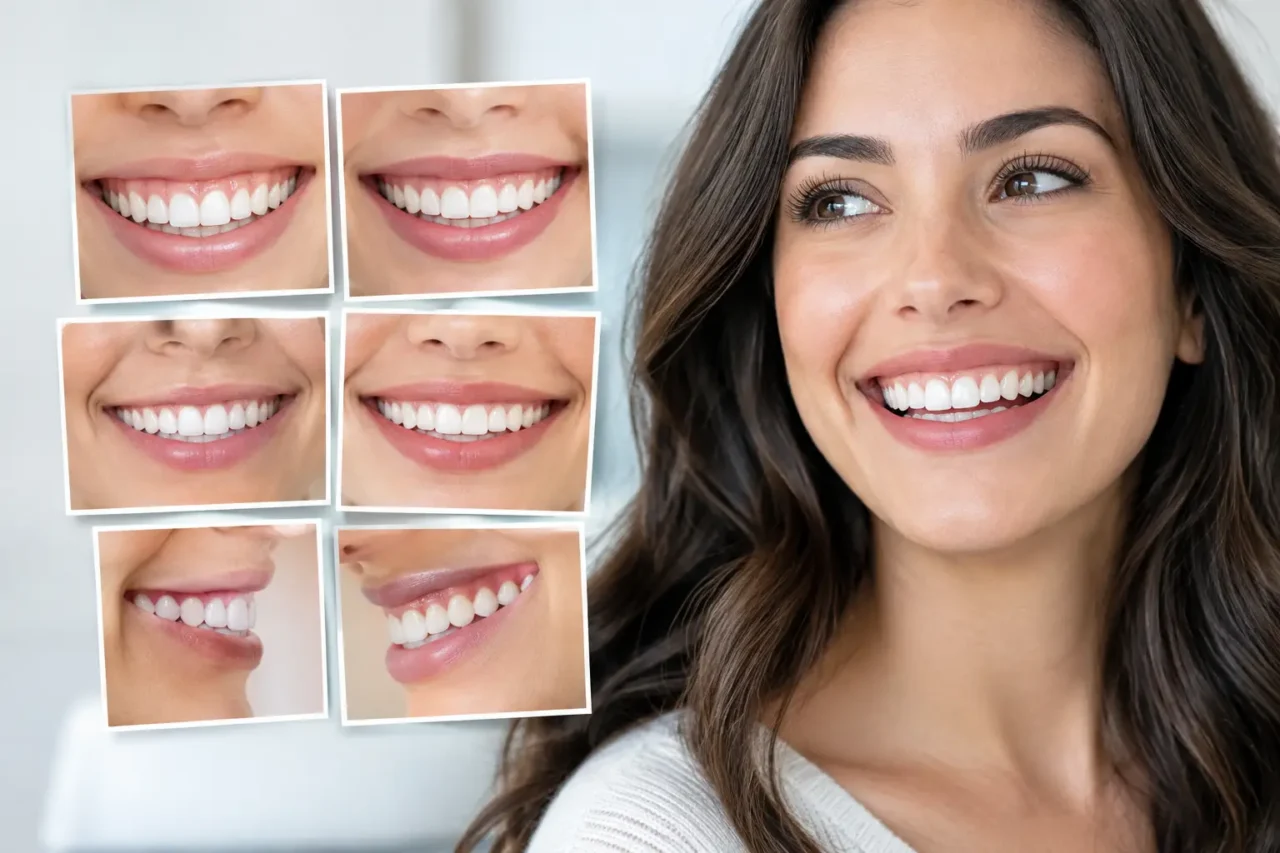
A smile can show more gum than you would like even when your teeth are healthy and well aligned. The right gummy smile treatment examples make one point clear: there is no single fix for every patient. A natural-looking result depends on identifying whether the issue comes from the gums, teeth, upper lip, bite, or jaw position before treatment begins.
For many adults, the goal is not to eliminate gum display completely. A small amount of visible gum can look youthful and attractive. Treatment is about improving the balance between the lips, teeth, and gums so your smile feels more proportionate and more like you.
What Causes a Gummy Smile?
Dentists usually consider a smile gummy when a person shows more than about 3 to 4 millimeters of gum tissue above the upper teeth when smiling. That measurement is only a guide. Facial proportions, lip movement, tooth shape, and personal preference all matter.
One common cause is excess gum tissue covering part of teeth that are otherwise normal in length. Another is teeth that have not fully erupted into their ideal visible position. Some patients have an upper lip that rises high when they smile, while others have an overactive lip muscle. Orthodontic concerns, such as an overbite or downward position of the upper front teeth, can also contribute. In more pronounced cases, the upper jaw itself extends too far vertically.
This is why before-and-after photos alone are not enough to choose treatment. Two patients may appear to have similar gummy smiles but need entirely different care.
7 Gummy Smile Treatment Examples to Consider
1. Botox for an overactive upper lip
Botox can be a conservative choice when the upper lip pulls too high because of strong elevator muscles. Small, carefully placed injections reduce how far the lip lifts when smiling, allowing less gum to show.
The appointment is quick, with no surgery and little downtime. Results commonly become noticeable within days and generally last around three to four months, so maintenance visits are needed. Botox does not change gum tissue, tooth length, or jaw position. It is best viewed as a temporary option for the right diagnosis, or as a way to preview how reduced lip movement may look.
2. Laser gum contouring for excess tissue
When healthy gum tissue covers too much of otherwise well-positioned teeth, gum contouring can reveal more of the natural tooth surface. A dentist reshapes the gumline to create a more even, balanced frame around the upper teeth.
Laser techniques can offer precise soft-tissue treatment with limited bleeding and a relatively comfortable recovery. However, contouring is not simply a cosmetic shortcut. The dentist must respect the biological width around each tooth and confirm that enough tooth structure can be safely exposed. For minor excess tissue, it can create a dramatic visual difference without changing the teeth themselves.
3. Crown lengthening when bone position is involved
Some teeth look short because both gum tissue and the underlying bone sit too low over the tooth. In these cases, crown lengthening may be more appropriate than surface-level contouring. The procedure adjusts the gum and, when necessary, a small amount of supporting bone to establish a stable new gumline.
Healing takes longer than with simple laser contouring, and patients need to allow time for the tissues to settle before final veneers or crowns are placed. The trade-off is long-term stability. This can be an excellent treatment when a patient wants to show more tooth structure and also needs restorative work on worn, broken, or decayed teeth.
4. Porcelain veneers after gumline correction
Veneers are not a treatment for every gummy smile, but they can be part of a carefully planned smile makeover. After the gumline has been corrected, porcelain veneers can refine tooth shape, improve color, close spaces, and create the proportions that complement the new gum display.
This approach is especially useful for patients with small, worn, uneven, or discolored upper front teeth. Quality matters here. Overly long or bulky veneers can make a smile look artificial, while conservative planning helps preserve natural tooth structure. A detailed smile design should account for facial features, lip movement, bite, and the amount of tooth that shows at rest and when smiling.
5. Orthodontics to improve tooth and bite position
Braces or clear aligners may be recommended when the gummy appearance is connected to an overbite, tooth eruption pattern, or the position of the upper front teeth. Orthodontics can intrude teeth slightly, correct bite relationships, and improve how the teeth sit behind the upper lip.
Treatment often takes months rather than days, but it addresses the underlying alignment rather than masking it. Some adults combine orthodontics with minor gum recontouring or veneers after tooth movement is complete. This sequence can be more conservative than placing cosmetic restorations before the teeth are in their ideal positions.
6. Lip repositioning surgery for excessive lip lift
Lip repositioning is a surgical option that limits the upward movement of the upper lip. The surgeon adjusts the attachment inside the lip so it covers more gum tissue during a full smile.
It may suit patients with a short or highly mobile upper lip who do not have a major jaw discrepancy. Results can be longer lasting than Botox, but healing, possible scar tissue, and the chance of some relapse should be discussed honestly. It is not the preferred answer when the main cause is excess gum tissue or a vertically prominent upper jaw.
7. Orthognathic surgery for significant jaw excess
When the upper jaw is substantially too long vertically, orthognathic surgery may offer the most comprehensive correction. An oral and maxillofacial surgeon repositions the jaw, often as part of a coordinated orthodontic plan.
This is the most involved option on this list. It requires careful imaging, surgical planning, recovery time, and a realistic understanding of the commitment involved. Yet for patients with a significant skeletal imbalance, it can improve gum display, bite function, facial proportions, and long-term oral health in ways that less invasive treatments cannot.
How Dentists Choose the Right Approach
A proper assessment begins with more than a posed smile photograph. Your dentist should evaluate how much gum shows at rest and in a full smile, the length and shape of your teeth, gum health, lip movement, bite, and facial profile. Digital photographs, X-rays, scans, and a discussion of your goals help establish whether the focus should be on soft tissue, teeth, orthodontics, or skeletal structure.
It also depends on your priorities. If you want a reversible option before an event, Botox may be worth considering. If you want to address permanently covered tooth structure, gum contouring or crown lengthening may be more suitable. If your concern includes worn teeth, discoloration, or uneven proportions, a combined approach involving gum treatment and veneers may deliver the most complete result.
A responsible plan will also account for periodontal health. Cosmetic changes should never compromise the gums or make daily hygiene more difficult. The healthiest-looking smile is usually the one that is designed around stable tissues and a functional bite.
Planning Treatment When You Are Traveling for Care
International patients can often start the conversation from home with clear smile photographs, dental X-rays if available, and a description of their concerns. An online consultation can help determine whether treatment is likely to fit within one trip or whether it requires staged visits.
For example, Botox and certain gum-contouring cases may have a short treatment timeline. Veneers and crowns require precise preparation, laboratory coordination, and final adjustments. Orthodontics and jaw surgery demand longer-term follow-up, so they need particularly thoughtful planning. At Smile Makeover Cartagena, fluent English communication and a customized treatment plan can help international patients understand the recommended sequence before arranging travel.
Avoid choosing solely by the shortest timeline or the lowest initial quote. Ask what diagnosis is driving the recommendation, whether temporary restorations are needed, how long healing will take, and what follow-up is advisable after you return home. Clear answers create a safer, more comfortable treatment journey.
The best next step is a personalized evaluation that treats your smile as a whole, not just a gumline. Once the cause is clear, the right treatment can make your smile look naturally balanced while protecting the health and function behind it.

