


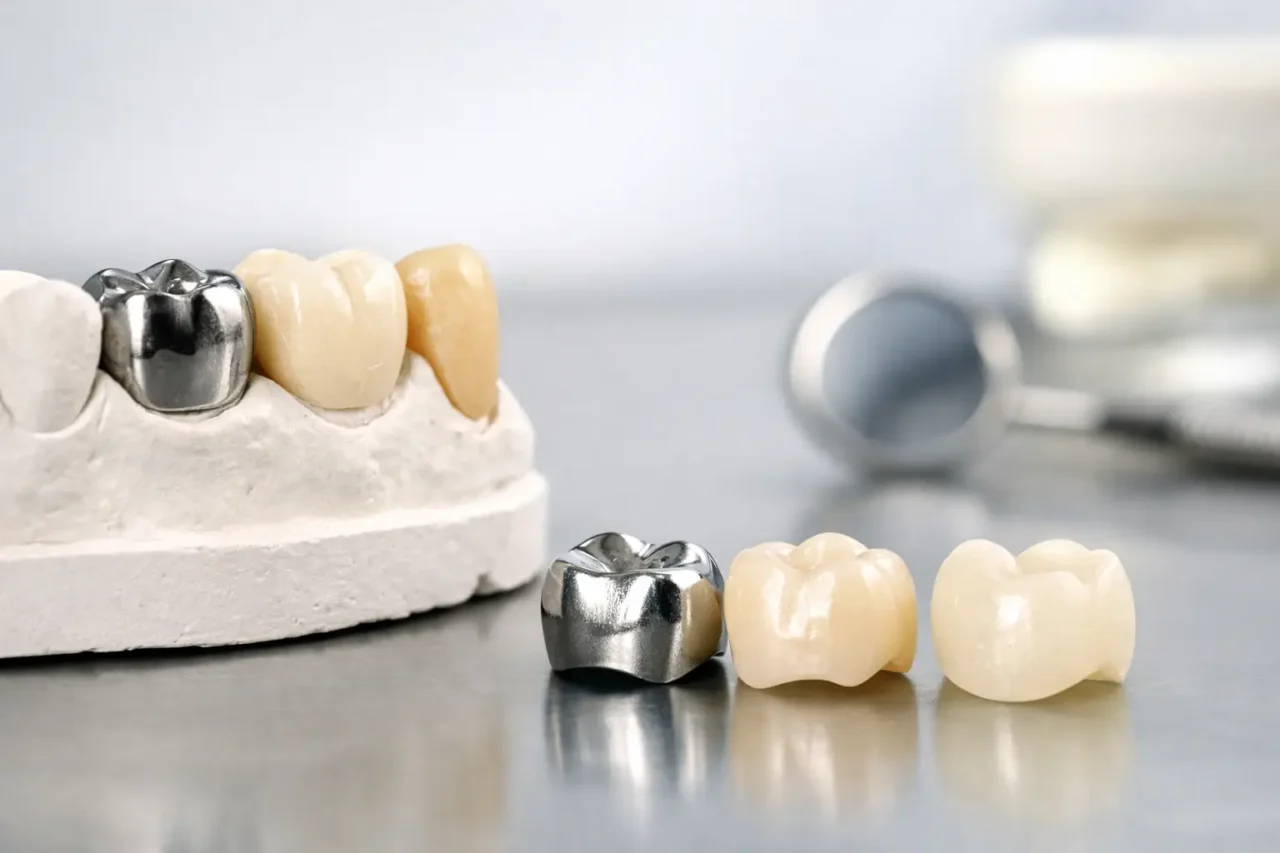
A crown is not simply a cap placed over a damaged tooth. It becomes part of your smile, your bite, and your daily routine for years to come. That is why comparing crown material options before treatment matters, especially when you are traveling for care and want a result that feels as natural as it looks.
The best choice depends on where the crown will sit, how strongly you bite or grind, how visible the tooth is when you smile, and the condition of the tooth underneath. A beautifully translucent material may be ideal for a front tooth but not always the first recommendation for a heavily loaded back molar. Your dentist should balance esthetics, strength, tooth preservation, and your long-term oral health rather than recommending one material for every situation.
Crown Material Options at a Glance
Modern dental crowns are commonly made from porcelain, zirconia, lithium disilicate, porcelain fused to metal, or metal alloys. Each has a place in restorative dentistry. The right material is the one that meets the demands of your specific tooth while helping your smile look balanced and natural.
For international patients, planning also matters. Some crown materials and cases can be completed quickly with an efficient treatment schedule, while more complex restorations, bite adjustments, or implant crowns may require additional appointments. A personalized online consultation helps clarify the expected timeline before you book travel to Cartagena.
Lithium Disilicate: A Natural Choice for Visible Teeth
Lithium disilicate is an all-ceramic material known for its lifelike appearance. It reflects light in a way that can closely resemble natural enamel, making it a popular choice for front teeth, premolars, and crowns visible in a broad smile.
This material can be color matched with neighboring teeth and shaped with fine detail. For patients replacing an old dark crown near the front of the mouth, lithium disilicate often offers a meaningful esthetic upgrade. It is also strong enough for many single-tooth restorations, provided the bite and tooth preparation are appropriate.
Its trade-off is that it may not be the best answer for every high-pressure situation. If you have severe grinding, a very limited amount of remaining tooth structure, or need a crown on a powerful molar, your dentist may recommend zirconia instead. A night guard can also be part of protecting a ceramic crown if you clench or grind while sleeping.
Zirconia: Strength for Back Teeth and Complex Bites
Zirconia is one of the strongest crown materials available. It has become a leading option for molars, bridges, implant-supported crowns, and patients with strong bites. Modern zirconia can also look much more natural than older versions, with layered and translucent options available for areas where appearance matters.
Full-contour zirconia is especially durable because it is milled from a solid block of material. This makes it a practical choice for a back tooth that needs to handle chewing forces every day. It is also useful when there is limited clearance between upper and lower teeth, since some zirconia restorations can be made strong without requiring as much thickness as other ceramic choices.
The esthetic trade-off is subtle but real. Even highly translucent zirconia may not reproduce the depth and light behavior of lithium disilicate in every front-tooth case. For a visible front crown, the treatment team will consider gum position, skin tone, neighboring tooth color, and how much translucency is needed before selecting a zirconia formulation.
Porcelain-Fused-to-Metal Crowns: Proven, With Limits
Porcelain-fused-to-metal crowns combine a metal substructure with an outer porcelain layer. They have been used successfully for decades and remain an option in certain restorative cases. The metal provides support, while the porcelain creates a tooth-colored visible surface.
However, this combination has esthetic limitations. A dark line can sometimes appear near the gumline, particularly if gums recede over time. Metal can also block light, so the crown may look less translucent than an all-ceramic restoration. If the outer porcelain chips, the metal beneath may become visible.
For these reasons, many patients seeking a cosmetic smile makeover prefer modern all-ceramic options when clinically appropriate. Yet porcelain-fused-to-metal may still be considered where its design and strength offer an advantage. The decision should be based on the individual case, not on the assumption that newer always means better.
Full Metal Crowns: Functional but Usually Less Visible
Gold and other metal alloy crowns are exceptionally durable and gentle on opposing teeth. They can require less tooth reduction than some ceramic crowns and are highly reliable for heavy chewing areas. From a purely functional perspective, metal remains an excellent restorative material.
The obvious consideration is appearance. Most patients do not want a visible metal crown in a smile zone, particularly when they are investing in a cosmetic result. Metal crowns are therefore more often reserved for far-back teeth or selected cases where durability is the highest priority.
How Location Changes the Best Material
A front tooth crown is judged by more than strength. It must blend with adjacent teeth in color, shape, translucency, and surface texture. Lithium disilicate or a highly esthetic zirconia option may be recommended, depending on the tooth’s position and the underlying color.
A molar crown has a different job. It must withstand repeated chewing forces without compromising the bite. Zirconia is often a strong choice here, especially for patients who clench, grind, or have a history of broken restorations.
Premolars sit between these two demands. They can be visible when you smile while also carrying substantial bite force. Either lithium disilicate or zirconia may work well, and the best choice depends on your bite, space, shade goals, and whether the tooth has been root canal treated.
Your Tooth Preparation and Bite Matter More Than Trends
The condition of the tooth can influence material selection as much as the crown’s final appearance. A tooth with extensive decay, a large old filling, or a prior root canal may need additional support before the crown is placed. In some cases, a buildup or post is needed to create a stable foundation.
Your bite also deserves careful attention. A crown that looks perfect but is even slightly too high can cause discomfort, sensitivity, jaw strain, or premature wear. For patients receiving multiple crowns or a full smile rehabilitation, the dentist must evaluate how the upper and lower teeth meet as a complete system.
This is one reason a quality crown should never be chosen from a menu alone. Digital scans, X-rays, photographs, clinical examination, and a clear discussion of your goals allow the dentist to recommend a material with confidence.
What to Ask During Your Crown Consultation
Before moving forward, ask why a specific material is recommended for your tooth and whether there are reasonable alternatives. You should also understand whether the crown is monolithic or layered, how it will be color matched, and what steps are planned to check your bite before final cementation.
If you are traveling from the United States, Canada, or Europe, ask how many visits your treatment requires and whether temporary crowns will be needed. Share recent X-rays and photos when available, but expect the final plan to be confirmed after an in-person examination. This protects you from surprises and helps create a more accurate treatment schedule.
At Smile Makeover Cartagena, crown recommendations are planned around both function and appearance, with fluent English communication from consultation through follow-up. The goal is not to place the most expensive material by default. It is to create a crown that supports your oral health and looks right in your smile.
A well-made crown should fade into your life. When you can smile in photos, enjoy a meal, and speak comfortably without thinking about the tooth, the material choice and treatment plan have done their job.

