


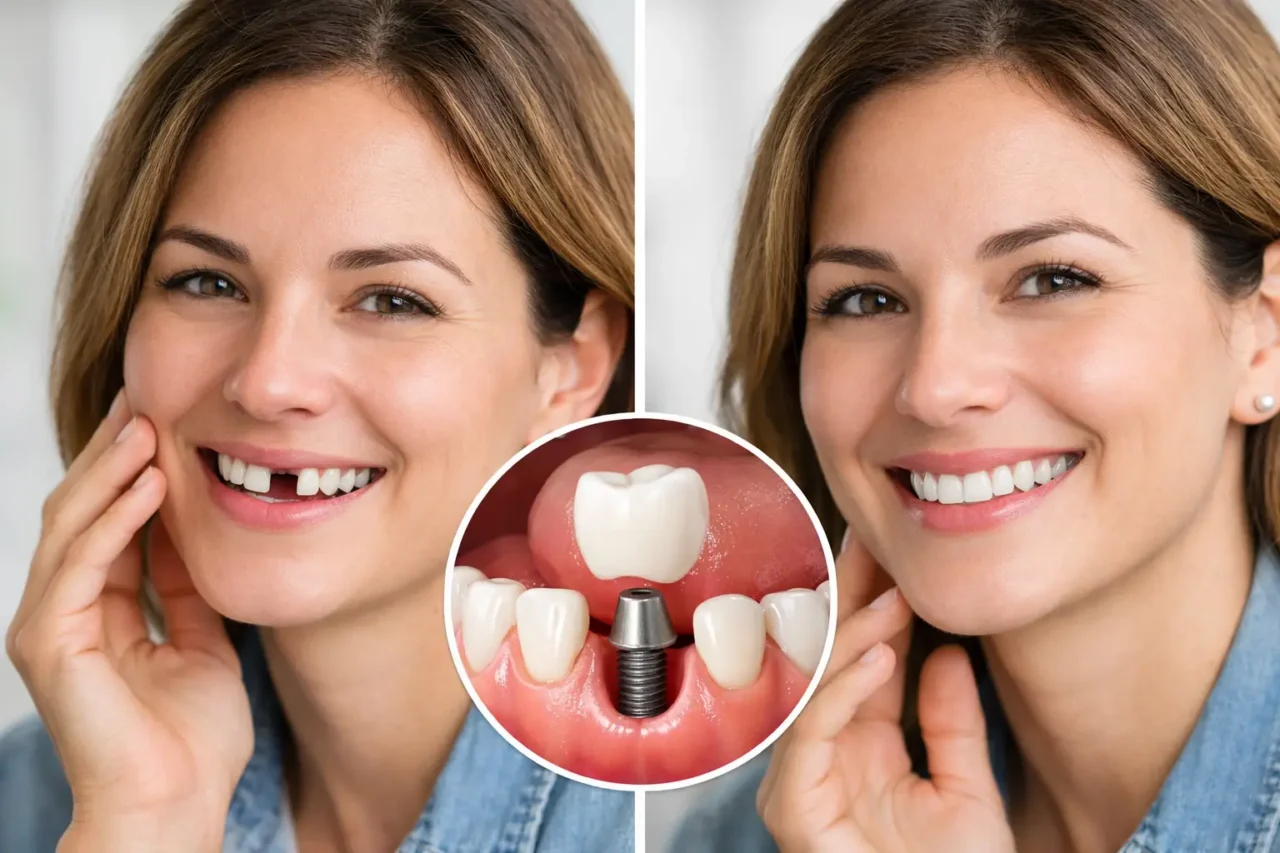
A missing front tooth changes more than a photograph. It can affect how you speak, bite into food, and feel when you meet someone new. If you need to replace a missing front tooth, the best solution is not always the fastest or the least expensive one. It should restore your confidence while protecting the bone, gums, and neighboring teeth that shape a natural-looking smile.
For many international patients, treatment planning also includes travel time, recovery, and the desire to complete care efficiently. A personalized evaluation makes it possible to choose an option that fits both your oral health and your schedule.
Why a Missing Front Tooth Needs Thoughtful Planning
Front teeth sit in the most visible area of the smile, where small details matter. The color, translucency, gumline, tooth length, and alignment all affect whether a replacement blends in or looks artificial. The front of the mouth also has thinner bone and delicate gum tissue, which can change after a tooth is lost.
Leaving the space untreated may allow nearby teeth to shift. The opposing tooth can also move downward or upward in search of contact. Over time, bone volume may decrease in the area where the root once stimulated the jawbone. That can make a future implant more complex, especially if treatment is delayed for years.
The right choice depends on why the tooth is missing, how long it has been absent, the health of the surrounding gums and bone, your bite, and your cosmetic expectations. A tooth lost in an accident may need a different plan than one removed because of infection or advanced gum disease.
Options to Replace a Missing Front Tooth
There are three primary ways to restore a missing front tooth: a dental implant with a crown, a fixed dental bridge, or a removable temporary prosthesis. Each has a place in modern dentistry.
Dental implant and crown
A dental implant replaces the root of the tooth with a small biocompatible post placed in the jawbone. Once the implant has healed and integrated with the bone, a custom crown is attached. This is often the most conservative long-term option because it replaces the missing tooth without shaving down the teeth on either side.
For a front tooth, the esthetic work is especially precise. The implant must be positioned carefully, and the temporary and final crown should support a balanced gumline. The final restoration is selected to match the shape, color, and subtle character of your natural teeth.
An implant is not always a same-day final solution. In some cases, a temporary tooth can be placed soon after extraction or implant surgery, but the final crown is usually made after healing. If bone grafting or gum treatment is needed, the timeline may be longer. The advantage is that a well-planned implant can preserve bone and provide a stable, independent replacement.
Fixed dental bridge
A traditional bridge uses crowns on the teeth beside the gap to support the replacement tooth in the middle. It can be an excellent solution when the neighboring teeth already need crowns because of large fillings, fractures, or existing damage.
A bridge is often completed more quickly than an implant because it does not require implant integration. It also avoids surgery, which may suit patients with certain medical conditions or limited time for travel. The trade-off is that healthy adjacent teeth must be prepared for crowns, and the missing root is not replaced, so bone in the empty area may continue to shrink gradually.
A resin-bonded bridge, sometimes called a Maryland bridge, may be suitable in select cases. It attaches to the back of a neighboring tooth with a conservative wing. This can be useful as a temporary or minimally invasive option, although it is not ideal for every bite and can come loose over time.
Removable temporary tooth
A removable partial denture or flipper can fill the visible space while you wait for definitive treatment. It is typically affordable and can be made quickly, making it useful after an extraction, during implant healing, or before an upcoming event.
It is not designed to feel or function like a permanent tooth. Patients usually need to remove it for cleaning and should avoid biting hard foods with it. Still, it can protect confidence during the transition between tooth loss and a final restoration.
Timing After Tooth Loss Matters
When a front tooth is damaged beyond repair, prompt evaluation can preserve more treatment options. If an extraction is necessary, your dentist may recommend preserving the socket with bone graft material. This helps limit the natural collapse of bone that can occur after the root is removed.
Some patients are candidates for immediate implant placement, where the implant is placed at the time of extraction. Others need a period of healing first because of infection, bone loss, trauma, or the position of the surrounding tissues. Immediate placement can reduce the number of surgical visits, but it is not automatically the best esthetic choice.
The goal is not to rush. It is to protect the foundation for a result that looks good years from now. A temporary tooth can often maintain your appearance while the tissues heal properly.
Planning Treatment When You Are Traveling Abroad
Dental tourism can make high-quality restorative care more accessible, but front-tooth treatment deserves a well-organized timeline. An online consultation is a useful first step. Recent X-rays, clear smile photos, and information about your dental history can help the clinical team determine whether your case may need an implant, bridge, bone graft, or temporary restoration.
For implant treatment, many patients should expect two phases. The first visit may include extraction, grafting, implant placement, and a temporary tooth when appropriate. After healing, a second visit is usually needed for the final crown. Healing periods vary, but several months is common.
Bridge treatment can often be planned within a shorter visit, although the exact schedule depends on the condition of the supporting teeth and whether gum care or other dentistry is needed first. Patients should build in enough time for exams, preparation, digital impressions, try-ins when needed, and final adjustments.
At Smile Makeover Cartagena, English-speaking international patients can receive a customized treatment plan before traveling, with clear guidance on appointments, expected visits, and aftercare. That preparation helps you arrive with realistic expectations rather than trying to make a major dental decision after you land.
How to Choose the Right Replacement
An implant is often preferred when the neighboring teeth are healthy, bone conditions are favorable, and you want a long-term standalone replacement. A bridge may make more sense when adjacent teeth already require crowns, surgery is not advisable, or a faster fixed solution is needed. A removable option is valuable when you need an immediate cosmetic placeholder or are planning future treatment.
Cost matters, but it should be considered alongside longevity, future maintenance, and the impact on healthy teeth. A lower initial price can become less attractive if it requires replacement sooner or compromises the surrounding teeth. Conversely, the most extensive treatment is not always necessary when a conservative solution can meet your needs safely and beautifully.
Ask your dentist to explain the condition of your bone and gums, whether a temporary tooth will be provided, how the final shade will be selected, and what follow-up will be needed once you return home. Clear answers are part of quality care.
Creating a Natural-Looking Front Tooth
A natural result is about more than choosing a bright white crown. Front teeth have subtle color variation, texture, and translucency near the edge. The crown must also be proportioned to your face, lip line, and neighboring teeth.
Your dentist may recommend whitening before the final crown is made if you want a brighter overall smile. Natural teeth can be whitened, but a porcelain crown cannot be lightened afterward, so timing matters. In some cases, minor bonding, veneers, or contouring on nearby teeth can create a more balanced final appearance.
The gumline deserves equal attention. A crown can be beautifully crafted, yet still look unnatural if the gum tissue is uneven or inflamed. Healthy gums, careful implant positioning, and precise temporary restorations all contribute to a result that belongs in your smile.
A missing front tooth can feel urgent, but the strongest choice is one made with a clear diagnosis and a realistic timeline. Start with an evaluation, protect the area while you heal, and choose a restoration that supports both your smile and your long-term oral health.

