


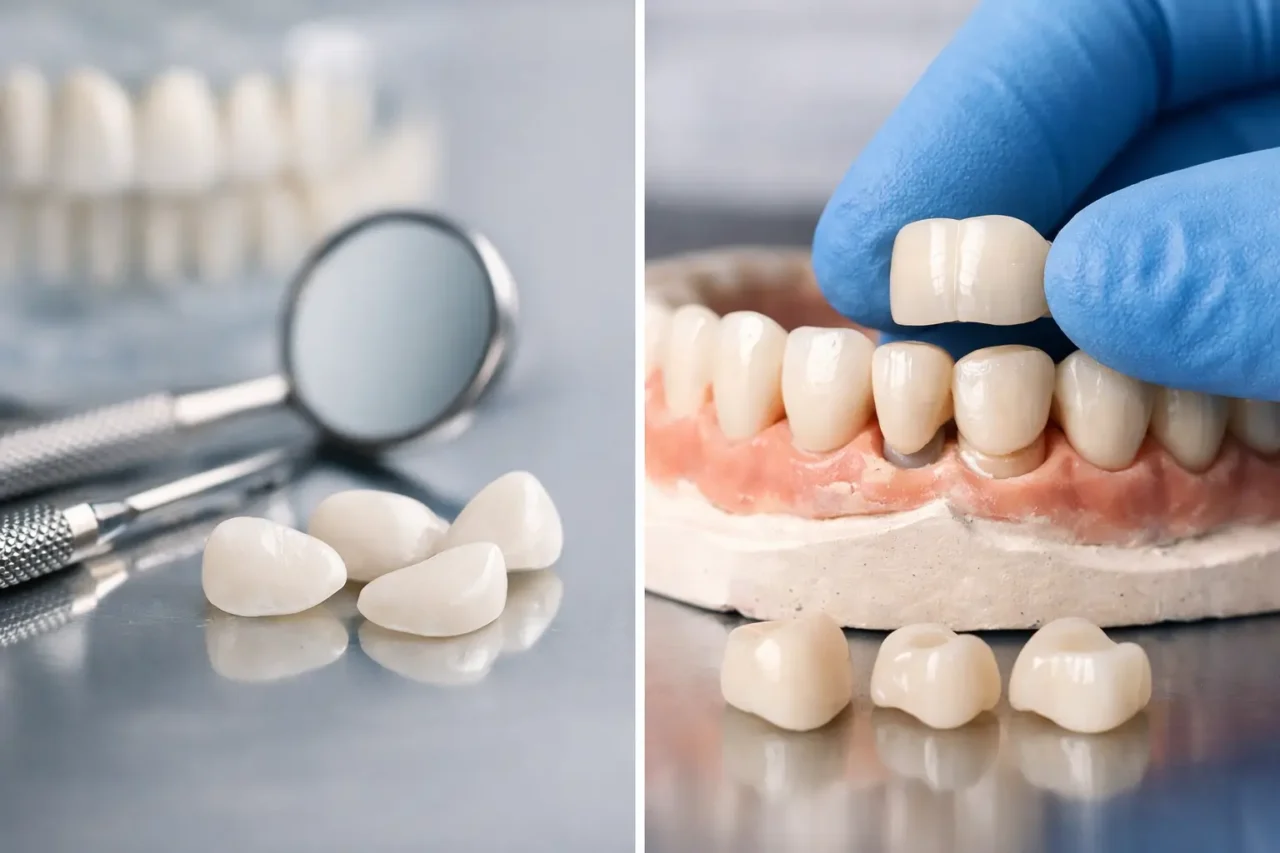
A chipped front tooth in a photo might make veneers sound perfect. A heavily filled tooth that hurts when you bite is a very different story. If you are asking veneers or crowns better, the real answer starts with one thing – what your tooth needs, not just what looks best on Instagram.
Both treatments can improve your smile dramatically. Both can look natural and polished when planned well. But veneers and crowns solve different problems, and choosing the wrong one can leave you paying for cosmetic improvement when you actually needed structural protection, or committing to more treatment than necessary when a conservative option would have worked beautifully.
Veneers or crowns better? Start with the job each one does
Porcelain veneers are thin shells bonded to the front surface of a tooth. They are primarily cosmetic. Veneers are designed to improve color, shape, size, small gaps, minor chips, and some mild alignment concerns. Because they cover only the visible front side, they preserve more of the natural tooth than a crown in many cases.
A crown covers the entire tooth structure above the gumline. It is both restorative and cosmetic. Crowns are typically used when a tooth is weakened, fractured, root canal treated, heavily filled, worn down, or structurally compromised. A crown can improve appearance, but its main advantage is protection and reinforcement.
That distinction matters. If your tooth is healthy and you want a brighter, more symmetrical smile, veneers often make sense. If the tooth has lost strength or large portions of its natural structure, a crown may be the safer long-term choice.
When veneers are the better option
Veneers are often the right fit for patients who want a smile upgrade without full coverage restoration. They work especially well for front teeth that are intact but visually disappointing. If your concern is stubborn discoloration, uneven edges, slightly short teeth, or worn enamel on otherwise healthy teeth, veneers can deliver a dramatic but natural-looking improvement.
They are also popular in smile design cases because they allow a dentist to create uniformity across several visible teeth. That matters for professionals, public-facing patients, and anyone who wants a refined result that still looks like their own smile, just better.
The trade-off is that veneers need a stable foundation. If a tooth has extensive decay, a large old filling, major cracks, or significant bite stress, a veneer may not be enough. In those situations, the tooth may look better for a while but remain vulnerable underneath.
When crowns are the better option
Crowns are usually better when the tooth needs strength as much as beauty. A crown can restore a tooth that has been damaged by trauma, large cavities, old restorations, heavy grinding, or a root canal. It wraps the tooth and distributes bite forces more safely, which is why it is often recommended for back teeth and compromised front teeth.
Crowns can also be the smarter option when there is simply not enough healthy enamel left for predictable veneer bonding. If a tooth has already had major dental work, preserving it may be more important than choosing the most conservative cosmetic treatment.
For some patients, crowns become part of a broader rehabilitation plan rather than a single cosmetic decision. If your bite is collapsing, your teeth are severely worn, or you need both appearance and function restored, crowns may offer a more durable path forward.
Which looks more natural?
This is where many patients hesitate, because they do not want a smile that looks obvious or overdone. The good news is that both veneers and crowns can look extremely natural when they are designed with the right proportions, translucency, and shade.
Veneers tend to have the edge in conservative cosmetic cases because they preserve more natural tooth structure, which can help create a lighter, more lifelike result on front teeth. They are often ideal for smile makeovers focused on shape and brightness.
Crowns can also look beautiful, especially in modern ceramic materials, but they require more complete coverage. In expert hands, the result can be seamless. The key is not whether a restoration is called a veneer or a crown. The key is whether it is planned for your facial features, bite, gum line, and natural tooth anatomy.
What about durability?
If you are comparing veneers and crowns, durability should be part of the conversation, but not in a simplistic way. Crowns are not automatically better just because they cover more. Veneers are not fragile just because they are thinner. Longevity depends on case selection, material quality, bite forces, oral hygiene, and whether habits like grinding are controlled.
Veneers can last many years when placed on healthy teeth and protected from excessive stress. Crowns can also last a long time and are often preferred when more force resistance is needed. But if a patient with severe clenching gets veneers without addressing the bite, or if a weak tooth gets a veneer when it truly needed a crown, durability suffers.
This is why a proper exam matters more than broad online claims. The best treatment is the one that matches your tooth condition and your bite pattern.
Veneers or crowns better for cost?
Patients traveling for dental care often start with appearance goals and quickly realize they also need value, predictability, and a clear plan. Veneers may cost less per tooth in some cases because they are more conservative. Crowns may cost more because they involve more tooth coverage and are often used in more complex restorative situations. But the bigger financial question is not just price per unit. It is whether you are choosing the right treatment the first time.
A veneer placed on a tooth that should have had a crown can become expensive if it fails early or leads to retreatment. A crown placed on a tooth that only needed cosmetic enhancement may mean unnecessary reduction of healthy structure. Smart treatment planning protects both your smile and your budget.
For international patients, this is one reason comprehensive evaluation is so valuable. When your treatment is coordinated clearly before travel, you can compare options based on health, esthetics, timing, and total cost rather than guesswork.
The role of enamel, bite, and tooth history
Three factors usually guide the decision more than anything else.
First is enamel. Veneers bond best to healthy enamel. If enamel is limited, bonding may be less predictable.
Second is bite. If your front teeth hit heavily, if you grind, or if your bite is unbalanced, veneers may need extra protection or may not be ideal for certain teeth. Crowns may be more appropriate in high-stress situations.
Third is tooth history. A virgin tooth with a minor chip is very different from a tooth with a root canal, a post, and a large filling. The more compromised the tooth, the more likely a crown becomes the responsible choice.
Why some patients need both
The question is not always veneers or crowns better across the whole mouth. Many excellent smile makeover cases use both. Veneers may be ideal for visible front teeth that are healthy enough for cosmetic enhancement, while crowns may be necessary for teeth that need structural support.
This blended approach often gives patients the best balance of beauty and function. It allows treatment to stay conservative where possible and more protective where necessary. That is especially important for adults who have a mix of cosmetic concerns and older dental work.
At Smile Makeover Cartagena, this kind of personalized planning is often what gives international patients peace of mind. You are not being pushed into a one-size-fits-all package. You are getting a recommendation based on what each tooth actually needs.
What to ask before you decide
A good consultation should make the choice clearer, not more confusing. Ask whether the tooth is structurally sound, how much natural tooth will be preserved, what material is being recommended, how your bite affects the plan, and what kind of maintenance will be needed over time.
You should also ask to see the expected esthetic outcome. Shape, shade, and overall smile harmony matter just as much as the type of restoration. The best result is one that feels natural when you speak, smile, and see yourself in photos.
If you are choosing treatment while planning dental travel, clarity becomes even more important. You want to know which teeth are candidates for veneers, which need crowns, how many visits are required, and whether any preliminary care is needed before cosmetic work begins.
A confident decision usually comes from a very honest diagnosis. Veneers are excellent when the tooth is healthy enough. Crowns are excellent when the tooth needs full protection. Neither is universally better. The better choice is the one that gives you a strong bite, a natural look, and results you can enjoy long after the trip is over.
