


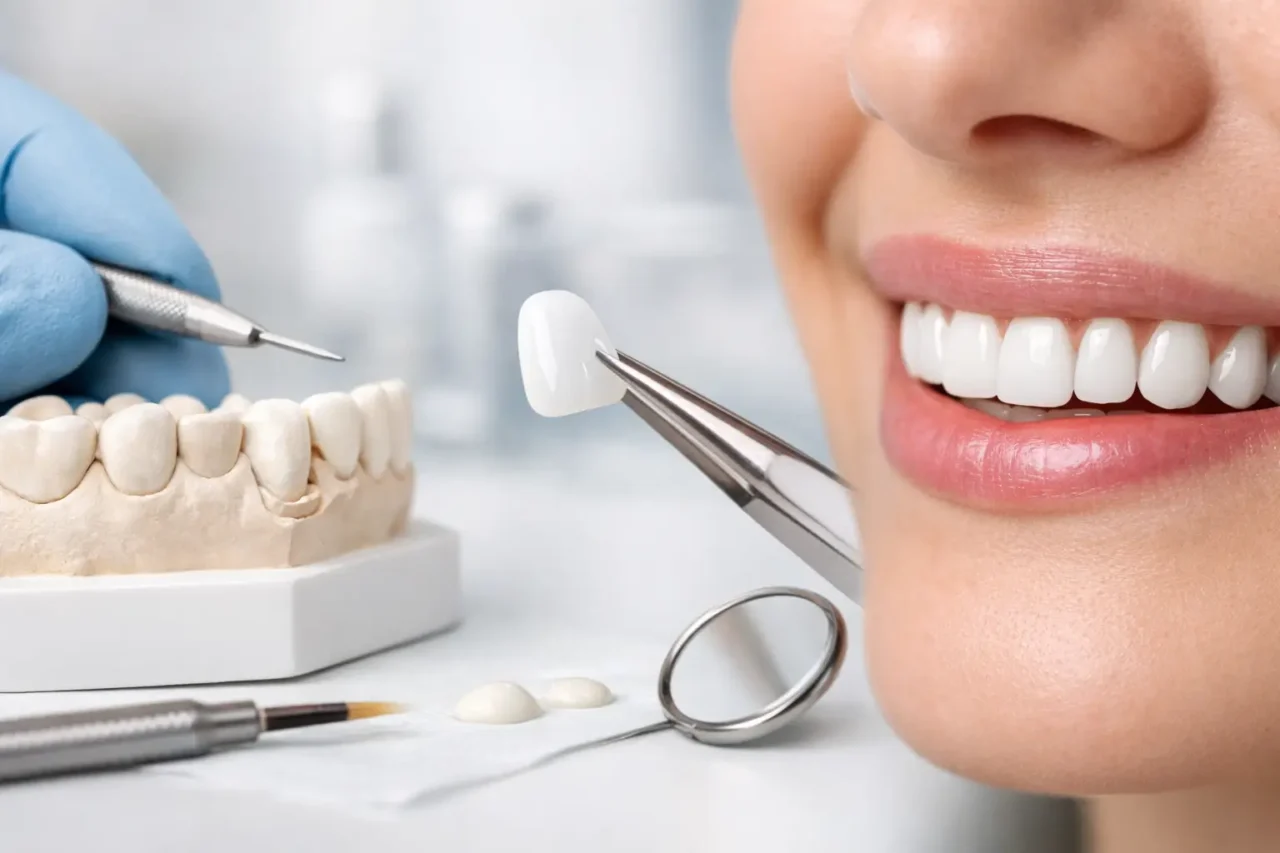
A great veneer result does not start with porcelain. It starts with planning. If you are researching how porcelain veneers work, you are probably not just asking what gets bonded to the tooth. You want to know what changes, what stays natural, how long the process takes, and whether the final smile will actually look like you – only better.
That is the right way to think about veneers. Porcelain veneers are not a one-size-fits-all cosmetic shortcut. When they are done well, they are carefully designed restorations that improve shape, color, proportion, and sometimes minor alignment issues while still respecting your natural bite and facial features.
How porcelain veneers work on real teeth
Porcelain veneers are thin custom-made shells, usually placed on the front surface of visible teeth. They are designed to improve the appearance of teeth that are stained, worn, chipped, slightly uneven, small, or spaced apart. The veneer covers the front of the tooth, but the tooth underneath still matters. Strength, enamel quality, bite position, and gum health all affect whether veneers are the right choice.
The reason porcelain veneers look so natural is that porcelain reflects light in a way that resembles real enamel. That gives them an advantage over many direct bonding materials when the goal is a brighter, more refined smile that still looks believable up close.
But veneers do not simply hide everything. They work best when the underlying teeth and bite are healthy enough to support them. If a patient has untreated gum disease, active decay, heavy grinding, or major alignment problems, those issues usually need to be addressed first or incorporated into the treatment plan.
The veneer process, from consultation to final smile
For most patients, the process begins with a consultation and smile evaluation. This is where your dentist studies your teeth, gums, bite, facial proportions, and goals. Photos, digital scans, and X-rays may be used to build a treatment plan. For international patients, this planning phase often starts remotely, which makes it easier to understand candidacy, timeline, and pricing before travel.
At this stage, the most important question is not how many veneers you can get. It is what result will look balanced and natural on your face. Some patients need only a few veneers to correct isolated concerns. Others benefit from treating the full visible smile zone for a more uniform look.
Smile design comes before tooth preparation
This is the part many patients do not realize. A strong veneer case is designed before the tooth is touched. Your dentist determines the ideal length, width, contour, shade, and smile line based on your features and preferences. If you want a very bright Hollywood look, that can be planned. If you want a softer, age-appropriate result that does not look obviously cosmetic, that can be planned too.
This design phase matters because porcelain is custom fabricated. Once the veneers are made, the shape and shade are not casually changed in the chair. Good planning reduces surprises and helps ensure the final result fits your face, speech, and bite.
Preparing the teeth
Once the design is approved, the teeth are prepared. In many veneer cases, this means removing a very small amount of enamel from the front surface of the tooth. The goal is to create space for the porcelain so the final restoration does not look bulky.
Preparation is conservative when possible, but not every case is no-prep. Some teeth need contouring to create the right shape and alignment. Others may require little to no reduction, depending on position, size, and the desired outcome. This is one of the biggest it-depends areas with veneers.
After preparation, impressions or digital scans are taken so the veneers can be made with precision. Temporary veneers may be placed while the final restorations are being fabricated, especially when multiple teeth are involved.
How porcelain veneers are made and bonded
The final veneers are created in a dental lab based on the approved design. Each veneer is shaped to match the treatment plan and crafted in a selected porcelain material that balances beauty and durability.
When the veneers are ready, your dentist tries them in before bonding. This is the quality-control moment. The fit, shape, bite, and color are checked carefully. Small adjustments may be made, but this is not a rushed step. If a veneer does not look right, it should not be bonded just because the appointment is scheduled.
Once everything is approved, the tooth surface is cleaned and prepared for bonding. A dental adhesive and specialized cement are used to attach each veneer securely to the tooth. The cement is cured with a light, excess material is removed, and the bite is refined.
Bonding is what turns a thin porcelain shell into a functional part of your smile. The veneer and tooth work together. That is why enamel quality is so important. Veneers bond best to healthy enamel, and that contributes to both strength and longevity.
What veneers can fix – and what they cannot
Porcelain veneers are excellent for improving cosmetic concerns such as deep discoloration, chips, worn edges, minor spacing, slight crowding, and teeth that appear too short or misshapen. They can also create a more symmetrical smile and help unify teeth that vary in color or form.
They are less ideal when the real problem is structural or functional. A tooth with a large filling, major fracture, root canal complications, or heavy load from the bite may be better restored with a crown. Significant orthodontic issues may still be better treated with braces or clear aligners first. Severe grinding can also shorten the life of veneers if it is not managed properly.
This is where an honest consultation matters. Veneers are powerful, but they are not the answer to every smile concern. The best treatment plan is the one that fits your teeth, not just your wish list.
How long porcelain veneers last
Well-made porcelain veneers can last many years, often 10 to 15 or longer, depending on case selection, oral habits, and maintenance. Longevity is influenced by the quality of the preparation, the bonding, the material, and the patient’s bite.
Daily care is straightforward. You brush, floss, and keep up with professional cleanings. You also avoid using veneered teeth as tools to open packages or bite hard objects. If you clench or grind, a night guard may be recommended.
Porcelain resists staining better than natural enamel and many composite materials, which is one reason patients choose it. Still, veneers are not maintenance-free. The gums around them must stay healthy, and surrounding teeth can still change over time.
What the final result should feel like
A well-done veneer case should look polished without looking fake. It should feel smooth, fit comfortably, and support normal speech and function. Most patients notice an immediate boost in confidence, but the best aesthetic dentistry also feels easy to live with day to day.
That often means restraint. The brightest or largest veneers are not always the most attractive. Natural-looking outcomes usually come from respecting facial proportions, lip movement, skin tone, and age. For patients traveling for care, this is especially important because they want a result worth the trip, not a smile that looks overdone when they get home.
At Smile Makeover Cartagena, that planning-first approach is a big part of what makes treatment appealing for international patients. You are not just shopping for veneers. You are choosing a process that combines clear English communication, personalized design, and a treatment timeline that fits real travel plans.
Is getting porcelain veneers worth it?
For the right patient, veneers can be one of the most efficient ways to transform a smile. They can brighten dark teeth that do not respond well to whitening, correct shape issues that orthodontics alone will not fix, and create a cleaner, more balanced appearance in a relatively short timeframe.
The trade-off is that veneers are a commitment. In most cases, some enamel has been altered, which means the decision is not fully reversible. They also require thoughtful case design and experienced execution. Cheap veneers that ignore bite, proportion, or gum harmony often look artificial and may fail sooner.
If you are weighing treatment at home against treatment abroad, the real comparison is not just cost. It is value. That includes quality of materials, experience with cosmetic design, communication, number of visits, and how clearly the process is explained before you commit.
When patients understand how porcelain veneers work, they tend to ask better questions and make more confident choices. That is the goal. A beautiful smile should not feel mysterious or risky. It should feel planned, personal, and fully aligned with how you want to look when you walk into the room.
